Blog
-
Recent Posts
-
Blog - Recent Posts -
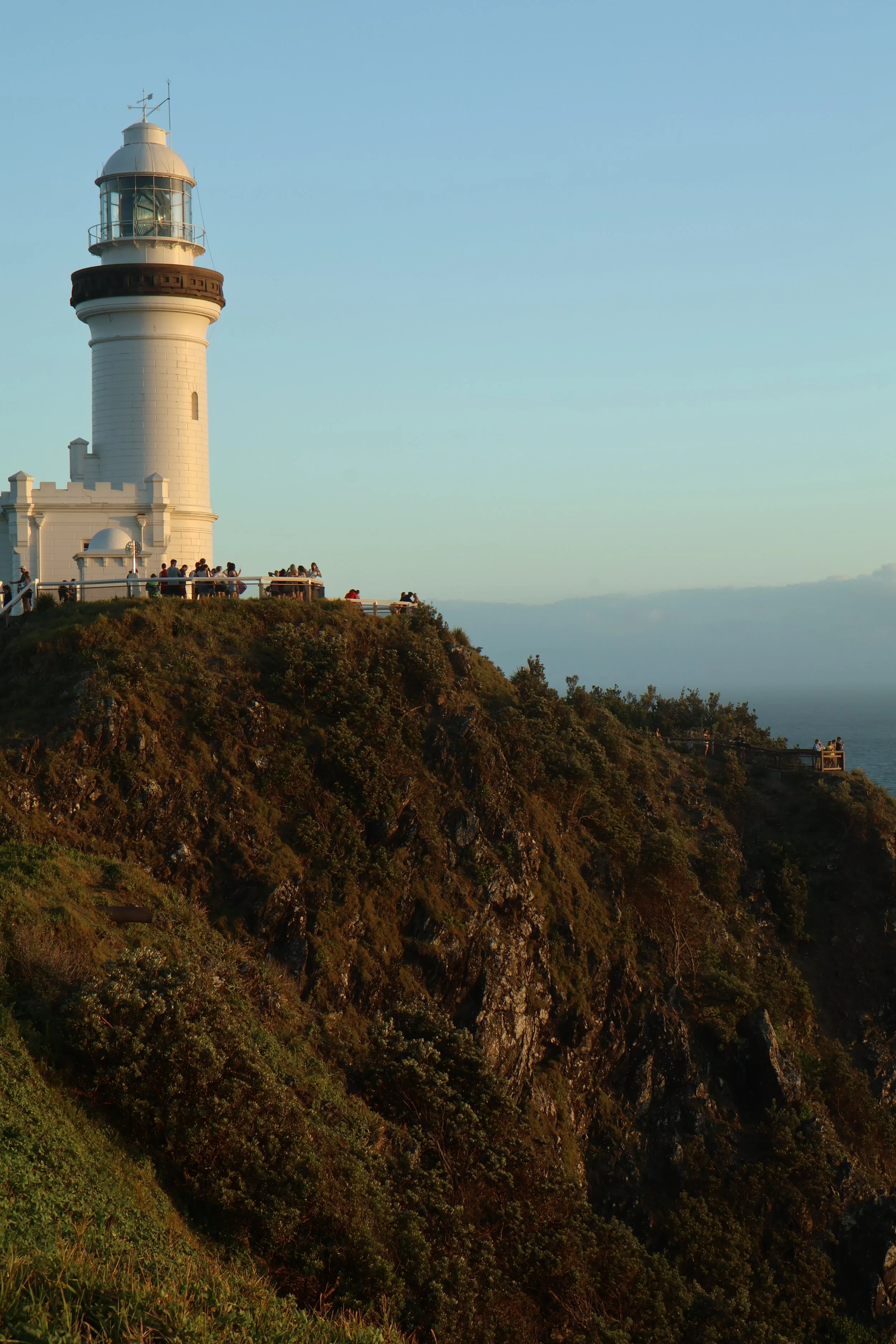
The sun rises above the horizon, spilling gold across the sea and over the hundreds of pilgrims gathered at the Byron lighthouse. A middle-aged Italian man begins singing the opening lines of My Girl. Not an obvious soundtrack for a warm, cloud-free January morning, but a welcome one nonetheless.
Long before the sun appears around 6am, the streets of this small but famous New South Wales beach town are already alive. People of all ages run, walk, and cycle through the quiet roads. Being outdoors and connected to nature feels like a default setting here, something that comes up again and again, and one of the reasons Australia, and Byron Bay in particular, feels so appealing.
Usually, a rainy day would put me in a bad mood. Perhaps surprising, given I come from the north of England, but it’s never something one really looks forward to, especially when travelling in the hope of sunny climes.
And yet, on this latest trip, I’ve noticed a shift in mindset. Rainy days no longer bring the same sense of mardiness they once did. Of course, they can be a welcome relief from the heat, but more importantly they feel like nature’s way of saying, have a day off.
Eating out is one of the great joys of travel. I love food and I love trying as broad a range of things as possible while away, ideally local and ideally seasonal. We spend a lot of time planning what and where to eat on our trips to make sure we experience the best and most authentic food a place has to offer.
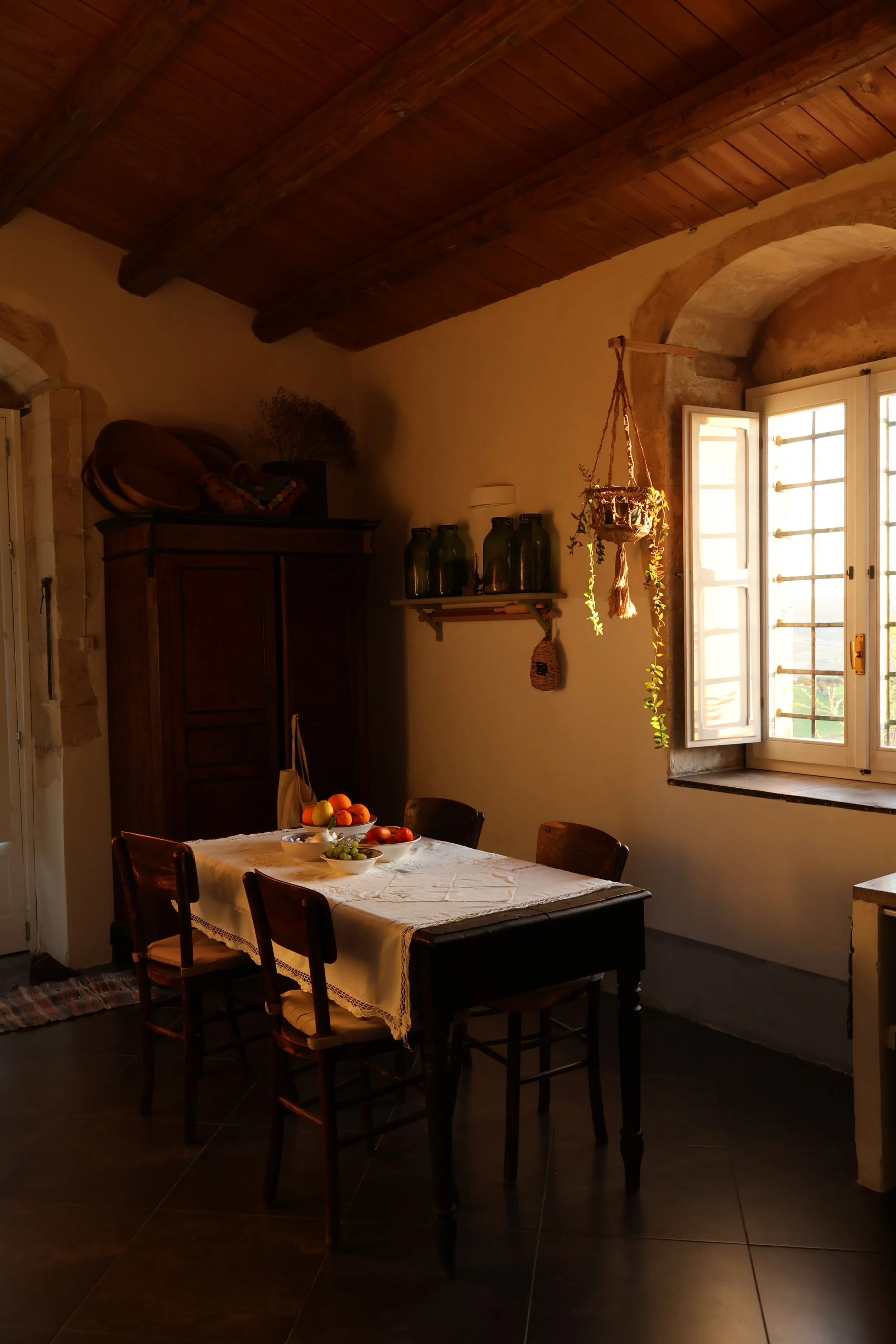
Sometimes, though, it is nice to make use of the kitchen where you are staying. A visit to the local market is always a must. It is one of the quickest ways to understand a place, its rhythms, its people, its priorities.
We take a left from the busy streets of the market. Catania is as edgy as I recall - the dark grey buildings, narrow streets and looming Mount Etna giving it a totally different feel to the baroque hillside towns of the Val Di Noto, where we have just come from.
With the turn we enter a steer that is strewn with half empty boxes and litter from the market stalls and one which is far quieter, almost devoid of people. We quickly approach a sign saying ‘Aldo, piano no.1’ with an arrow pointing up a suspect looking staircase.
Of late this blog has gotten a little travel heavy and that’s because of course, I am travelling. However, I’m acutely conscious that this is not a travel blog. There’s no intent to unseat Lonely Planet in telling you where to go, what to do, or what to think. Instead, our aim is to illicit thought, bring an alternative view, or take a dive into the less talked about.
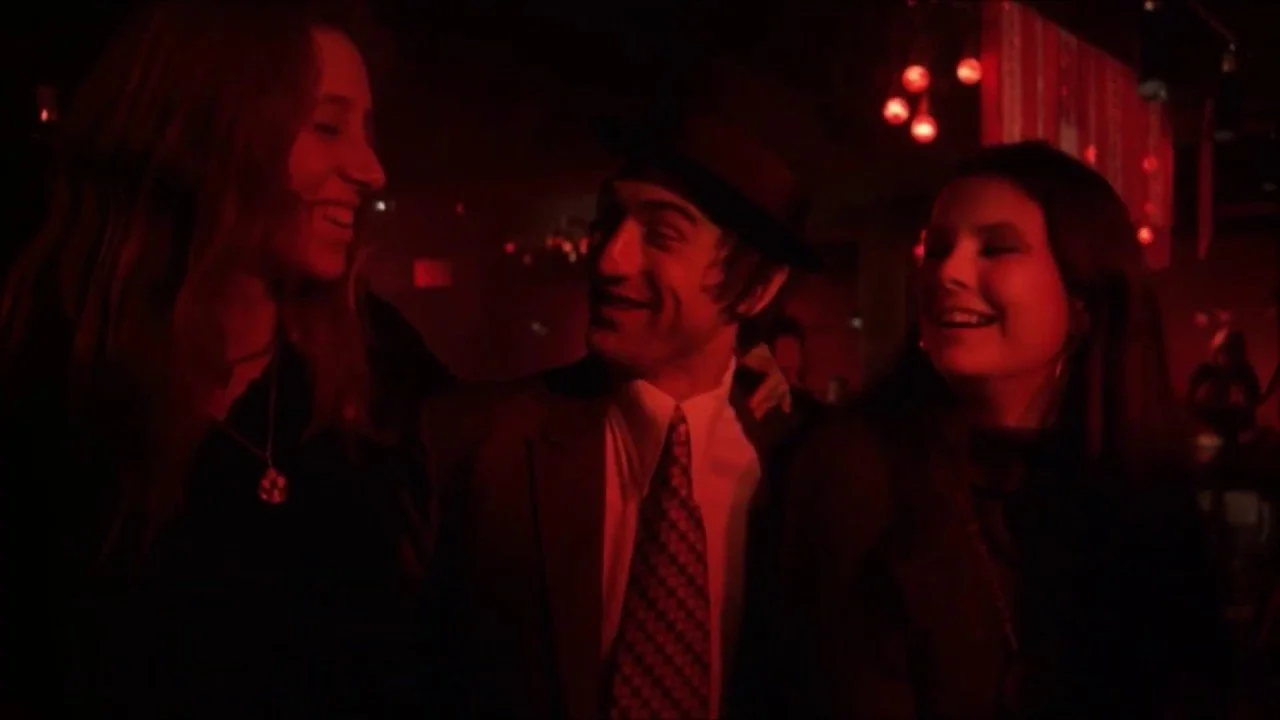
Whilst staying in the rolling hills of the Sicilian countryside I just had to rewatch the Godfather trilogy and during Godfather II I was reminded how cool Robert De Niro, playing a young Vito Corleone looks. The baker boy hat, the brown herringbone jacket, the wool trousers - it’s almost like a lookbook for Engineered Garments, only cent’anni fa.
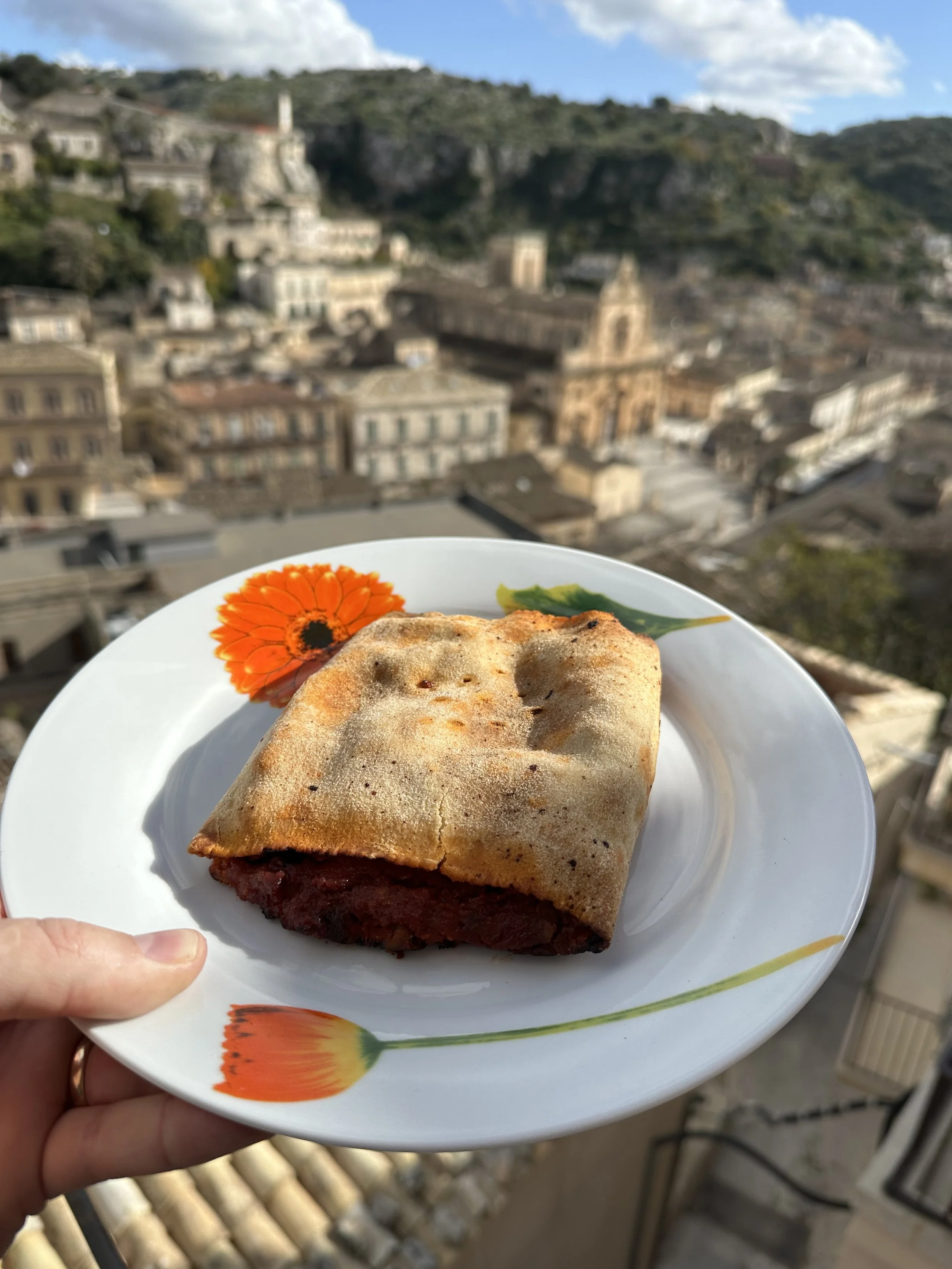
Some foods find you. Others you have to hunt for. Scaccia belonged firmly in the second camp.
I first came across it years ago, in a newspaper article I read. It mentioned this strange folded bread from the Ragusa area of Sicily; part pizza, part focaccia, part something entirely its own. Nobody I knew had ever heard of it. Even in the UK, where Italian food is popular, scaccia might as well not exist.
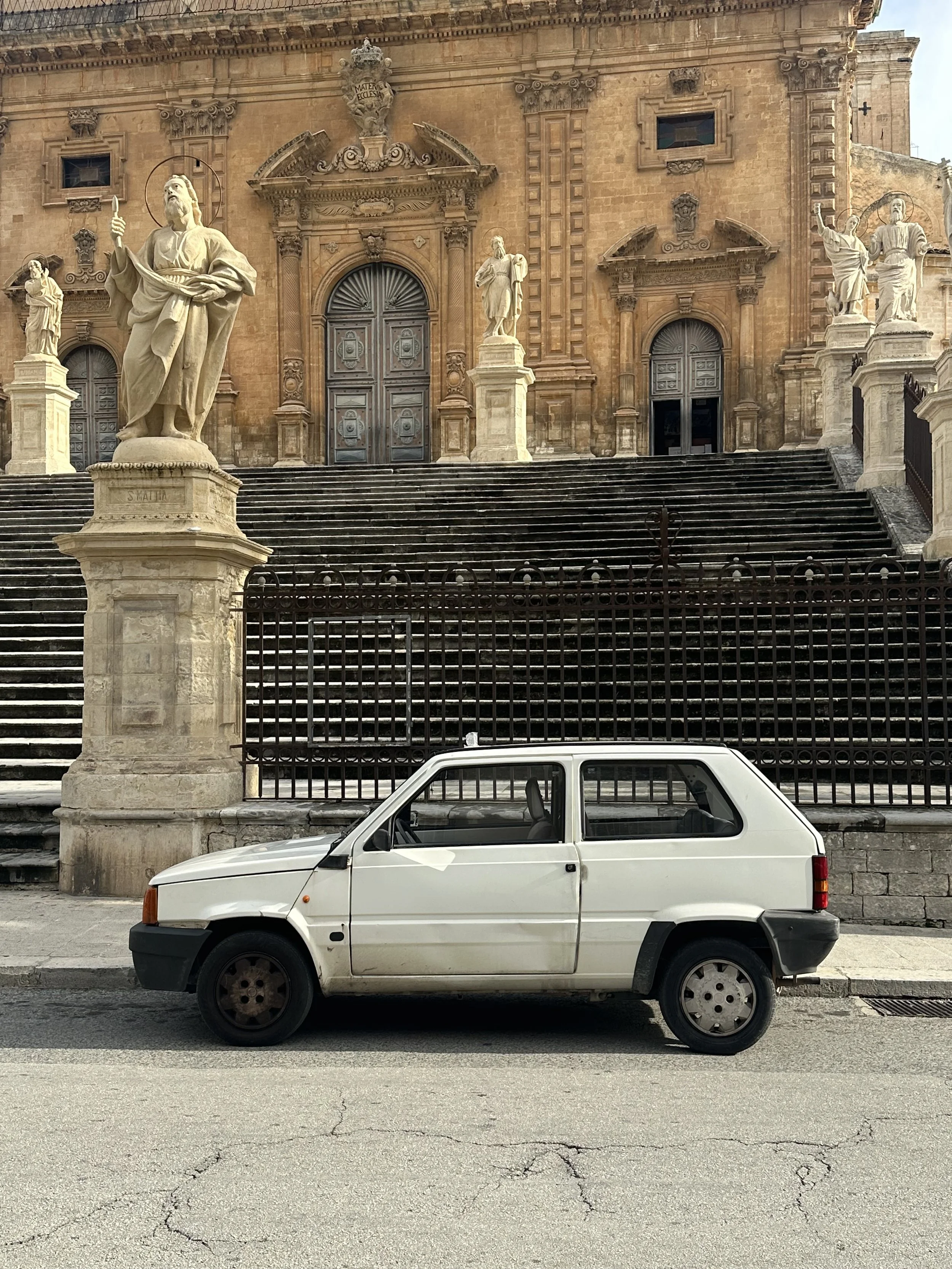
Departing town and dodging Fiat Pandas making illegal, yet excruciatingly slow, turns. A BMW fails to stop at a stop sign and I am grateful to be on high alert. Cars sit double parked along the pavement, blocking a lane of traffic. It is apparently fine because the hazard lights are on.
The road opens and follows the coast, with Sicily’s industrial edges, present. Bland apartment blocks rise beside littered streets. You will not find this on TikTok.
We’re driving through the outskirts of Trapani. A rain shower passes over as quickly as it came, a common theme for this part of the north western Sicilian coastline in late November. The windscreen wipers begin to slow and the sun shines bright, glistening off the road.
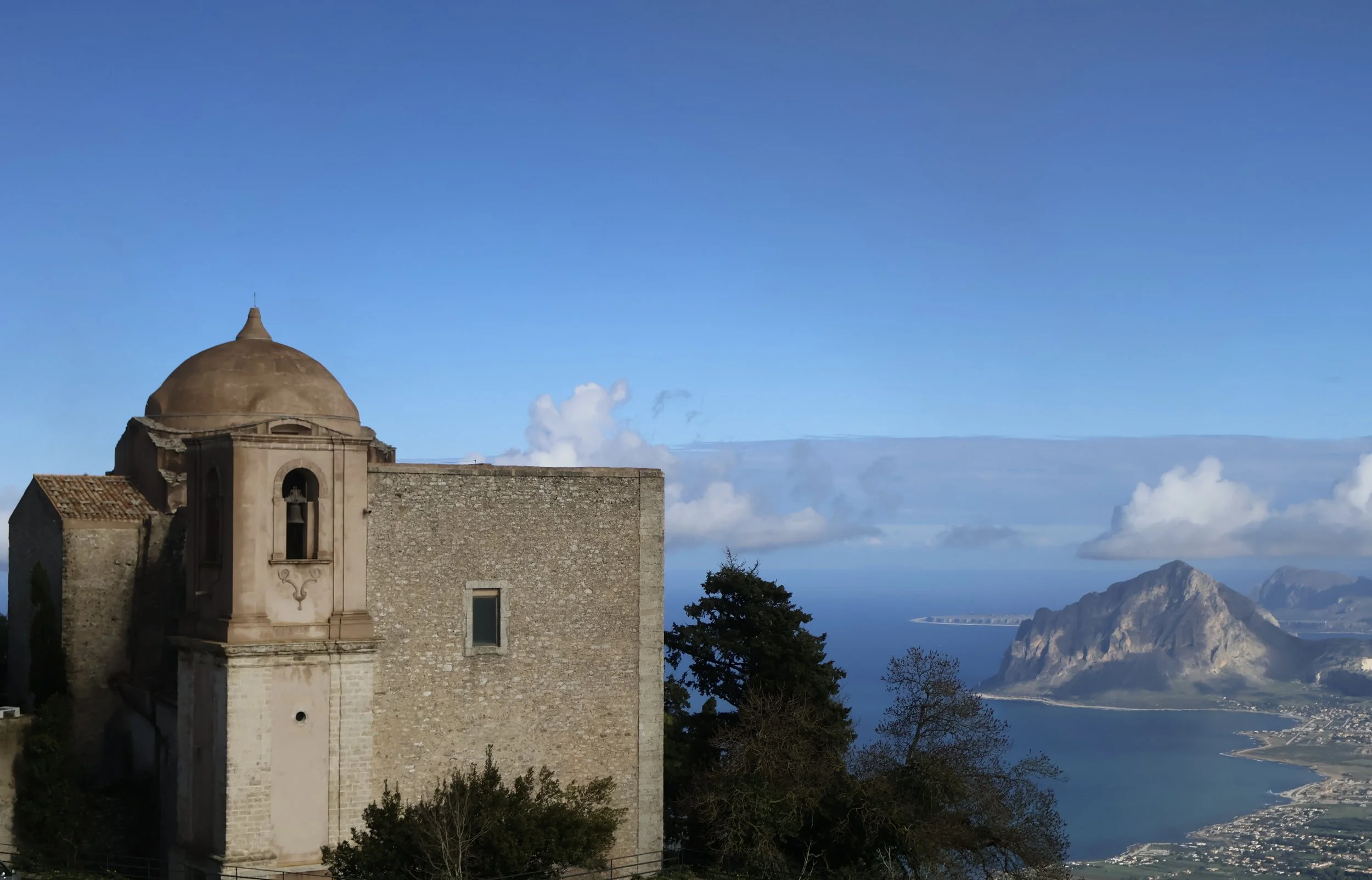
Monte Erice ahead of us, still shrouded in a heavy, thick cloud; brooding above.
Anthony Bourdain once said that the real heart of a place is found in its markets and that if you want to understand a culture, you should go where people shop and eat every day.
I have always agreed with him. Whenever I travel somewhere new, the market is my first stop. Spend twenty minutes wandering between the stalls and you get an instant sense of what is in season, what is local, and what you should be ordering later at dinner.
Our plane begins its descent into Palermo. The curve of the bay glows on our left, a soft necklace of lights against the dark water, while the mountains stand brooding around the city.
I’ve recently been watching Jimmy McGovern’s Accused on Netflix. This drama from the early 2010s sees each episode focus on a trial, at court. The crimes committed in each episode vary, but the consistent theme of each challenges the viewer’s perception of morality, versus the law. It’s an excellent show and is a bit of a who’s who of British acting - Sean Bean, Olivia Colman, Stephen Graham, Sheridan Smith and Peter Capaldi all feature, to name but a handful of household names. But that’s not the focus of this post.
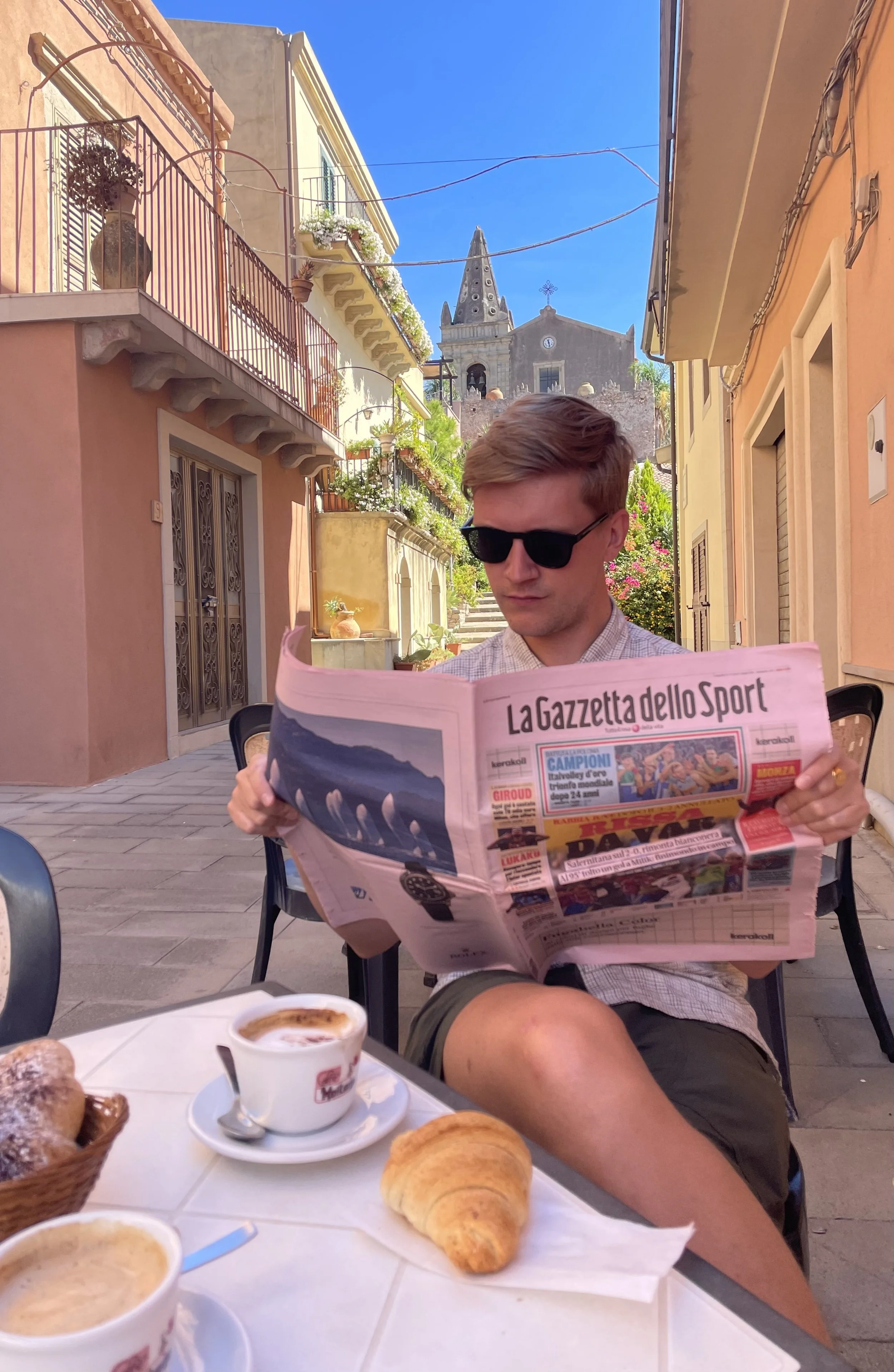
If you’ve been wondering about the splash of pink across Passeggiare, here’s the story.
The inspiration comes straight from Italy’s most iconic newspaper: La Gazzetta dello Sport. I didn’t want this to look like just another blog — the choice of pink was deliberate, a nod to something uniquely, unmistakably Italian.
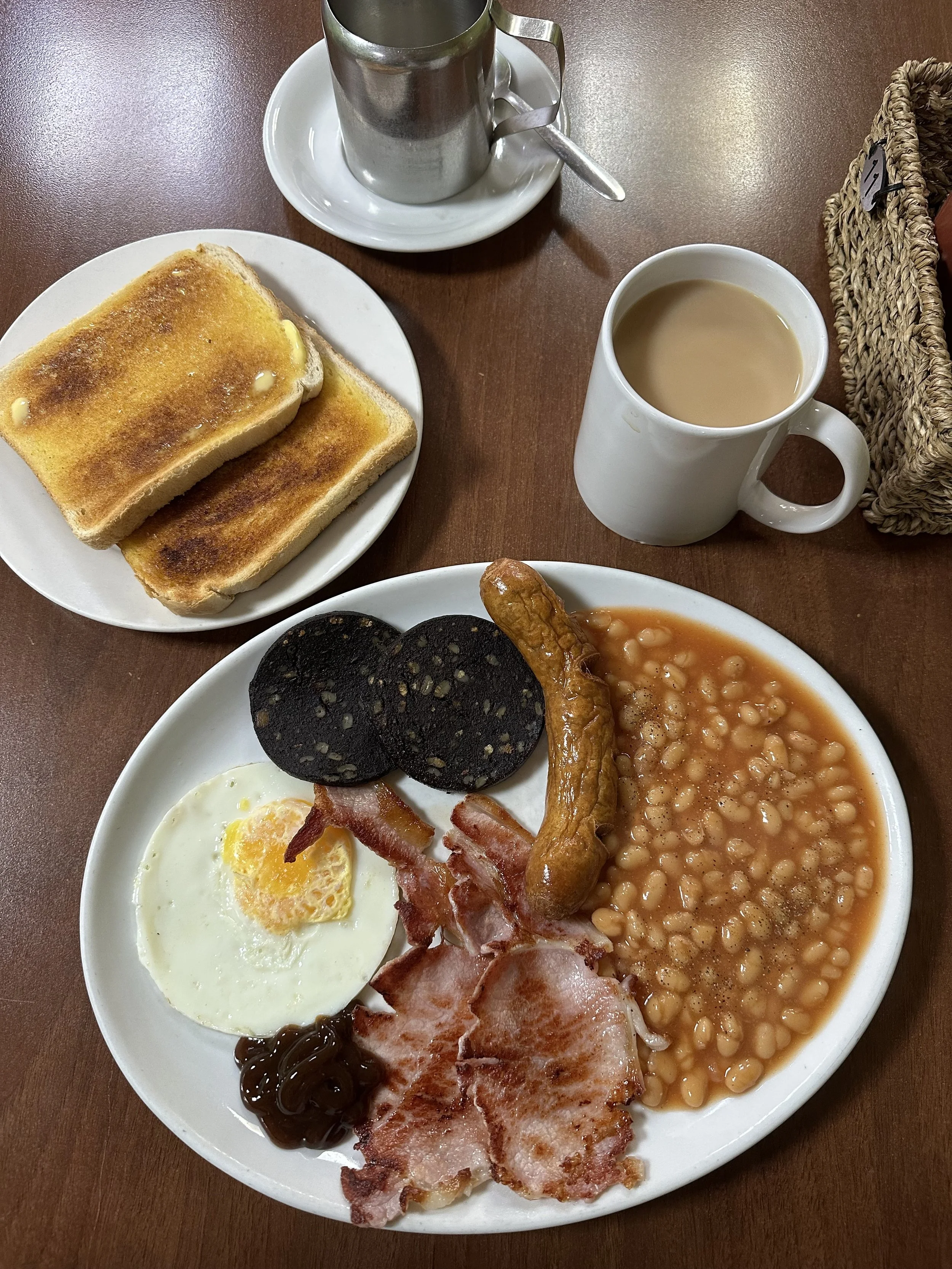
There’s something about a full English. I don’t eat them often — the last one I can remember was back in June 2024 — but every so often the craving strikes. This time, it led me to The Moor Cafe in Sheffield city centre, a place I’d never tried before.
Like many cities, Sheffield has fewer and fewer of these traditional cafés — the no-frills kind that once lined every high street. They’re being nudged out by coffee shops and bakeries with hipster decor and steeper price tags. I enjoy those too, but it would be a real shame if we lost the honest, slightly worn cafés along the way. They might trade in nostalgia, but there’s a certain charm in their scuffed tables and straight-up food. Everyone’s welcome, and the meal won’t empty your wallet.
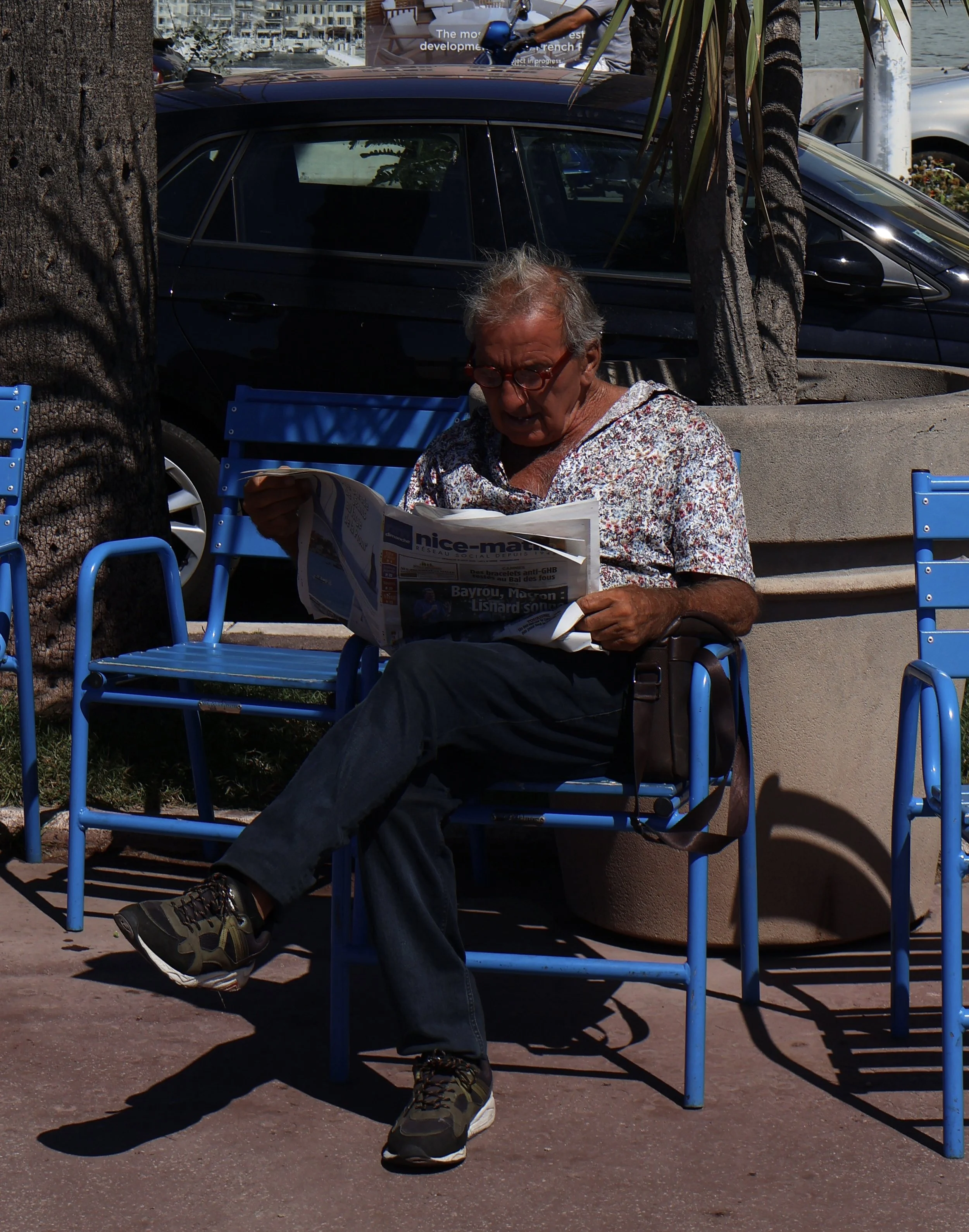
Tony Soprano once said a nursing home was basically like a hotel in Cap d’Antibes. We put that line to the test with a day split between Cannes and Antibes — one felt like a film set, the other like a place you’d actually want to stay.
The warm morning sun is just rising above Saint-Jean Cap-Ferrat and is starting to glisten on the azure Mediterranean Sea. The bay, littered with yachts and fishing boats, looks perfectly still at this hour. With very few people around, I always find it the best time to take photographs, uninterrupted.
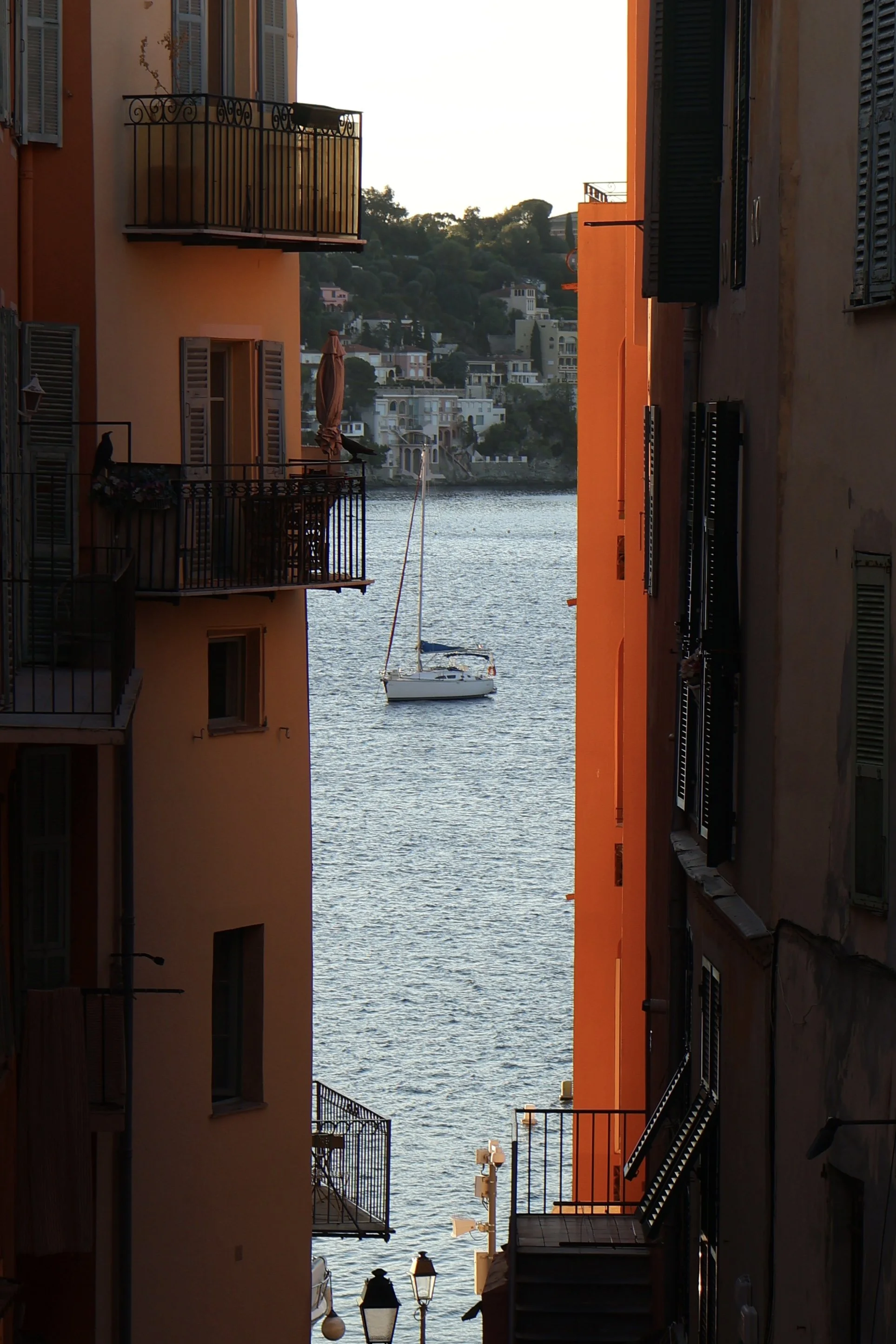
The narrow red and yellow hued streets of Villefranche-sur-Mer cling to the steep slopes heading down to the bay, providing a perfect setting for capturing some archetypal scenes of a town on the French Riviera.
I am lucky enough to have visited Kraków many times now. My wife is Polish and came to university here and whilst her family are not from the city, it’s still not a million miles away and is regularly a port of call for when we visit.
As a child, family holidays were punctuated with a questioning of why my mum was taking a long time trying to take a photograph of a Greek Orthodox priest walking down some stairs, or waiting for the right moment, with no people in frame, to photograph a sweeping white sandy beach.
I mercati di Palermo
Anthony Bourdain once said that the real heart of a place is found in its markets and that if you want to understand a culture, you should go where people shop and eat every day.
I have always agreed with him. Whenever I travel somewhere new, the market is my first stop. Spend twenty minutes wandering between the stalls and you get an instant sense of what is in season, what is local, and what you should be ordering later at dinner.
Anthony Bourdain once said that the real heart of a place is found in its markets and that if you want to understand a culture, you should go where people shop and eat every day.
I have always agreed with him. Whenever I travel somewhere new, the market is my first stop. Spend twenty minutes wandering between the stalls and you get an instant sense of what is in season, what is local, and what you should be ordering later at dinner.
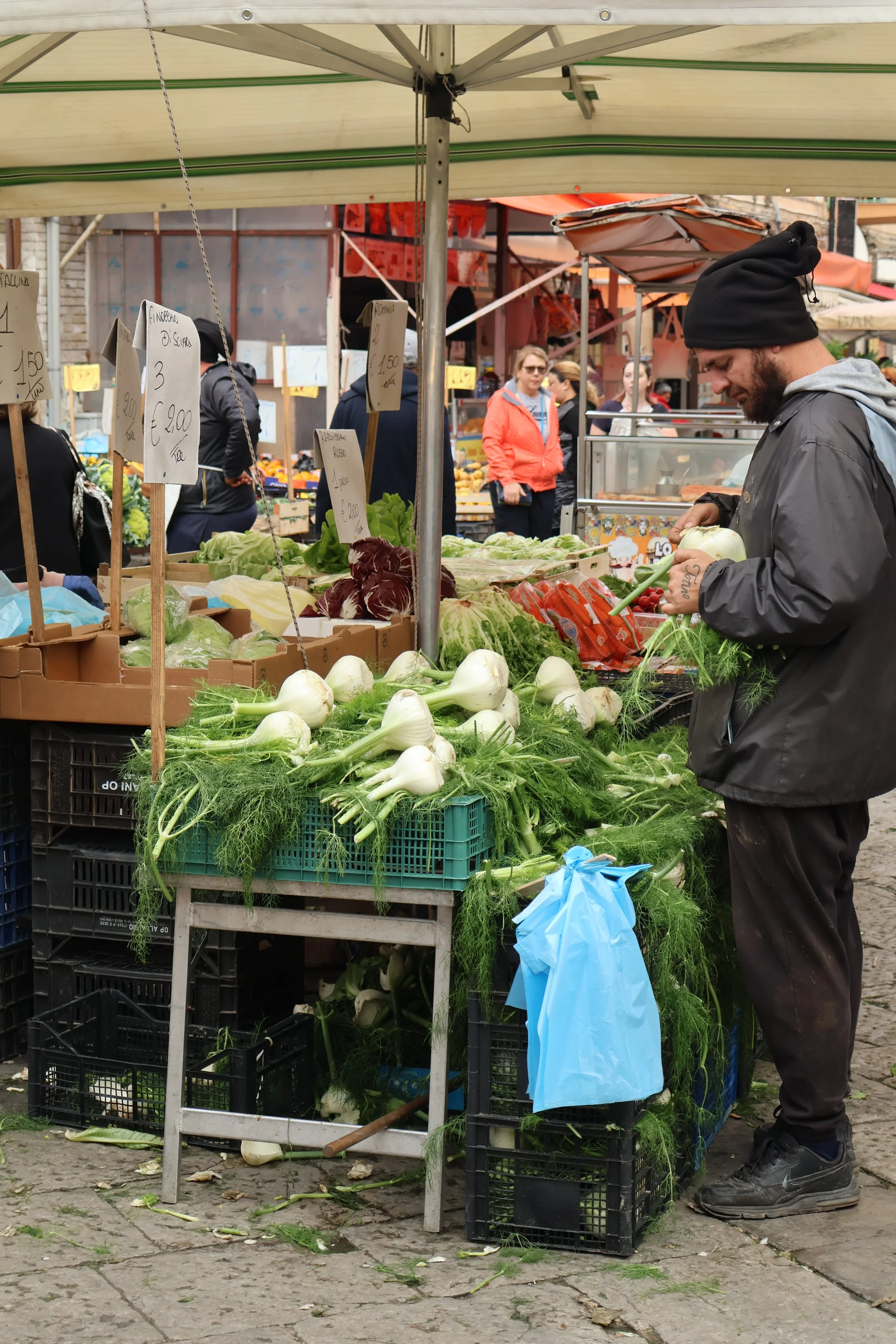
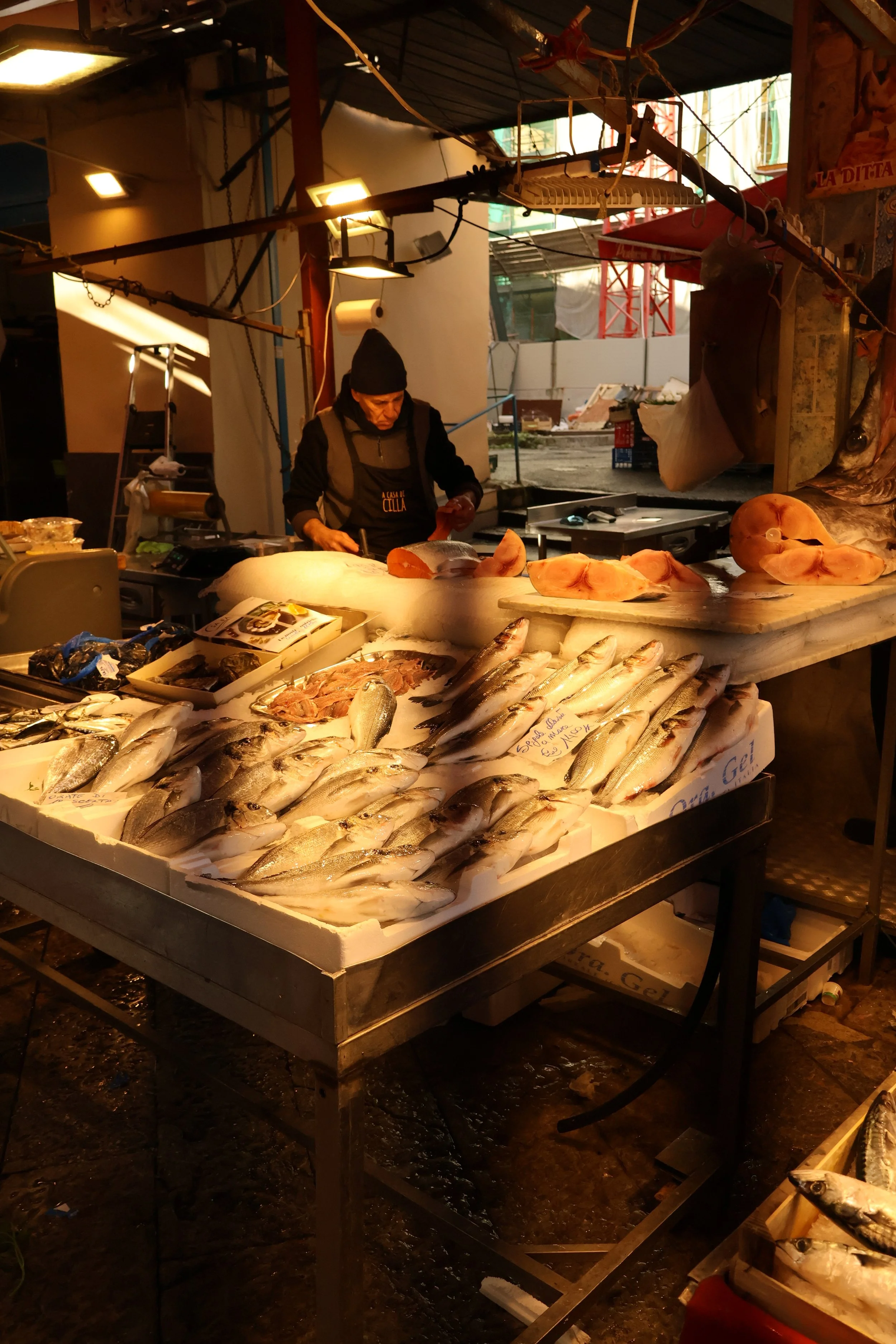
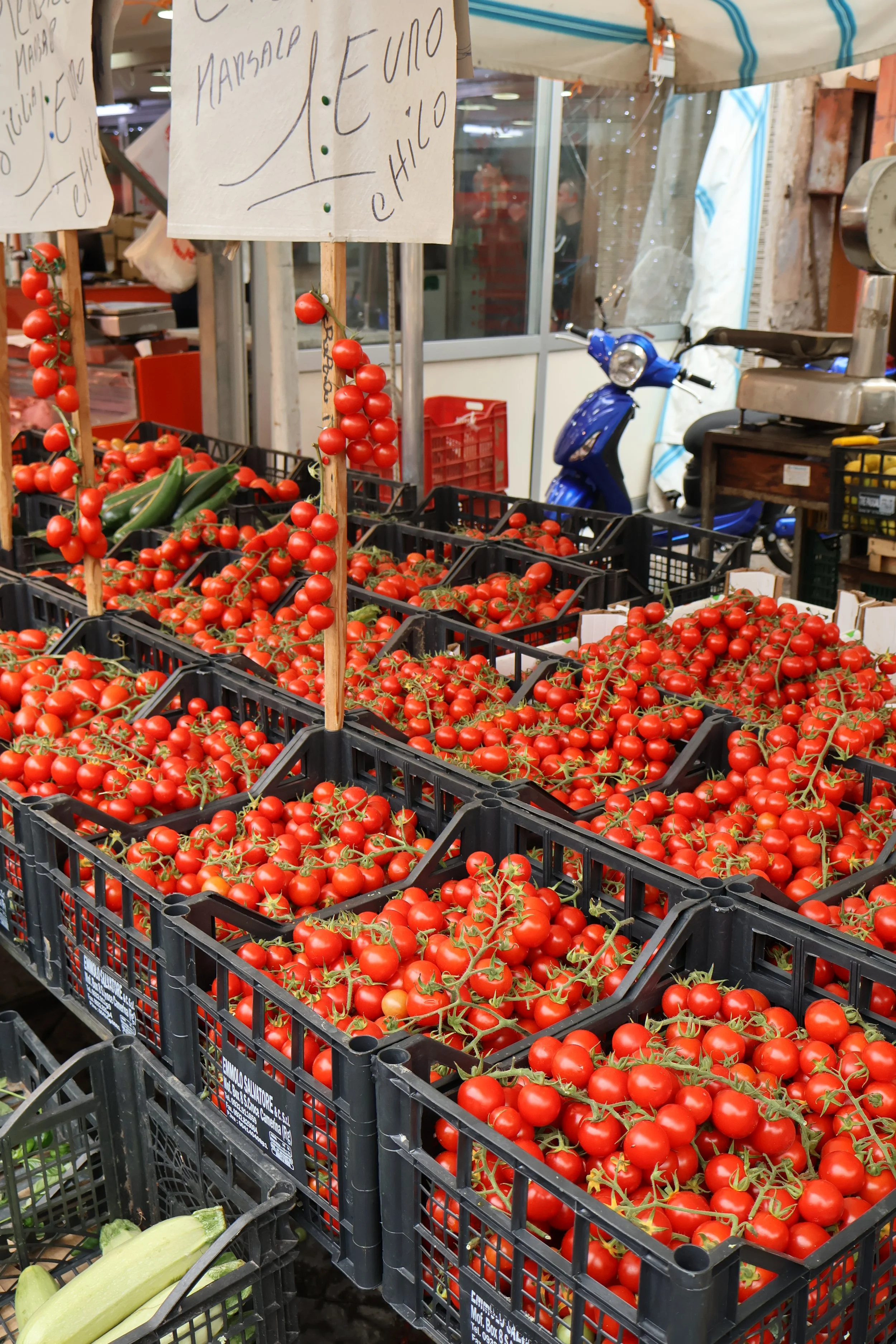
Here in Palermo, returning to Mercato Capo and Ballaró has been every bit as exhilarating as I remembered from three years ago. Both run along narrow streets through the centre of the city, a jumble of makeshift stands and permanent shopfronts tucked beneath the golden stone apartments above.
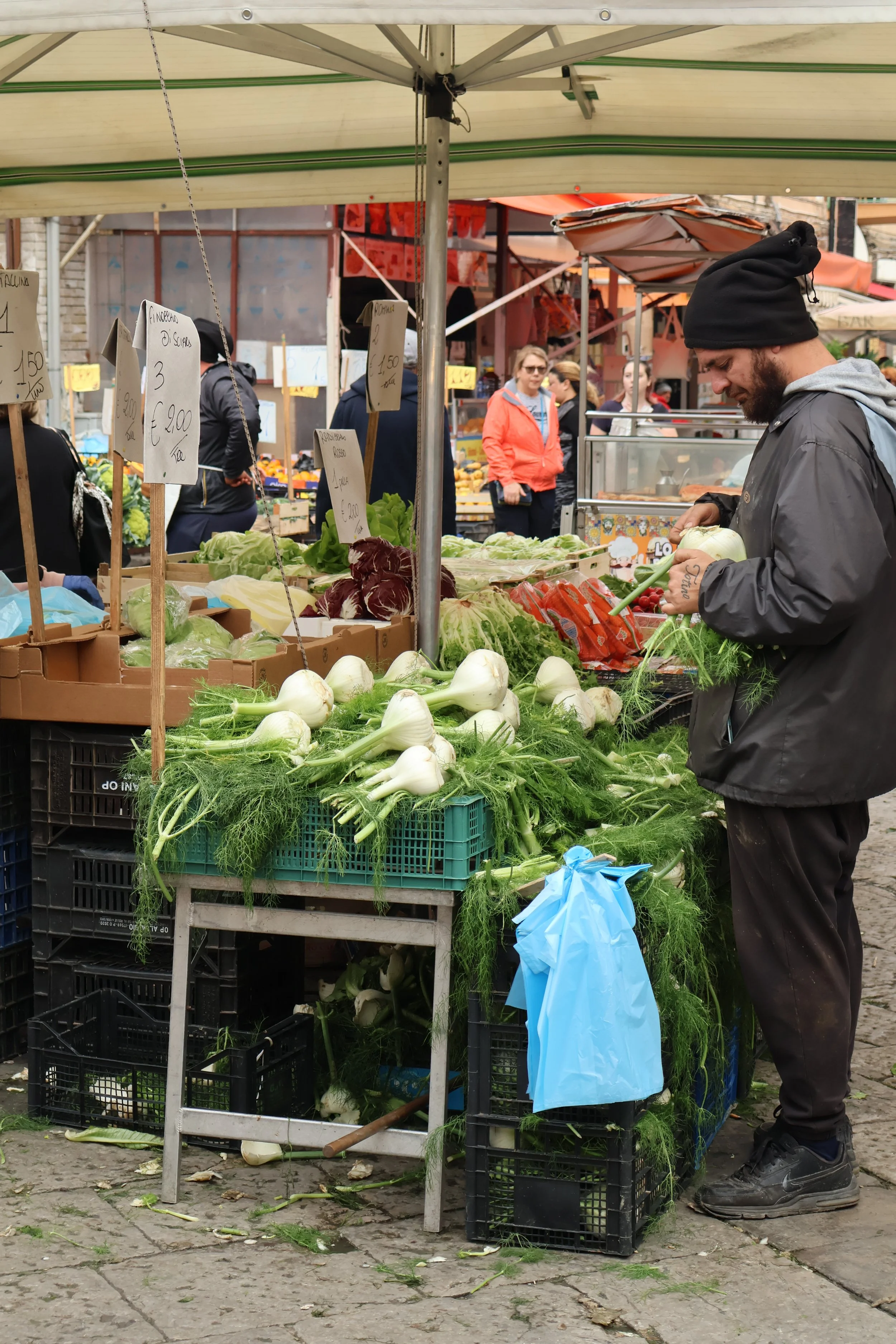
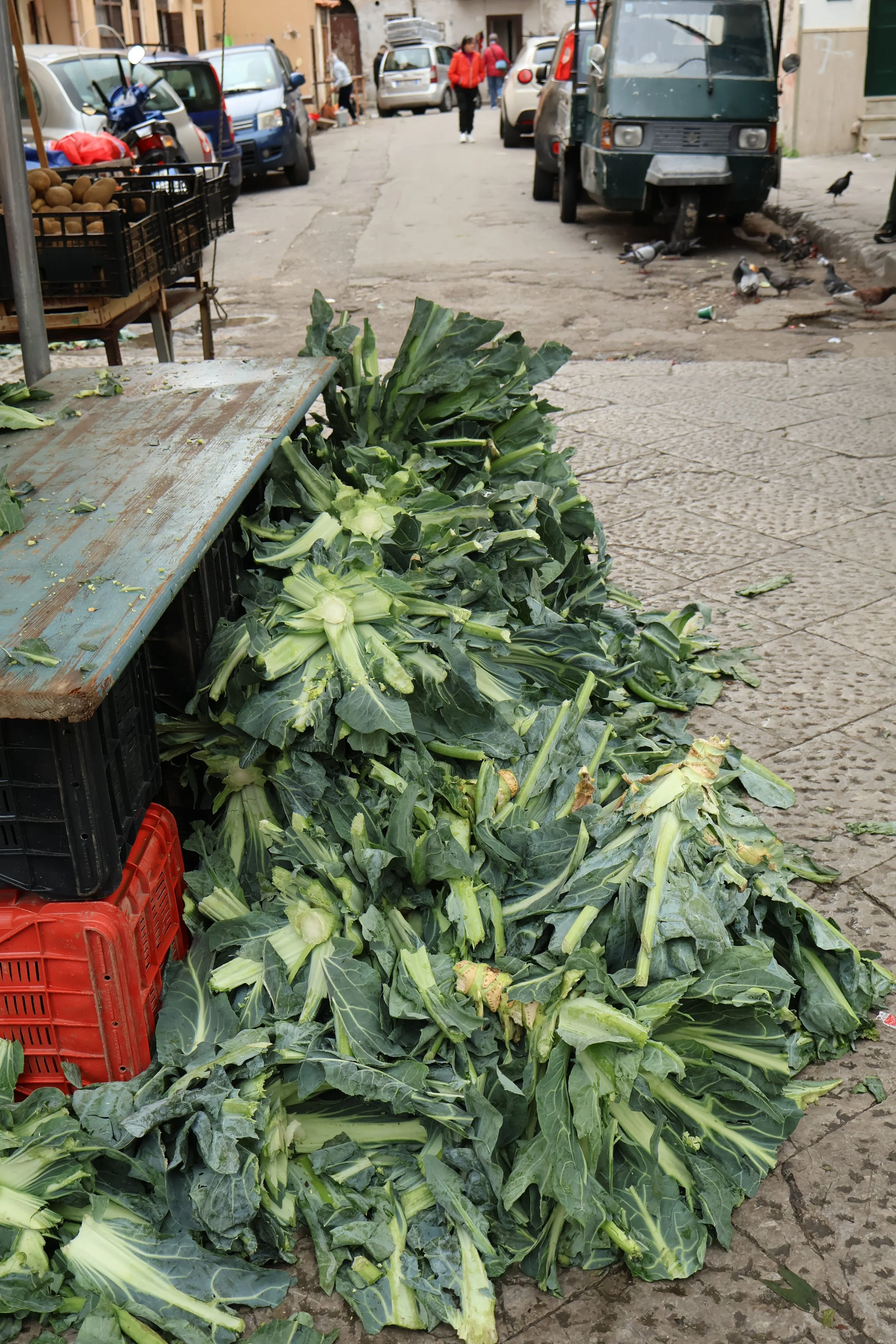
It can feel like controlled disorder. Teenagers on mopeds inch their way down corridors of people. A car turns down the wrong lane and has to roll over a mountain of discarded cauliflower leaves to escape. Voices carry from every direction, thick with Sicilian dialect that hints at the island’s history with North Africa and the Middle East.
Music fills the gaps, especially at Ballaró where Italian pop blares from speakers and stallholders dance as they serve panelle con pane. One man I remembered instantly from our last trip, famed in my mind for turning meat with his bare hands, shouts a compliment at my wife with full theatrical hand gestures. Palermo knows how to put on a show.
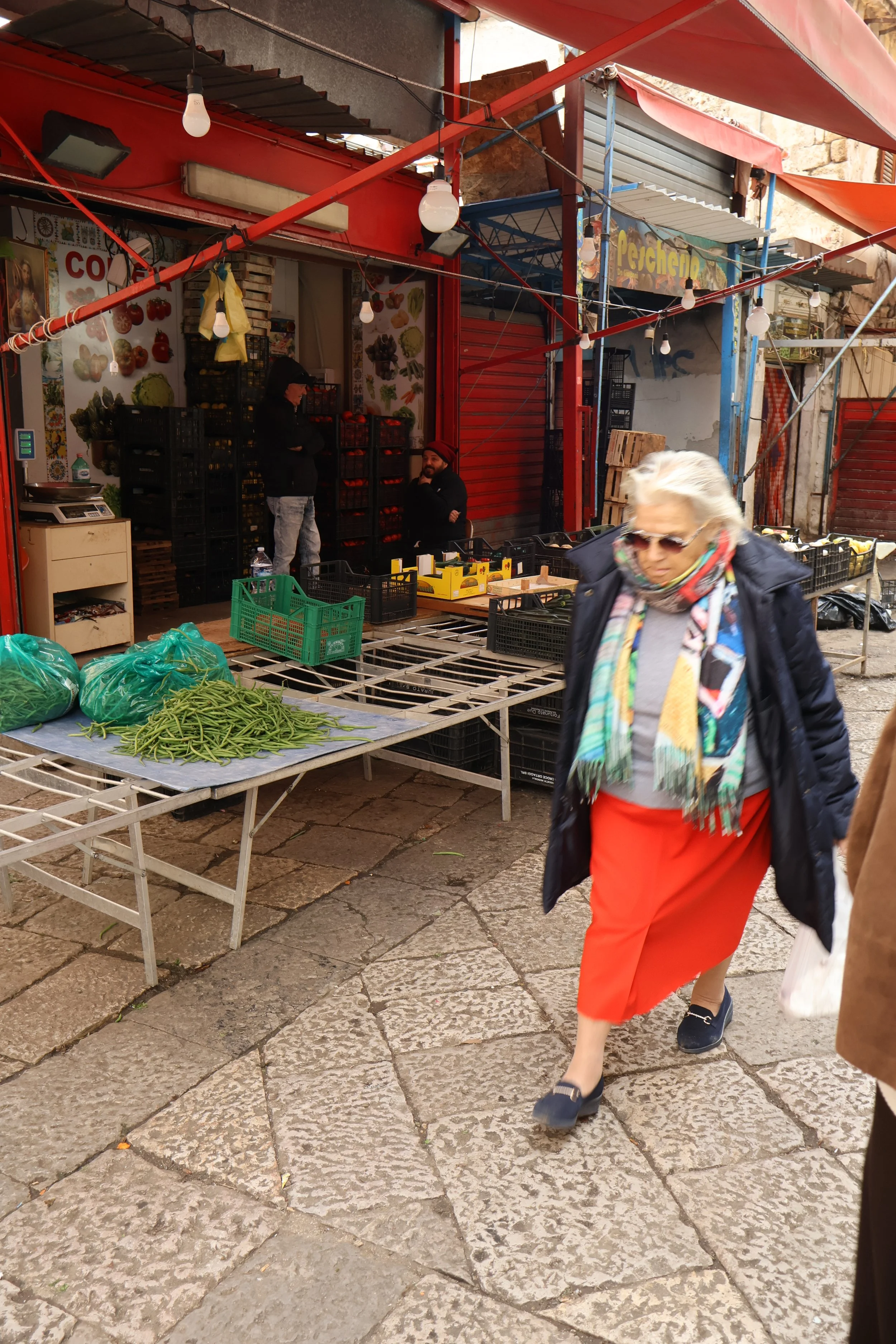
It is a full sensory hit, equal parts spectacle and obstacle course. Yet this time, something is different. The heat has eased. It is late autumn now, a comfortable twenty rather than the humid mid thirties. And the crowds have thinned. Gone are the tourist groups drifting toward restaurants plastered with photos of lasagne. In their place are locals comparing prices, debating the best way to cook something, offering advice nobody asked for but everyone expects.
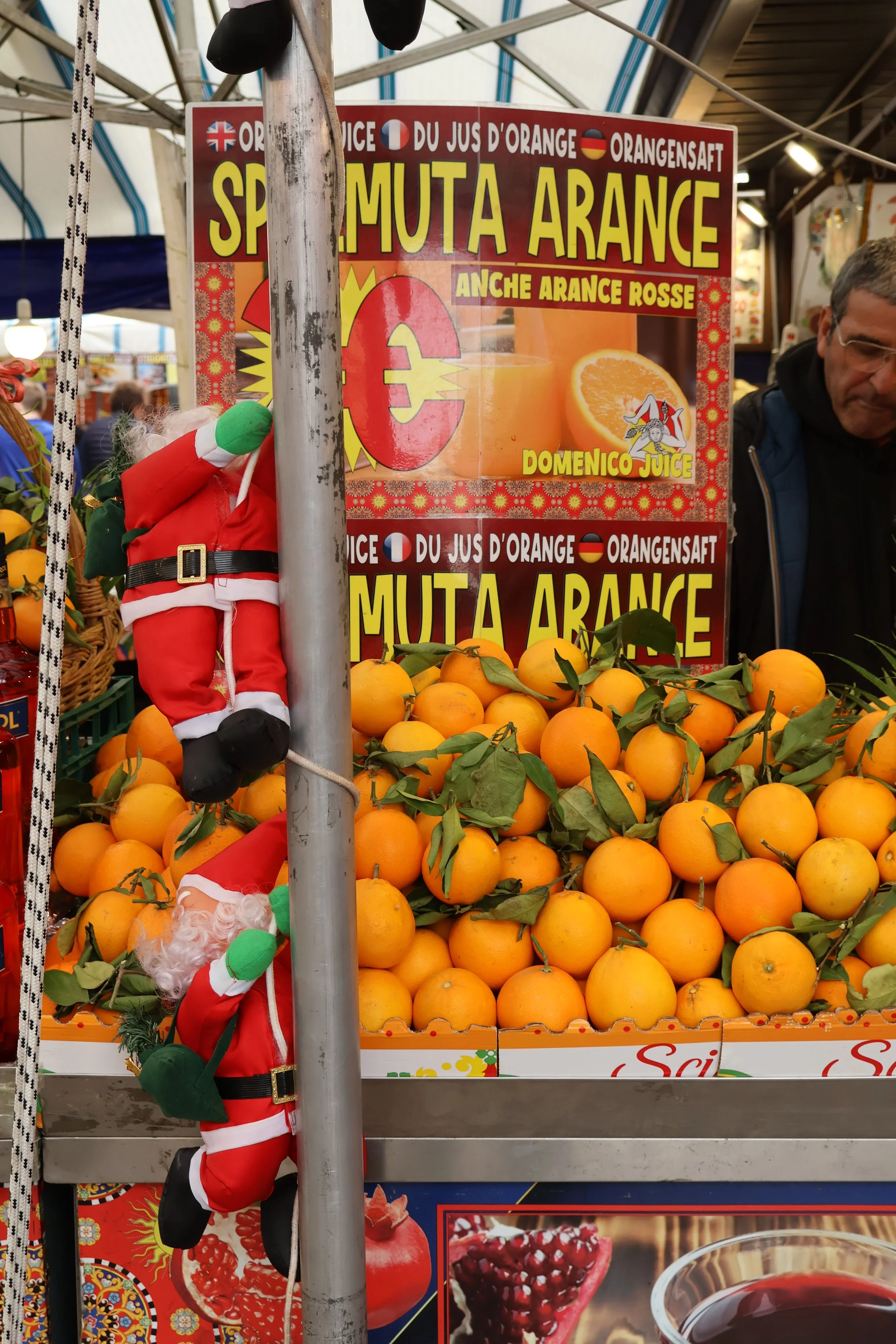
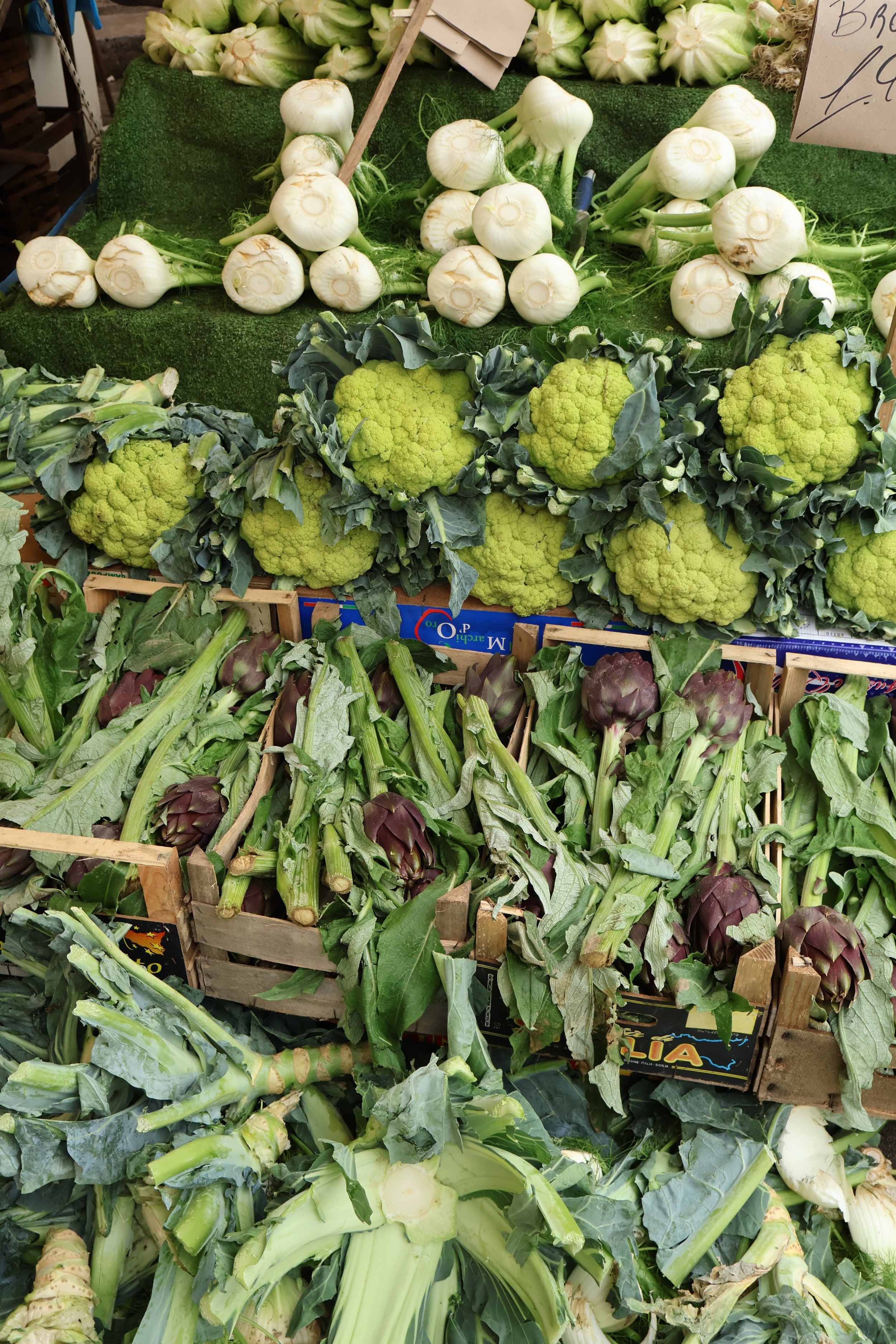
The produce has shifted too. Where figs, melons and aubergines once dominated, the stalls are now piled high with fennel, cauliflower, and the bright citrus that defines Sicilian cooking. Oranges everywhere.
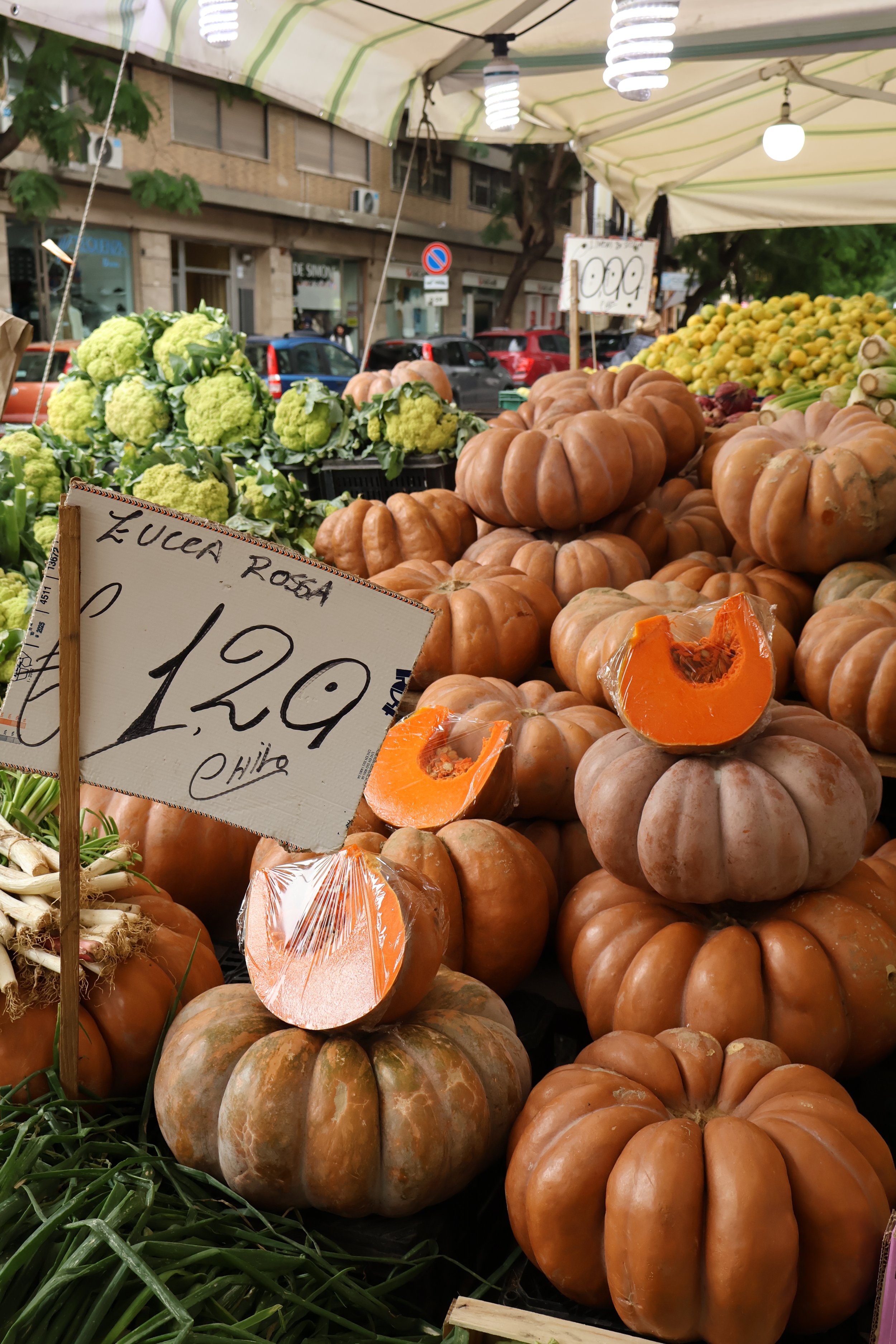
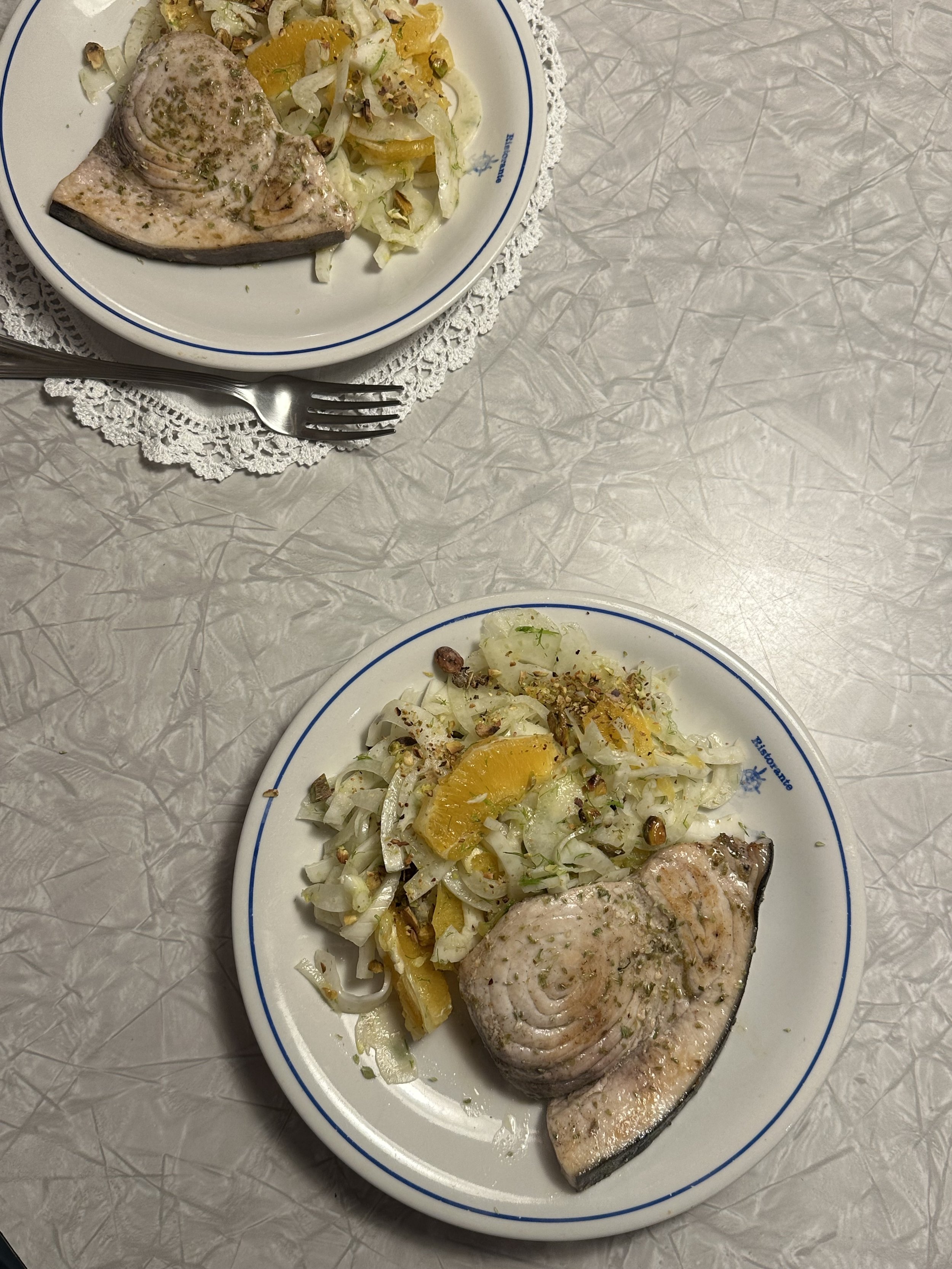
With space to breathe, choosing what to buy feels more deliberate. Ideas come fast, matching the energy of the markets themselves. And despite the flood of possibilities, the decision more or less makes itself: swordfish, still local and still in season, paired with a crisp fennel and orange salad and finished with chopped pistachio from Bronte.
Simple. Obvious. Perfectly Sicilian.
Familiar unfamiliarity is often a feature of travel.
A trip to New York turns a lifetime of television and film into reality. Manhattan becomes a walking set of “wasn’t this in…” and “isn’t that where…”. Paris and Rome carry a different kind of recognition, the inherited romanticism of the Seine or the Trevi Fountain, places we feel we already know long before we arrive.
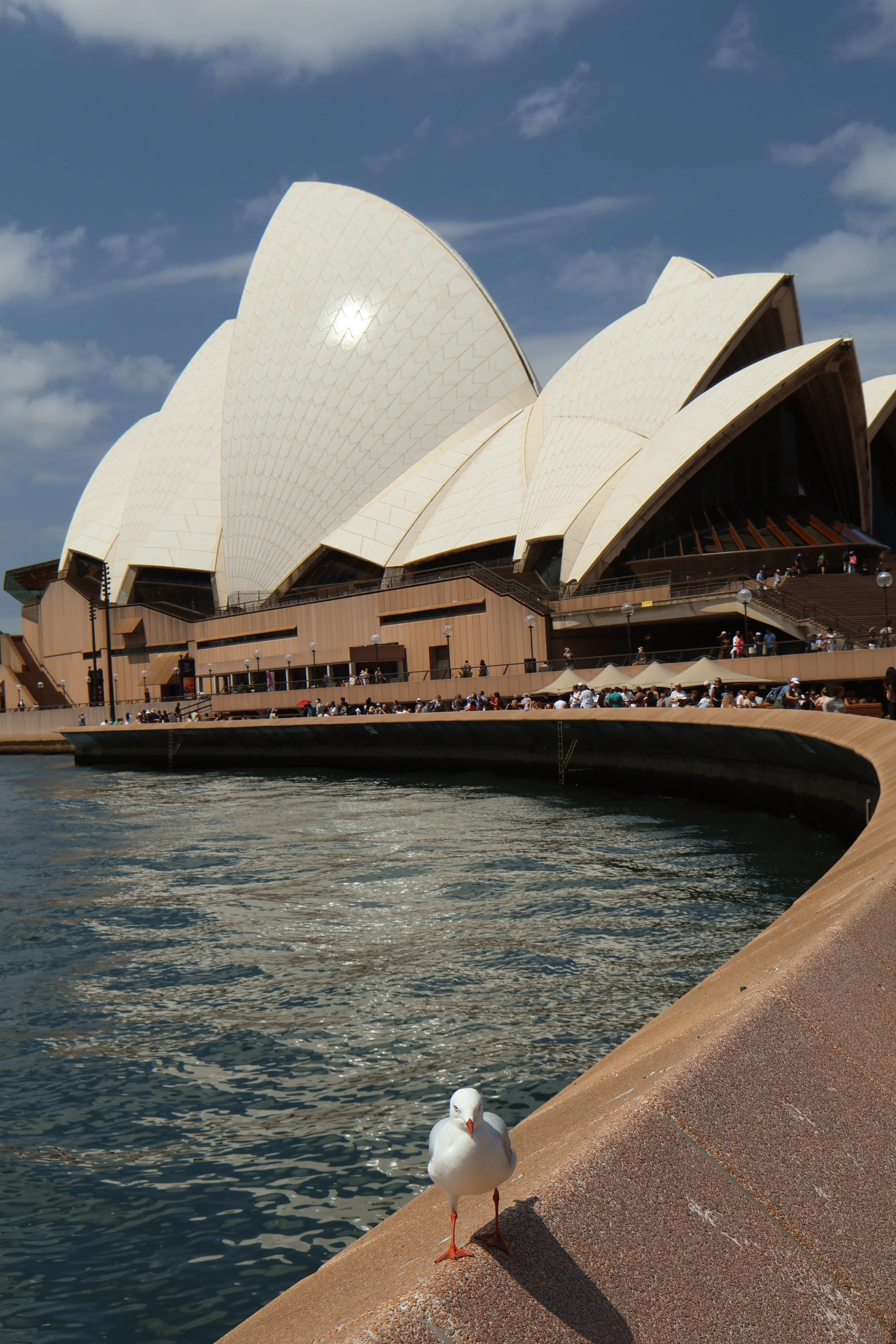
Sydney offers those picture-postcard moments of familiarity on first visit too. The Harbour Bridge, so often a backdrop to New Year’s Eve news stories, watched from afar while the Australians celebrate and you wait for the clock to crawl round to that mate’s house party back home.