
Blog
-
Recent Posts
-
Blog - Recent Posts -













Unfamiliar Familiarity
Familiar unfamiliarity is often a feature of travel.
A trip to New York turns a lifetime of television and film into reality. Manhattan becomes a walking set of “wasn’t this in…” and “isn’t that where…”. Paris and Rome carry a different kind of recognition, the inherited romanticism of the Seine or the Trevi Fountain, places we feel we already know long before we arrive.
Sydney offers those picture-postcard moments of familiarity on first visit too. The Harbour Bridge, so often a backdrop to New Year’s Eve news stories, watched from afar while the Australians celebrate and you wait for the clock to crawl round to that mate’s house party back home.
Familiar unfamiliarity is often a feature of travel.
A trip to New York turns a lifetime of television and film into reality. Manhattan becomes a walking set of “wasn’t this in…” and “isn’t that where…”. Paris and Rome carry a different kind of recognition, the inherited romanticism of the Seine or the Trevi Fountain, places we feel we already know long before we arrive.
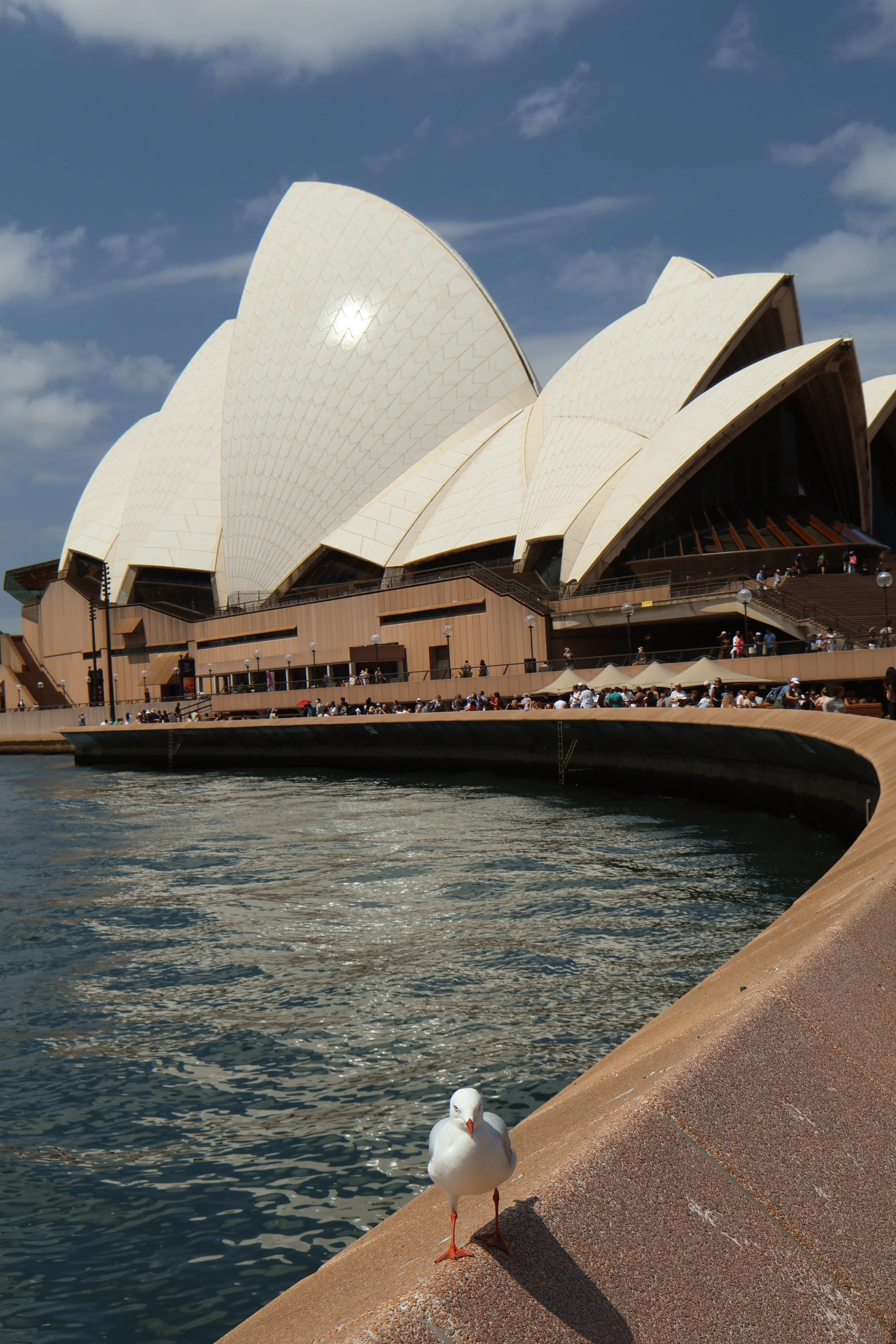
Sydney offers those picture-postcard moments of familiarity upon first visit too. The Harbour Bridge, so often a backdrop to New Year’s Eve news stories, watched from afar while the Australians celebrate and you wait for the clock to crawl round to that mate’s house party back home. The Opera House, a view seen a thousand times and in-person, as is often the case, appearing smaller than you first imagined.
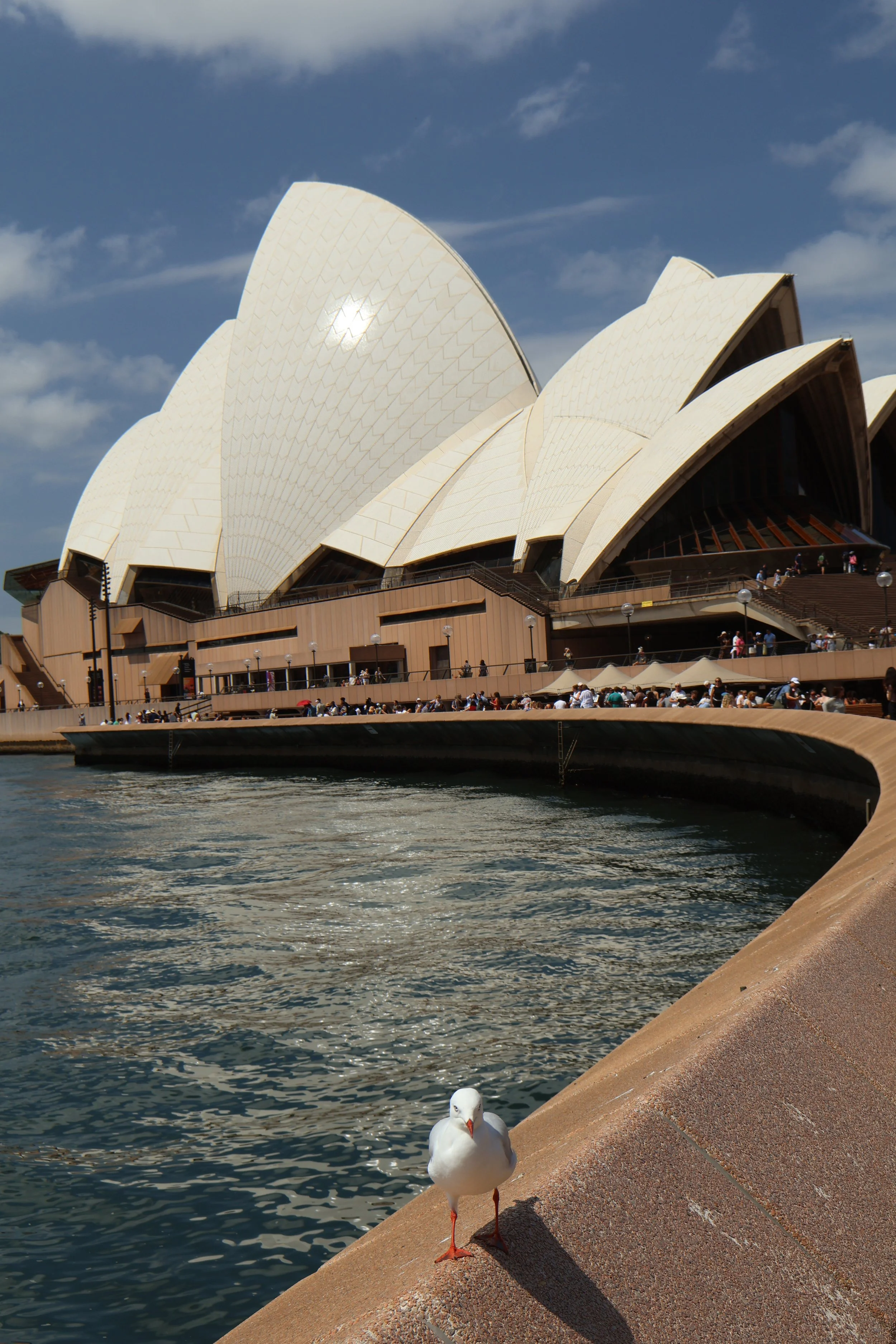
Sydney Opera House and a camera friendly seagull
But Sydney offers something else, something deeper and more disarming, particularly for a British visitor.
Not only do you hear British accents everywhere and Aussies drive on the left, but there are quieter clues too. Street names and statues regularly nod to Britain’s past. Queen Victoria in particular is everywhere, watching over parks, squares and civic buildings.
Then there are the streets themselves. Much of the architecture can feel uncannily close to home, especially on a wet day, when the light dims and the air turns heavy.
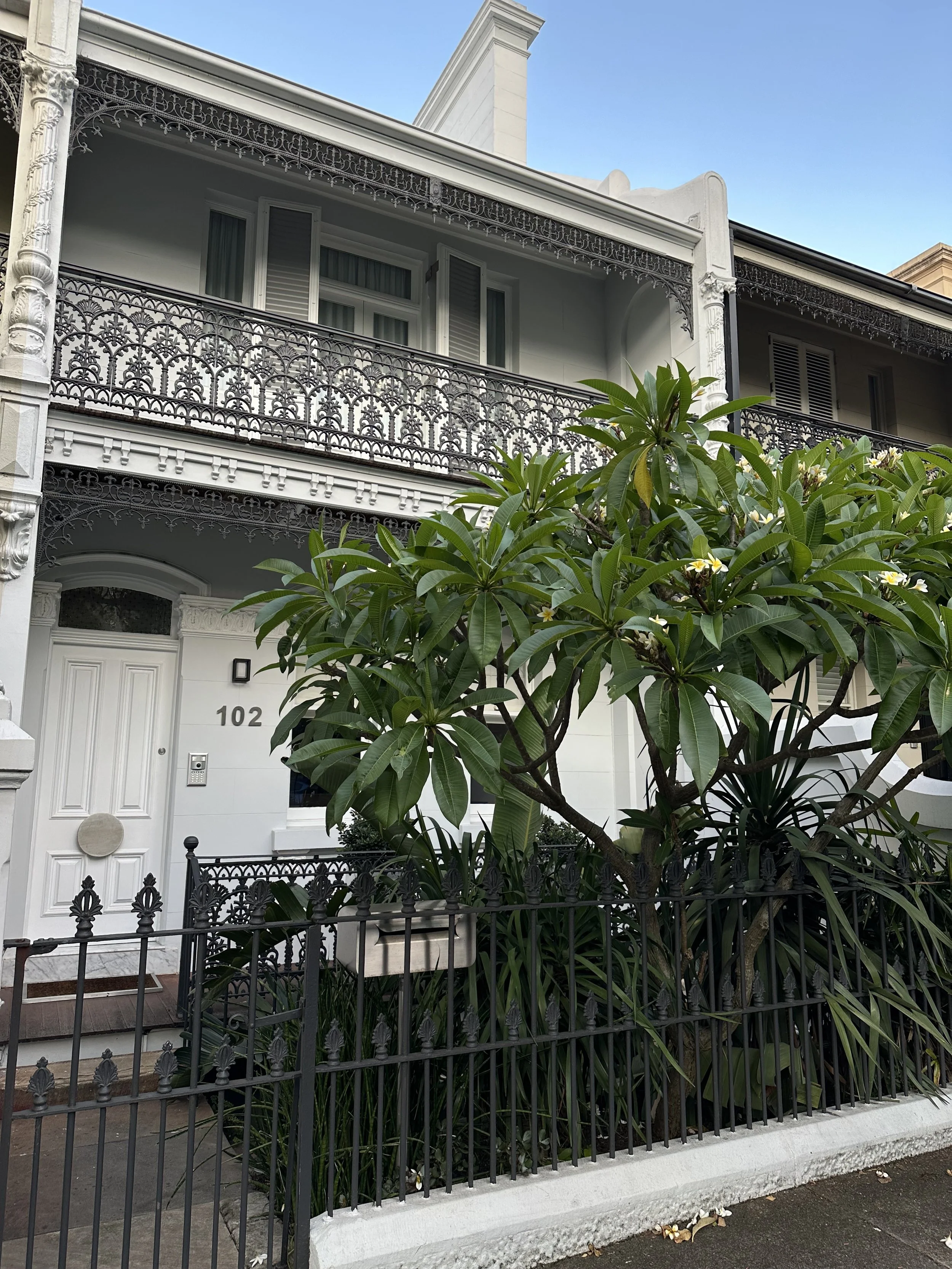
Elevated Aussie take on a terraced house
A walk along Liverpool Street (there we go again…) brings to mind Piccadilly Gardens in Manchester, a comparison that will no doubt upset several corners of the North West at once. The area around Kings Cross (oh, one more) echoes the seedier edges of Leicester Square. An evening walk after dinner in Paddington (ok, this is getting daft now…) provides an Australian take on the quaint terraces of Notting Hill.
The familiarity can become confusing, almost disorientating. Enough so that you find yourself seeking reassurance in small rituals. A pub. A pint. Australians, it turns out, do pubs exceptionally well, serving proper pints in proper glasses, often with the option of a pie, or a roast dinner alongside.
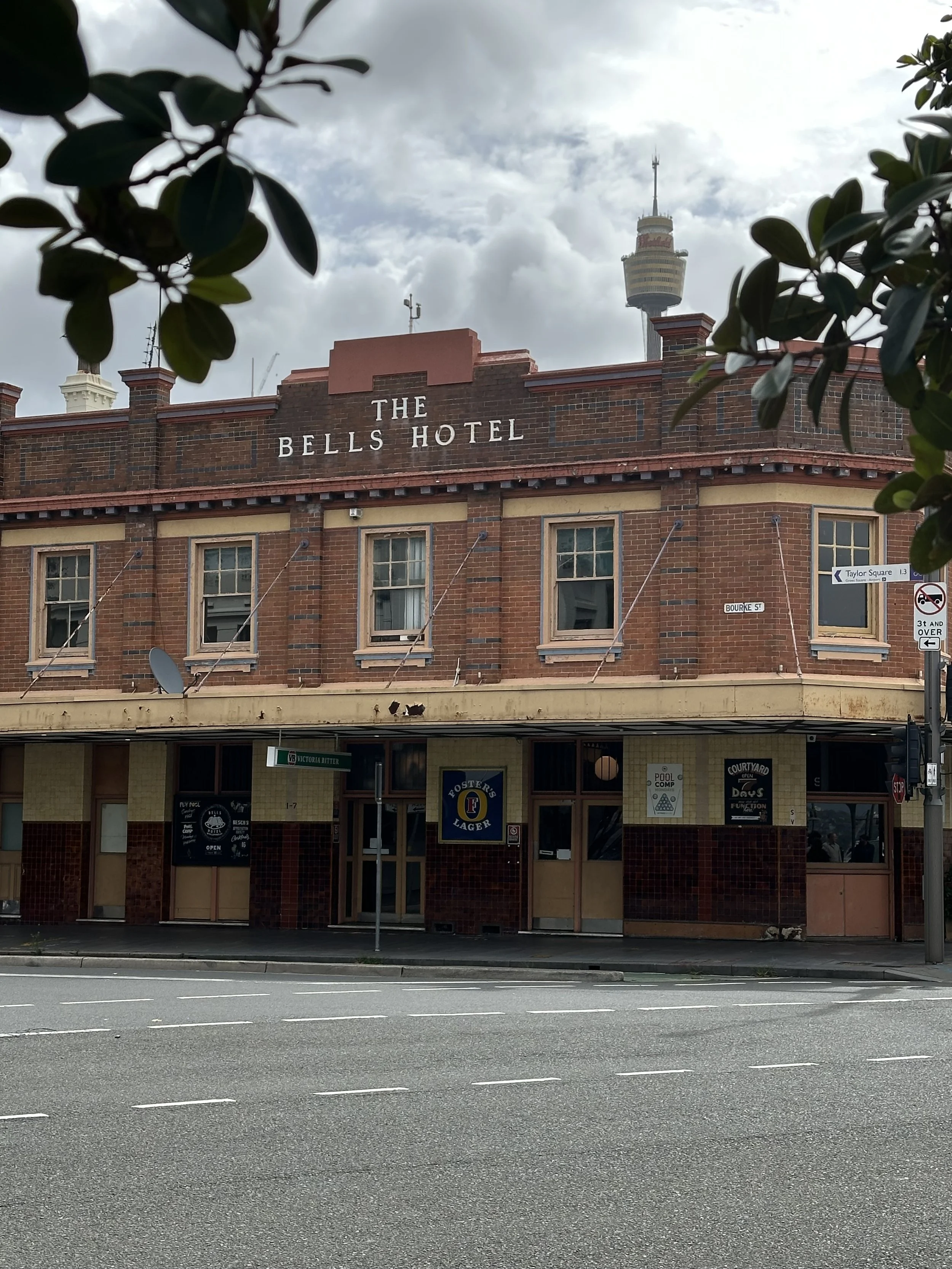
A Sydney boozer whose exterior reminded me of one you’d find at some UK seaside town.
Of course, this is not what visiting Australia is really about. But there is comfort in being on the other side of the world, in a subtropical climate and still being able to find a bacon sandwich. Familiarity, it seems, has travelled a very long way.
If you enjoyed this, you might like the below too…
Byron Bay
The sun rises above the horizon, spilling gold across the sea and over the hundreds of pilgrims gathered at the Byron lighthouse. A middle-aged Italian man begins singing the opening lines of My Girl. Not an obvious soundtrack for a warm, cloud-free January morning, but a welcome one nonetheless.
Long before the sun appears around 6am, the streets of this small but famous New South Wales beach town are already alive. People of all ages run, walk, and cycle through the quiet roads. Being outdoors and connected to nature feels like a default setting here, something that comes up again and again, and one of the reasons Australia, and Byron Bay in particular, feels so appealing.
The sun rises above the horizon, spilling gold across the sea and over the hundreds of pilgrims gathered at the Byron lighthouse. A middle-aged Italian man begins singing the opening lines of My Girl by The Temptations. Not an obvious soundtrack for a warm, cloud-free January morning, but a welcome one nonetheless.
Long before the sun appears around 6am, the streets of this small but famous New South Wales beach town are already alive. People of all ages run, walk and cycle through the quiet roads. Being outdoors and connected to nature feels like a default setting here, something that comes up again and again, and one of the reasons Australia, and Byron Bay in particular, feels so appealing.

Byron Bay lighthouse
Early morning sunlight has well-documented health benefits. It helps switch off melatonin, boosts serotonin activity, and supports mood, emotional resilience, and metabolism. I have always been more of a morning person, but time in Byron Bay deepened that connection to rising with the sun and getting outside as soon as possible.
Back home, mornings were often something to get through rather than enjoy. Coffee drank quickly, social media checked too early, the day already half spent before it had really begun. Here, mornings feel like an invitation rather than an obligation. Nothing is waiting for me except the light.
Good weather and beautiful surroundings help, of course, but a week of this routine left me feeling noticeably more energised, more positive, and sleeping better too. I notice it most in the afternoons. The familiar slump never quite arrives.
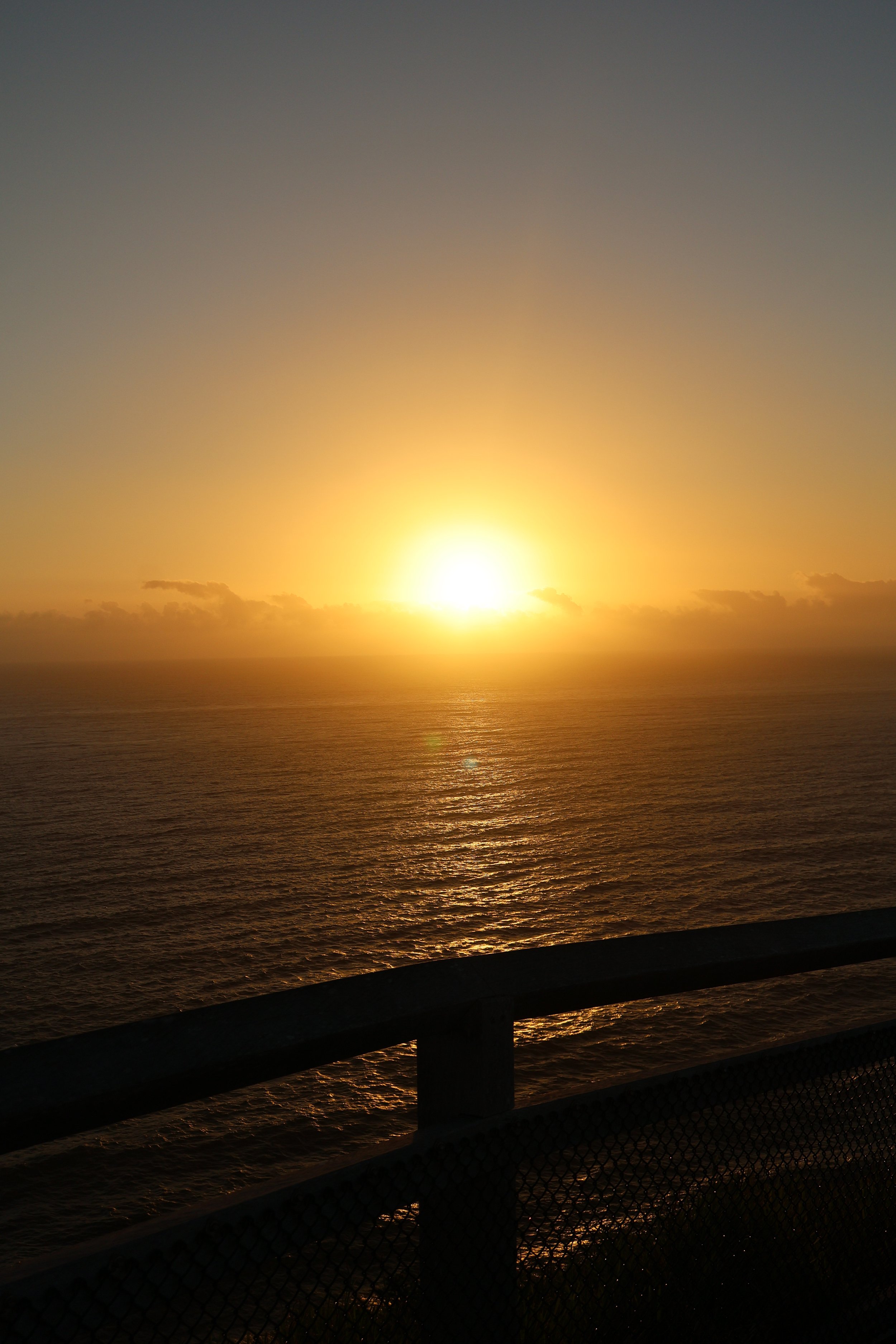
Sunrise at Byron Bay
Beyond the beach, Byron’s neighbourhoods unfold in quiet, tree-lined streets. Weatherboard houses sit lightly on their plots, all timber and verandas. Cafés and bakeries appear almost incidentally, corners rather than destinations, serving excellent coffee and improbably good pastries to people still in flip-flops or running gear. Nothing feels overdesigned. It is interesting in the way places become beautiful when they are lived in properly.
Health and wellbeing are a constant presence here. The stereotypical Australian instinct to be active is hard to ignore, especially around the beach, where it is striking how few overweight people there seem to be. Surfing, another well-worn cliché, is everywhere, but with a far broader cast than expected. Small children, older men, young women, and the archetypal surfer bro all share the same waves with little fuss or hierarchy.
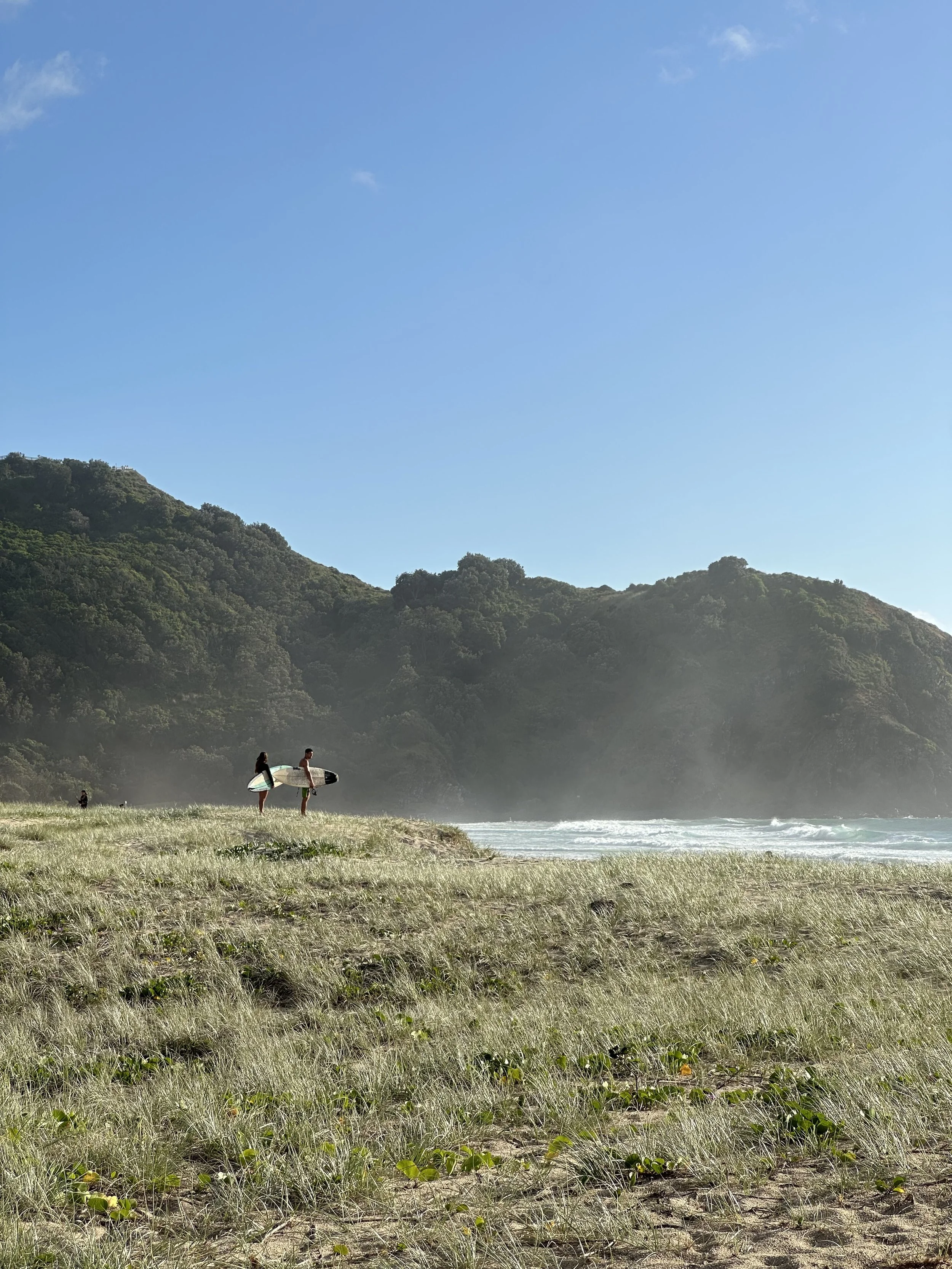
Surfers at Tallow Beach
Australia also appears to have a refreshingly relaxed relationship with class. Byron Bay is sometimes described as “posh” or “stuck up”, which likely says more about the observer than the place. Anyone familiar with the UK’s deeply ingrained class consciousness would struggle to see much of that here. Even amid the wealth of Byron, there is an air of egalitarianism that is hard to miss.
As with most great places, however, it is the natural world that truly steals the show.
Tropical birds make sounds you usually only hear in David Attenborough documentaries. Koalas sleep lazily in eucalyptus trees while tourists peer hopefully into the canopy above. The koalas barely acknowledge the attention. Curled into themselves, they sleep through the excitement, entirely uninterested in being seen.
Dolphins are visible from the coastal path, just offshore in turquoise water. Lunch at Beach is accompanied by an unexpected sighting of a pod of whales a few hundred metres out to sea, as we tuck into the ubiquitous Moreton Bay bug. No sharks during our stay, thankfully, though a tree snake, luckily non-venomous, pops out to say hello as we check in to our Airbnb.
By the time we leave Byron Bay, waking early no longer feels virtuous or productive. It simply feels normal. As though this is how days are meant to begin and life is meant to be lived.
If you enjoyed this, you might like the below too…
Rain…I don’t mind
Usually, a rainy day would put me in a bad mood. Perhaps surprising, given I come from the north of England, but it’s never something one really looks forward to, especially when travelling in the hope of sunny climes.
And yet, on this latest trip, I’ve noticed a shift in mindset. Rainy days no longer bring the same sense of mardiness they once did. Of course, they can be a welcome relief from the heat, but more importantly they feel like nature’s way of saying, have a day off.
Usually, a rainy day would put me in a bad mood. Perhaps surprising, given I come from the north of England, but it’s never something one really looks forward to, especially when travelling in the hope of sunny climes.
And yet, on this latest trip, I’ve noticed a shift in mindset. Rainy days no longer bring the same sense of mardiness they once did. Of course, they can be a welcome relief from the heat, but more importantly they feel like nature’s way of saying, have a day off.
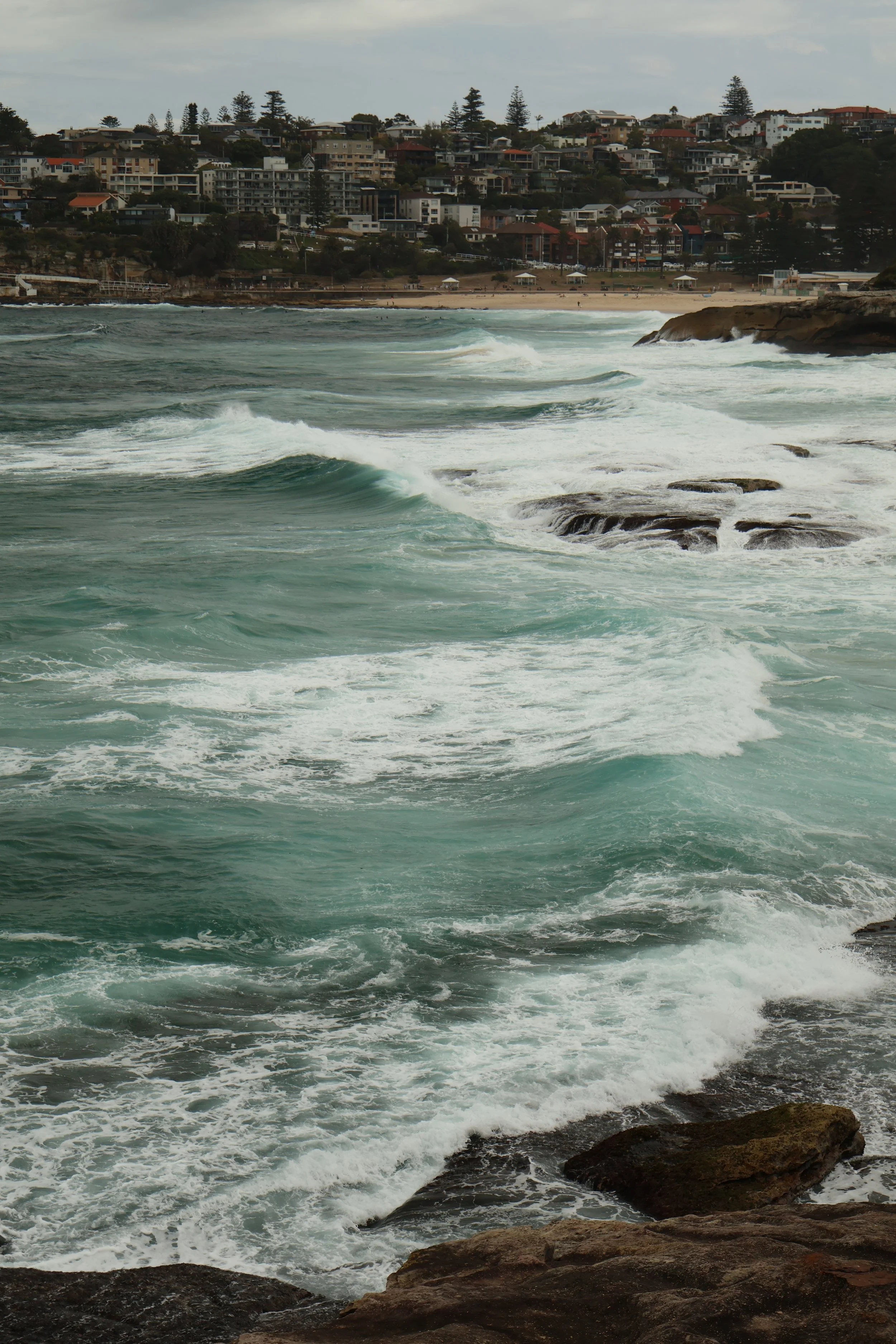
A wet day means fewer possibilities. No long sightseeing loops, no afternoon spent lying on a beach, comatose under the sun. Instead, it gently forces your hand towards the quieter things. The life admin. The laundry. Sorting through the ridiculous number of photographs you’ve taken. Or finally sitting down and finding your rhythm with writing again.
Like life itself, even the most idyllic stretches have a gloomy day now and again. And while it’s never wise to ignore how we feel, rain has become a small reminder that time still passes, plans still shift, and there are often quiet positives to be found in moments that initially feel like a disappointment.
Sometimes, all you need is permission to slow down.
If you enjoyed this, you might like the below too…
It’s hot and humid and we are stood uneasily inside a badly lit shop. Sharp knives are carelessly left on any flat surface that can be found. A large spider crawls up a wooden beam directly behind my wife and settles, part-camouflaged beneath a heap of pineapples. There’s a bucket of discarded leaves, skins and chopped ends of fruit rotting away as flies circle its circumference.
Welcome to the fruit stall.
Since travelling we’ve become attuned to what’s in season and what each place does best, and have subsequently spiralled into some kind of unnamed fruit addiction. One that now quietly drives the intent of our days.