
Blog
-
Recent Posts
-
Blog - Recent Posts -



Trattoria Aldo
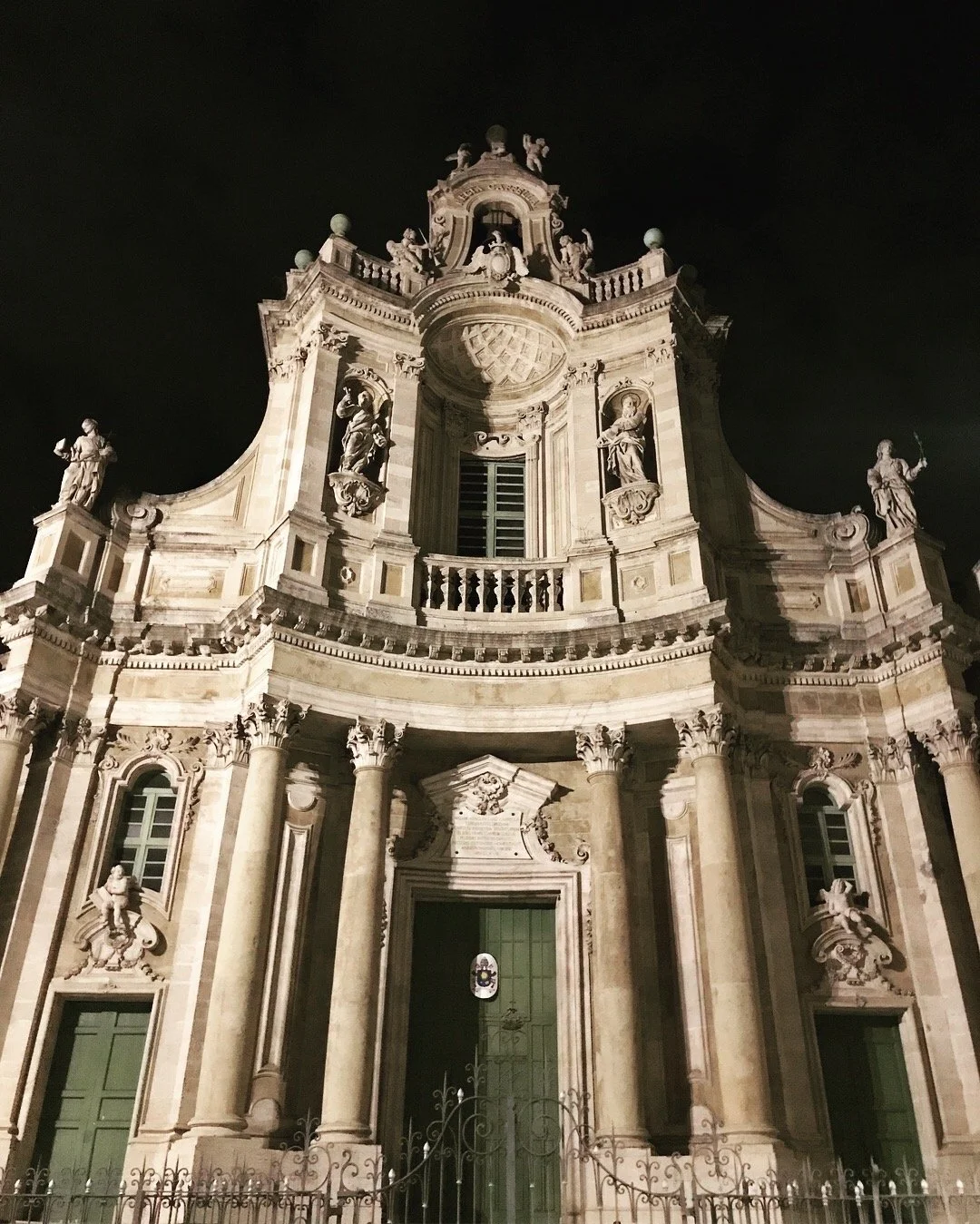
We take a left from the busy streets of the market. Catania is as edgy as I recall - the dark grey buildings, narrow streets and looming Mount Etna giving it a totally different feel to the baroque hillside towns of the Val Di Noto, where we have just come from.
With the turn we enter a steer that is strewn with half empty boxes and litter from the market stalls and one which is far quieter, almost devoid of people. We quickly approach a sign saying ‘Aldo, piano no.1’ with an arrow pointing up a suspect looking staircase.
We take a left from the busy streets of the market. Catania is as edgy as I recall - the dark grey buildings, narrow streets and looming Mount Etna giving it a totally different feel to the baroque hillside towns of the Val Di Noto, where we have just come from.
With a turn we enter a street that is strewn with half empty boxes and litter from the market stalls and one which is far quieter, almost devoid of people. We quickly approach a sign saying ‘Aldo, piano no.1’ with an arrow pointing up a suspect looking staircase.
We head up and I try my best to look confident and unfazed at stepping into the unknown, all the while wondering if this is going to be worth the impeccable tip off I’ve been given to visit here.
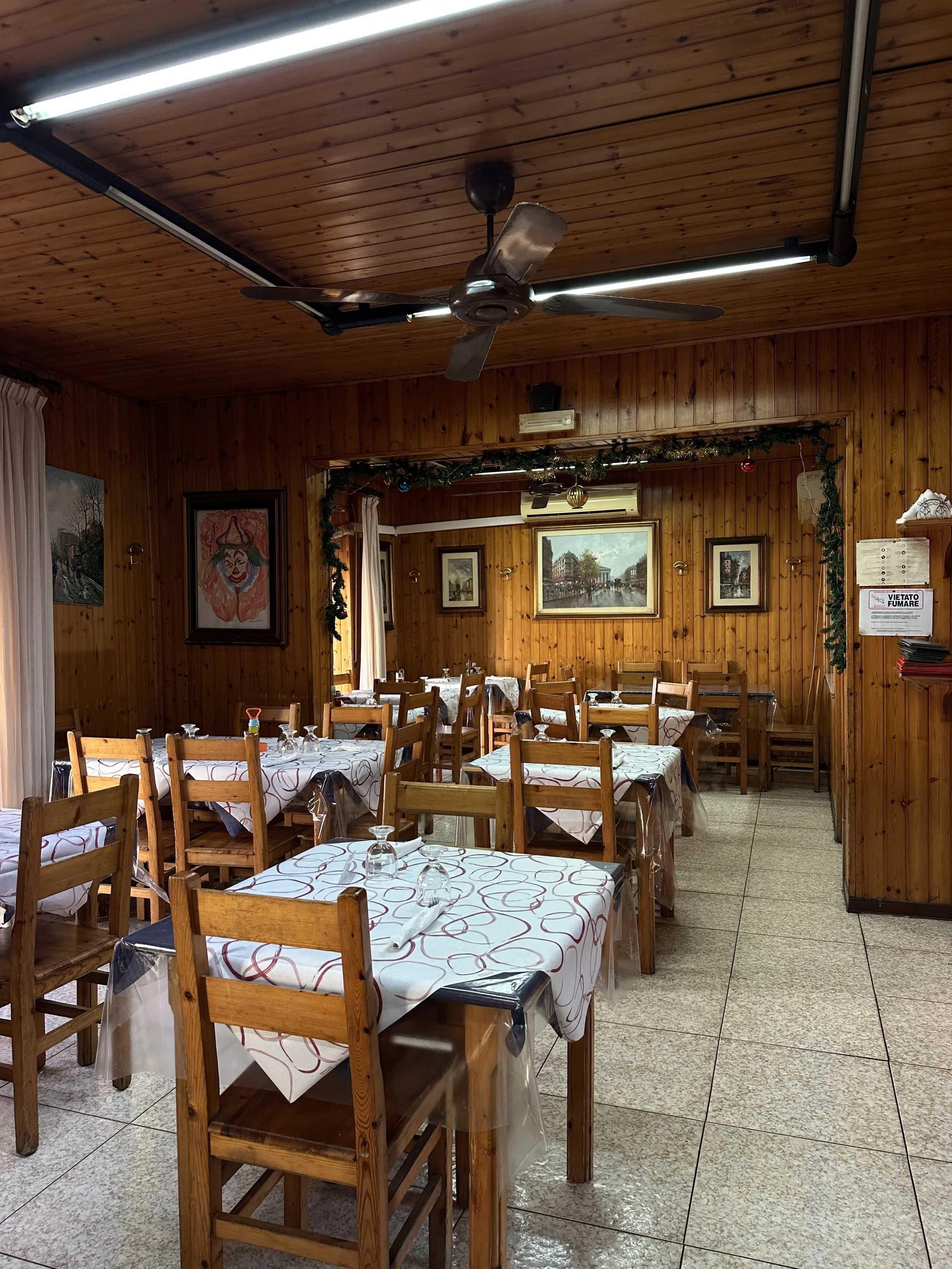
Simplicity is king at Trattoria Aldo
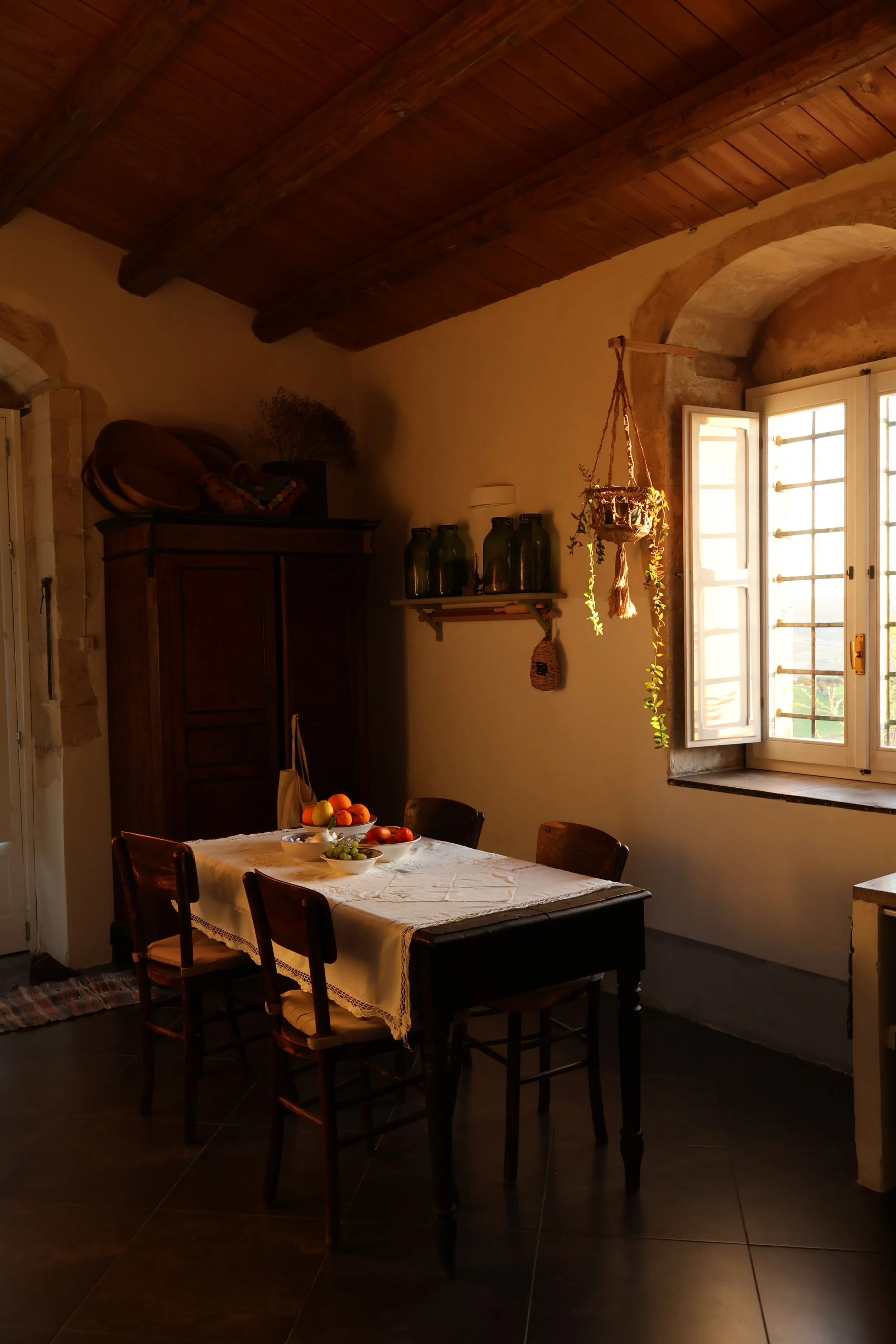
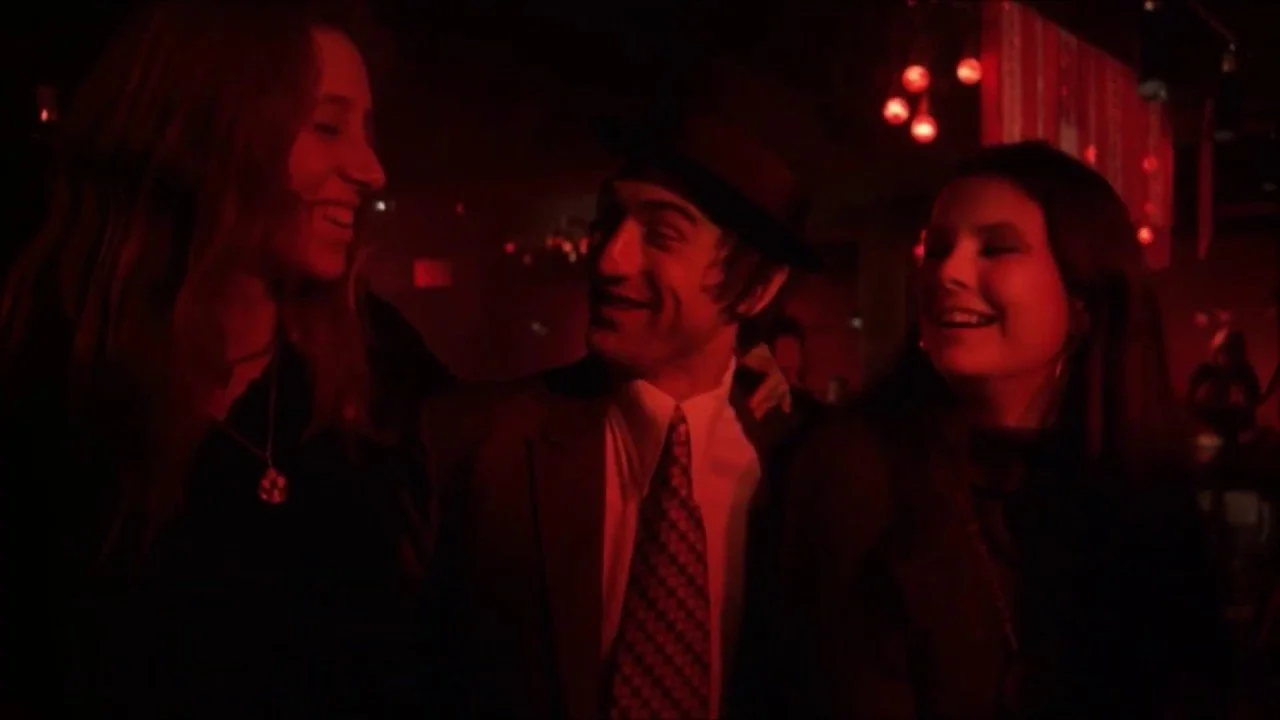
Through some glass doors at the top of the stairwell and we are into a wood-panelled heaven (always a hallmark of a quality traditional eatery, in my experience), adorned with a mix of paintings featuring early 20th century Paris and in a shift in artistic taste, clowns. A smattering of Christmas lights flash to a sombre rhythm in the near-empty dining room. We are early to lunch by Italian standards and as such, pretty much have the place to ourselves.
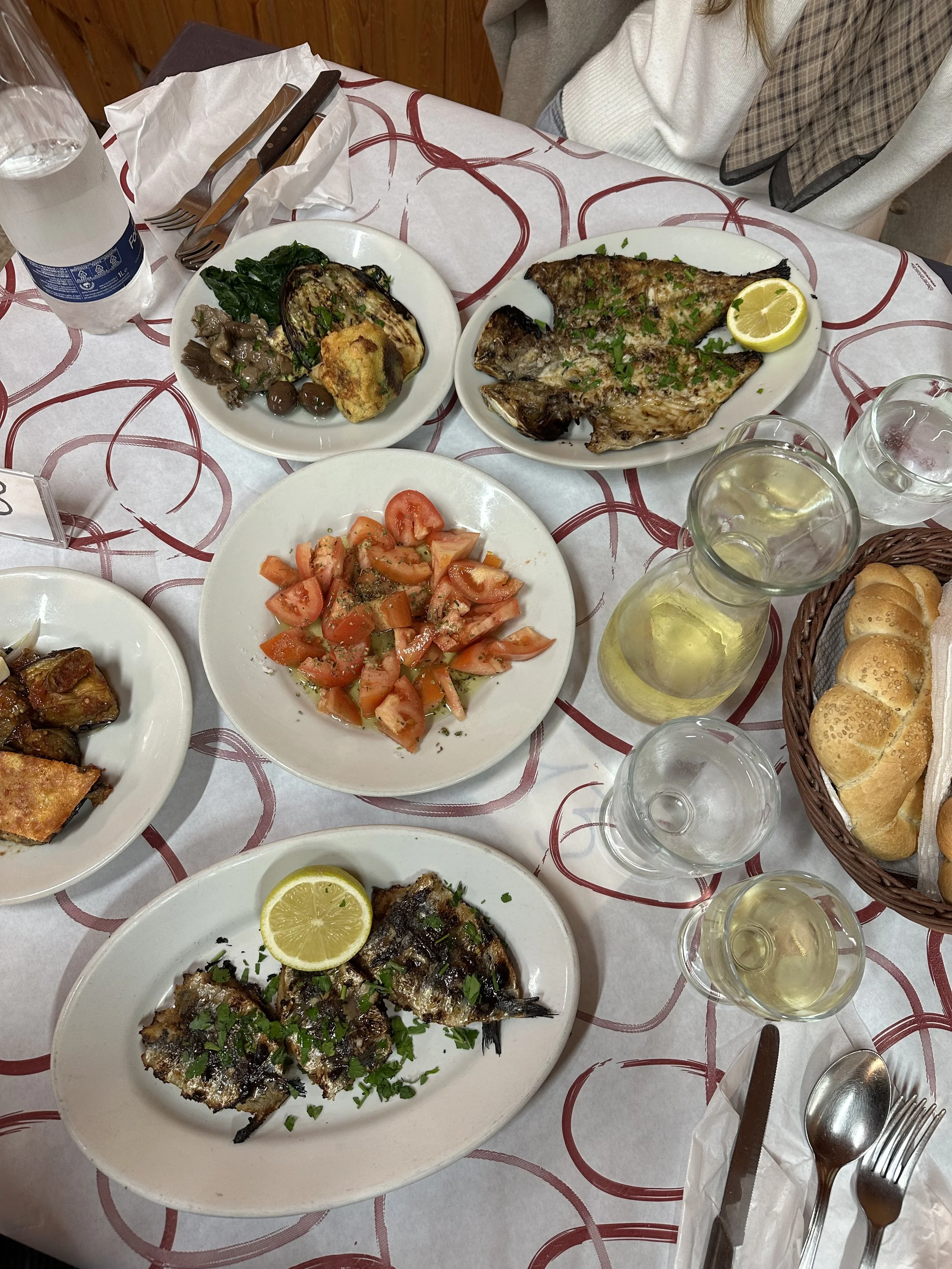
We are seated at a simple table with a paper table cloth and passed a menu with a mix of typed and handwritten items. The service is prompt and we opt for the becaffico (meaning little fig-pecking bird) - grilled sardines stuffed with breadcrumbs, herbs, raisins and pine nuts. Orata (bream), tomato salad and the antipasto option, which at Aldo is a buffet option containing an excellent range of vegetable dishes such as grilled courgettes, caponata, fritatta, spinach, wild mushrooms and fried cauliflower, to name but a few.
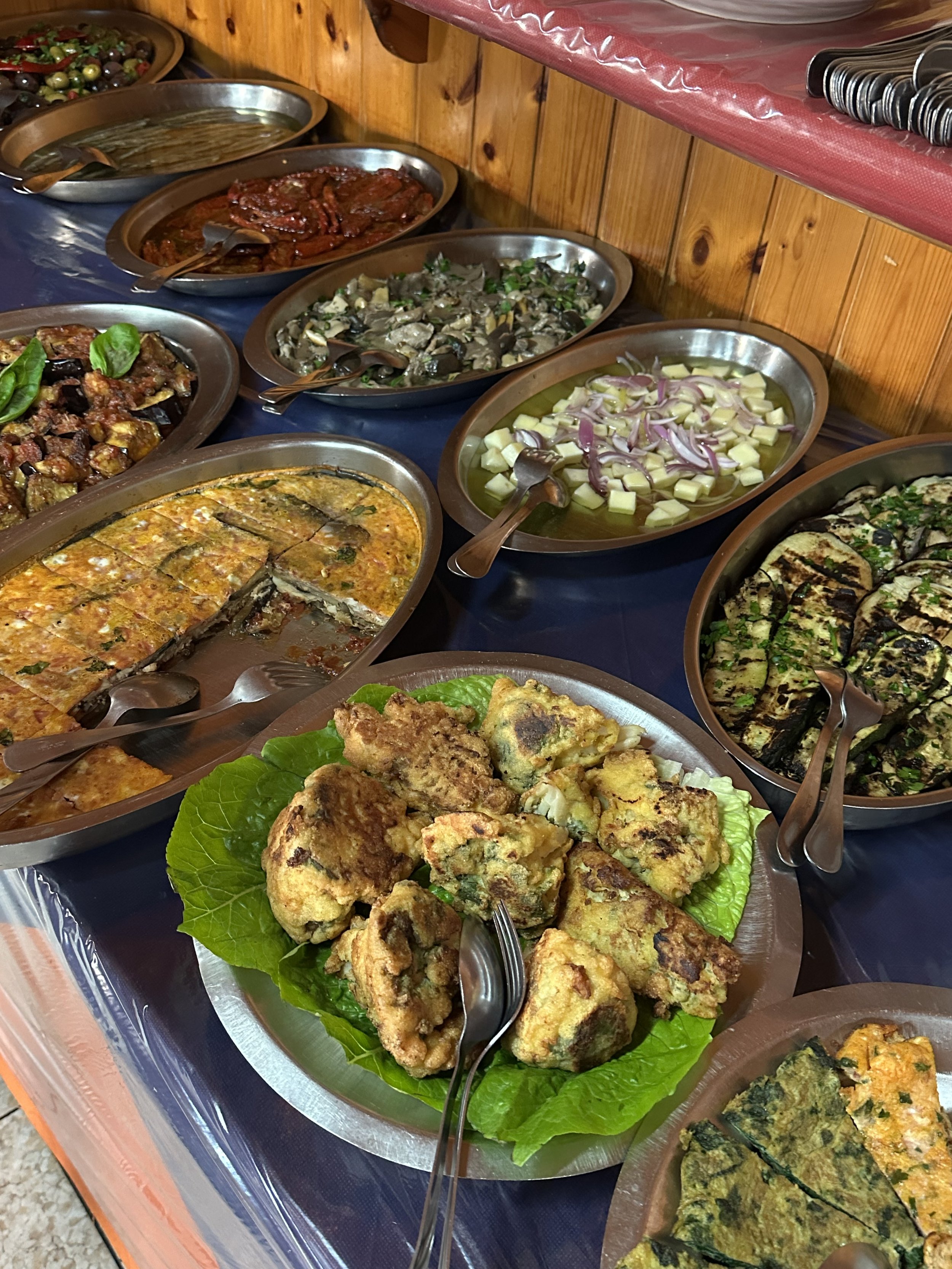
Antipasti selection - a real bargain and a great way to eat
However, the best is yet to come as when we ask for a glass of wine each, the waiter tells us that we “might as well” order the half-litre carafe of wine as it’s only €4 instead of the €5 for two glasses. Not wanting to let stereotypes of tight fisted Yorkshiremen down, I eagerly accept. We chat about how ridiculously well-priced it is, for what turns out to be better than many white wines you’d pay at least twice as much for, by the glass, in a bar at home.
Our food arrives and we select our antipasti from the communal buffet table and dig in. Everything is so simply cooked, but to a very good level of quality. There’s no pretension here. The food does all of the talking and as we eat, we discuss that these types of places are far more enjoyable to dine in than many restaurants with a higher price tag, for a lower standard.
Our meal, including the excellent beccafico
It felt so connecting eating in a trattoria such as this, whose only opening hours are 7 am to 4 pm - a reflection of its position by the market and its main clientele. These are exactly the types of places I want to eat when travelling, as they’re unashamedly local, have tasty dishes at a very reasonable price and have the kind of aesthetic that’s now a dying breed.
Here’s to places like Trattoria Aldo continuing for many more years yet!
If you enjoyed this, you might like the below too…
The Long Way to Scaccia
Some foods find you. Others you have to hunt for. Scaccia belonged firmly in the second camp.
I first came across it years ago, in a newspaper article I read. It mentioned this strange folded bread from the Ragusa area of Sicily; part pizza, part focaccia, part something entirely its own. Nobody I knew had ever heard of it. Even in the UK, where Italian food is popular, scaccia might as well not exist.
Some foods find you. Others you have to hunt for. Scaccia belonged firmly in the second camp.
I first came across it years ago, in a newspaper article I read. It mentioned this strange folded bread from the Ragusa area of Sicily; part pizza, part focaccia, part something entirely its own. Nobody I knew had ever heard of it. Even in the UK, where Italian food is popular, scaccia might as well not exist.
That only made it more intriguing. When a dish is that local, that unknown, my curiosity goes into overdrive. So I did what any food-obsessive would do: fell down a rabbit hole of half-translated recipes, regional blog posts and fragmentary instructions. I ended up stitching together my own version (recipe below), equal parts instinct and detective work. It tasted good, but I always wondered how close I’d come to the real thing.
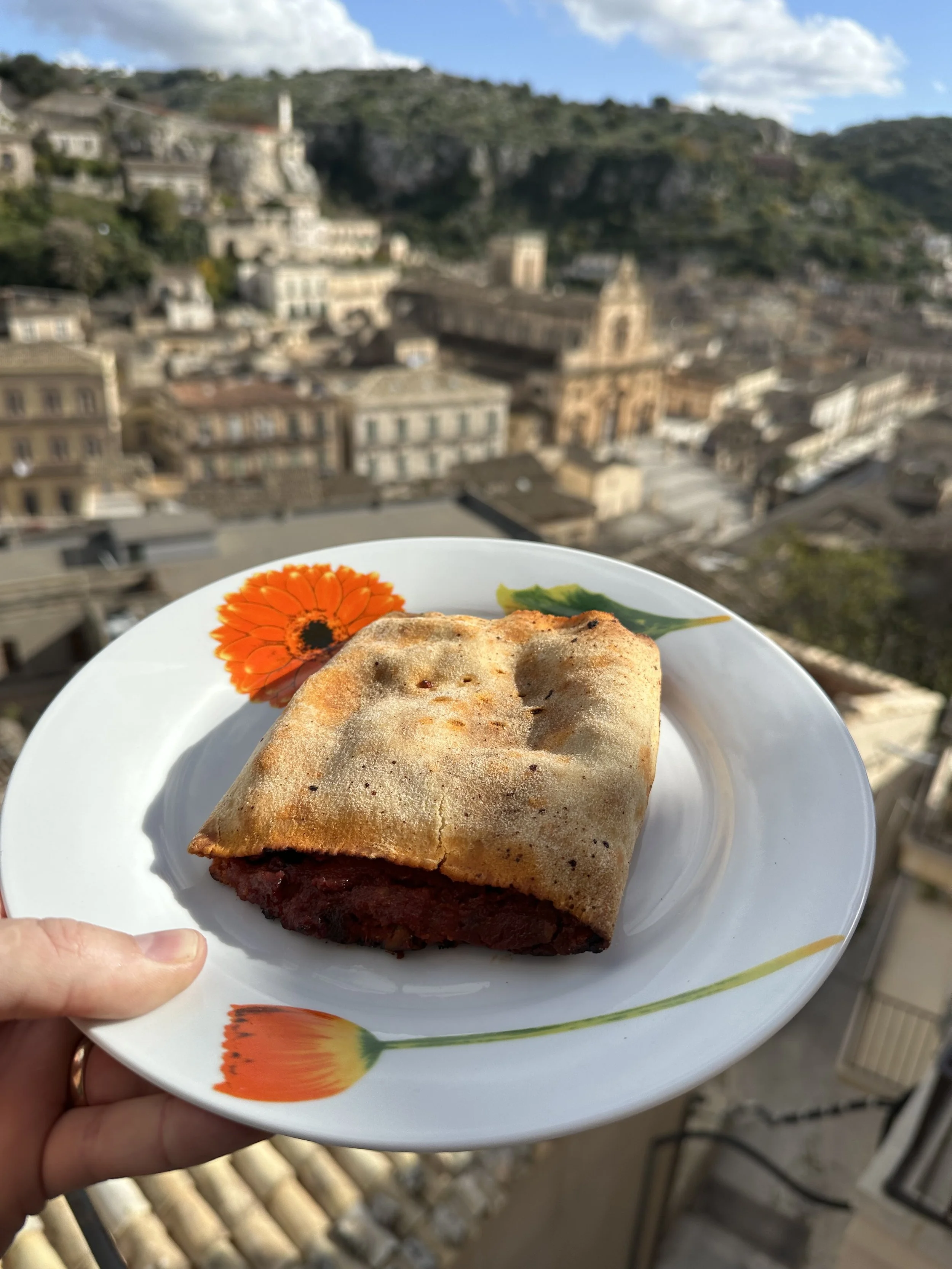
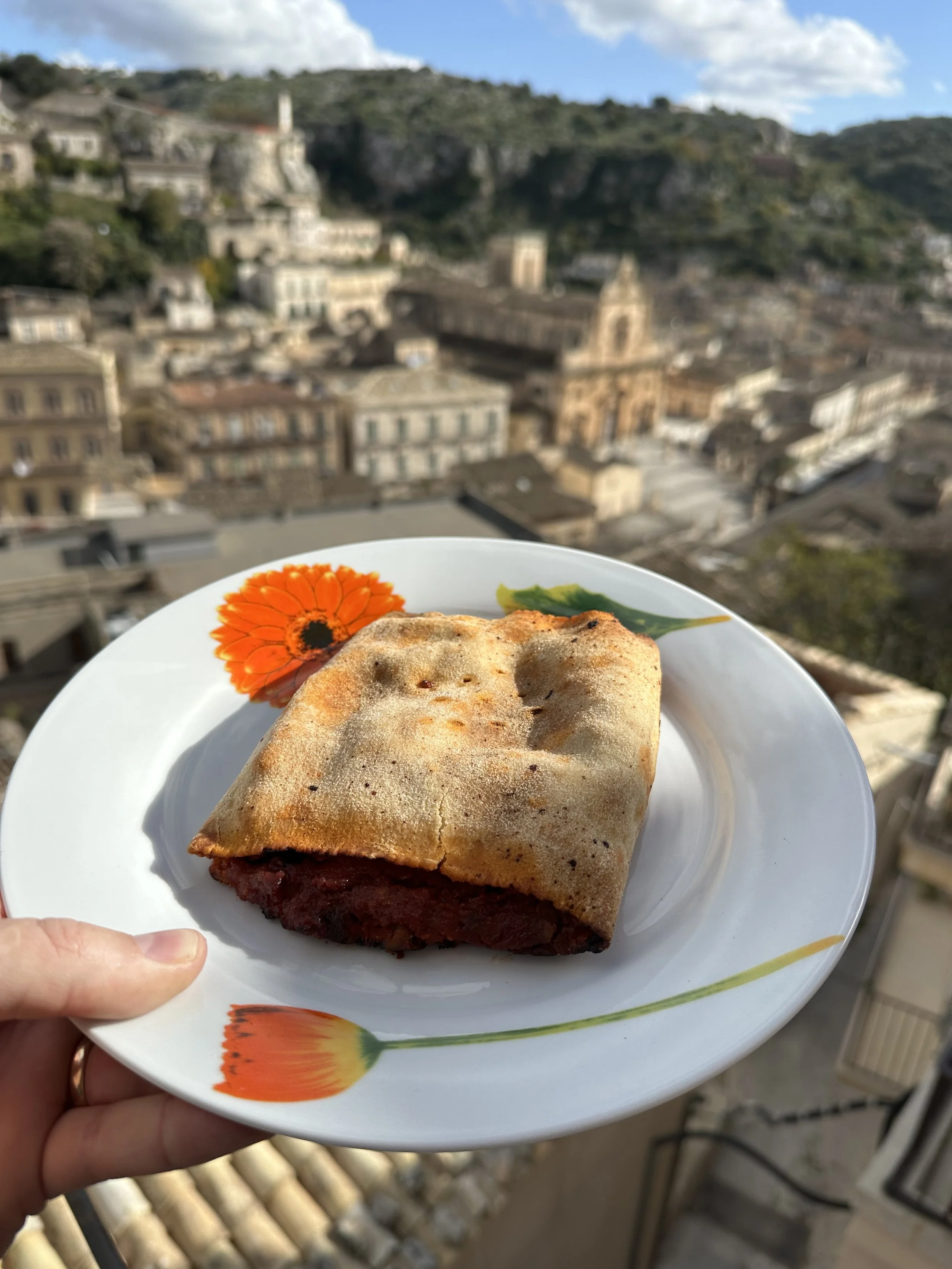
Scacce Modicane - the slimmer, lighter sibling to that of Ragusa
And now here I am, in Ragusa, finally meeting the dish on its own turf. No substitutions, no approximations, no British flour pretending to be Sicilian. Just a bakery counter, a sheet of dough rolled out thin and fillings folded in with the kind of muscle memory that comes from doing something your whole life. Holding a slice warm from the oven feels like closing the loop on a quiet obsession that’s followed me for five years.
What’s struck me since arriving in this part of Sicily however, is how scaccia isn’t an outlier. It belongs to a whole landscape of baked goods that are so local they sometimes don’t even travel to the next town. In Modica you’ll see scacce Modicane (note the difference in spelling), which is a thinner layered version and less rich than that of Ragusa. Impanate (or ‘mpanette depending which town you’re in), resembling a cross between an empanada and a Cornish pasty; filled with cauliflower, brocolli or aubergine. Ten minutes over a hill and the display changes entirely: different shapes, different fillings, different vocabulary.
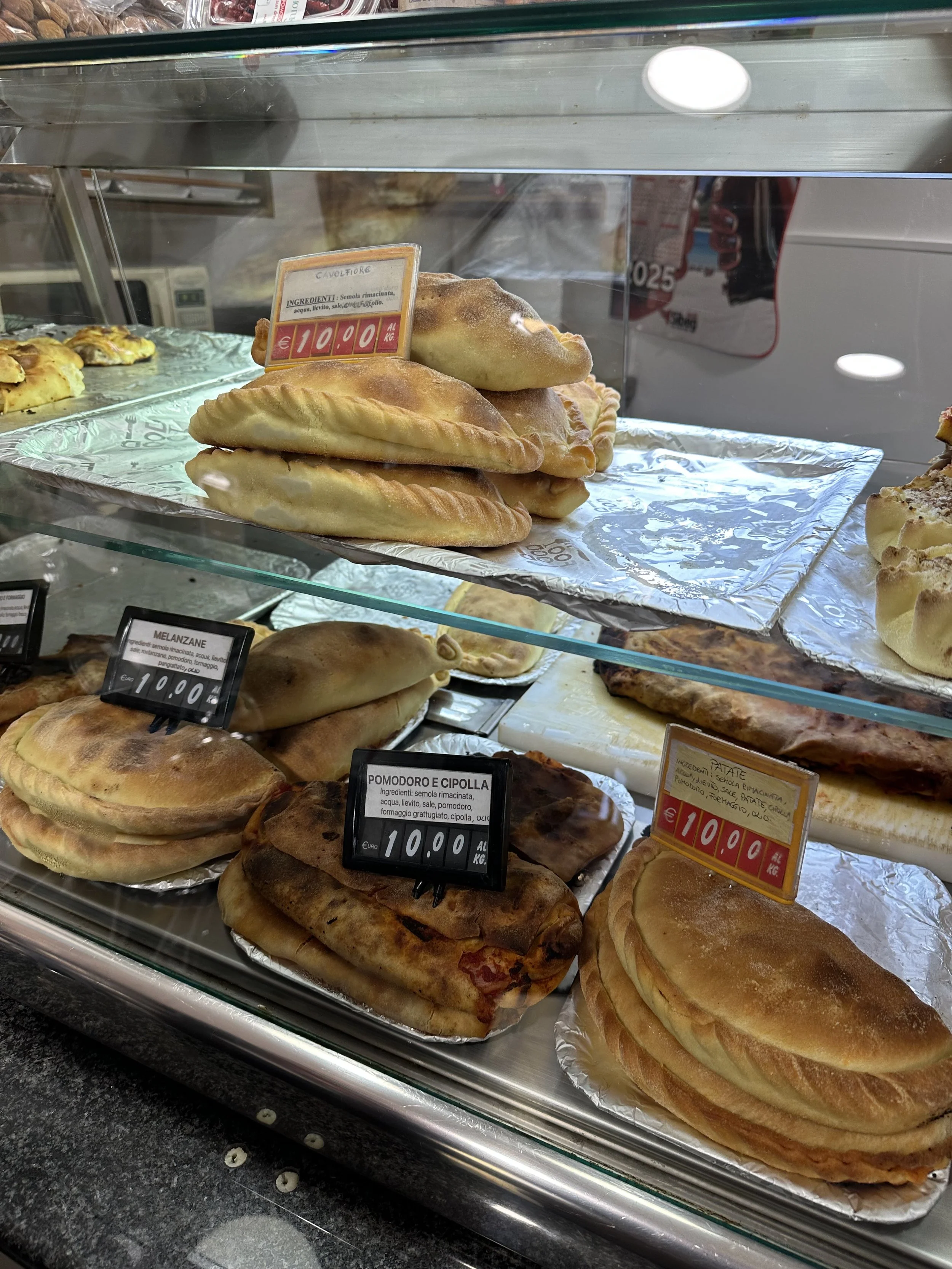
A selection of baked goods at Panificio Giummarra, Ragusa
It’s one of the clearest reminders of how hyper-local Italian food really is. In the UK we often talk about “Italian cuisine” as if it’s one unified thing, but here the borders are drawn at the nearest ridge. A bakery in Ragusa folds its dough differently to one in Modica. A tomato filling that’s standard in one town is unthinkable in another. Even the way loaves are knotted or scored seems inherited, more family tradition than written recipe. That’s the charm: food that has stayed local, specific and stubbornly itself.
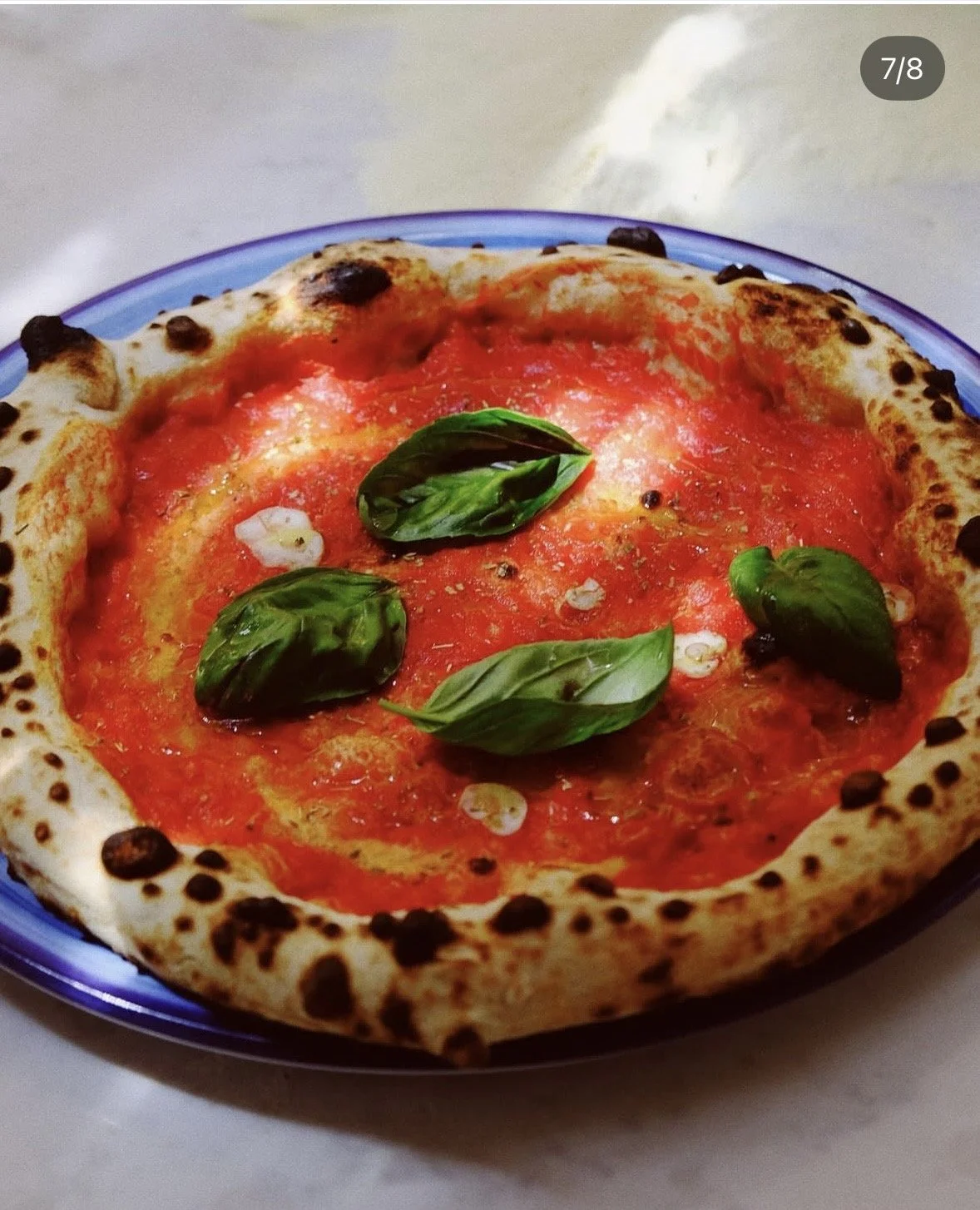
And it’s not just the bakeries. Even pizza rewrites itself here. At Daniele Baglieri’s pizzeria in Modica, I watched every assumption I had about what pizza “should” be fall away. Lighter bases, different techniques and dough fermentation, toppings that respect the land rather than trends. It’s a reminder that just when you think you know Italian food, something new taps you on the shoulder. That’s the thrill of it, in a world where almost everything is available everywhere and known, there are still pockets of Italy producing things so local, so particular, that they feel like discoveries.
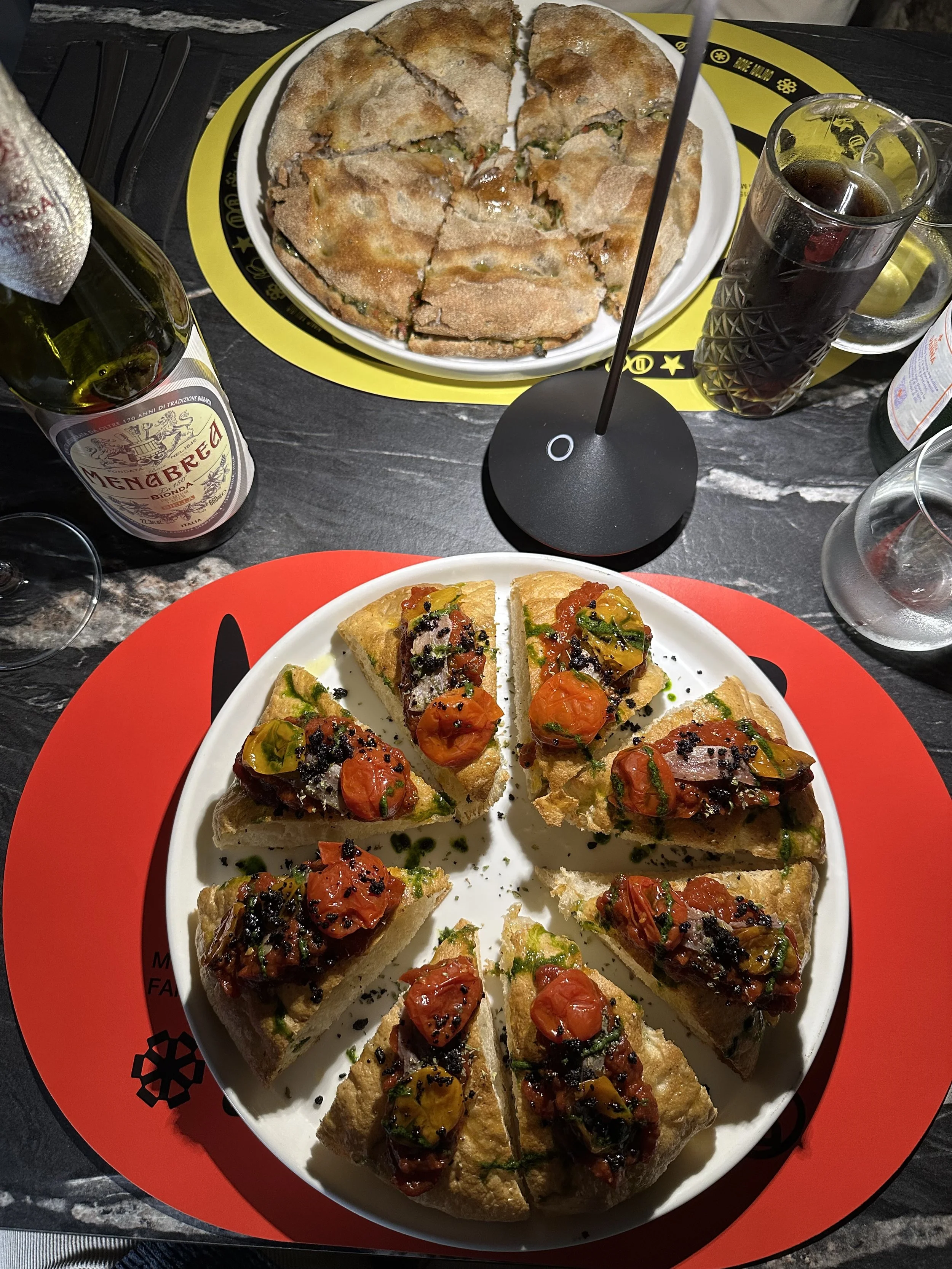
Outstanding, fresh and inventive pizze (Padellino & Pensa Tonda Romana) at Daniel Baglieri Pizzeria, Modica. A must try!
Scaccia sits right at the heart of that. A dish that’s pretty unknown outside of this corner of Sicily, somehow finding me anyway and now finally, letting me come to it and in my quest, unearthing a whole other plethora of wonderful baked goods to taste and try and one day recreate myself.
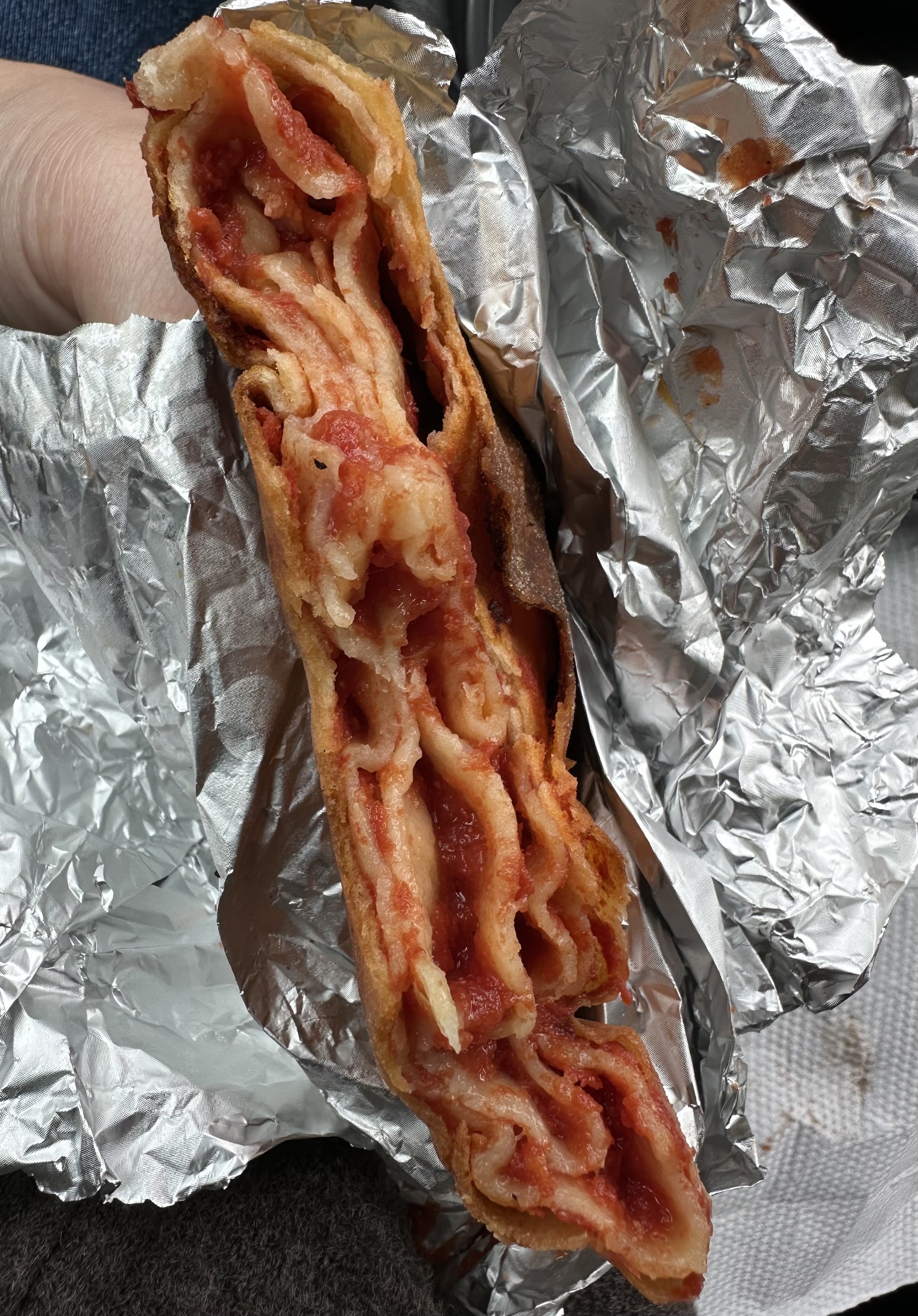
The delicious cross-section of a Scaccia Ragusana
My Scaccia Ragusana Recipe
335g semolina flour
160ml lukewarm water
1 & 1/4 tsp sugar
1/4 tsp yeast
2 tbsp extra virgin olive oil
1/2 tsp sea salt
Flour for dusting
Mix the yeast, water and sugar and leave to sit for ten minutes. Then mix in the olive oil.
Separately, combine the flour and salt in a bowl. Add the wet ingredients and bring together. Knead for 5-8 minutes, until smooth. Add more water if the mix feels too dry.
Add the dough to a lightly oiled bowl and cover with cling film. Let it rise for approximately 2 hours, or until doubled in size.
Meanwhile make a basic tomato sauce and slice cheese/any other fillings (aubergine is popular in Sicily).
Heat the oven to full and roll out dough as thin as possible.
Fold and fill the dough using this video as a guide for the technique - https://youtu.be/CjJiVchocxA. Tuck underneath at the end to stop leakage.
Bake for around 50-60 mins at 200 degrees.
Let the scaccia rest for at least 5 minutes before cutting. Enjoy!
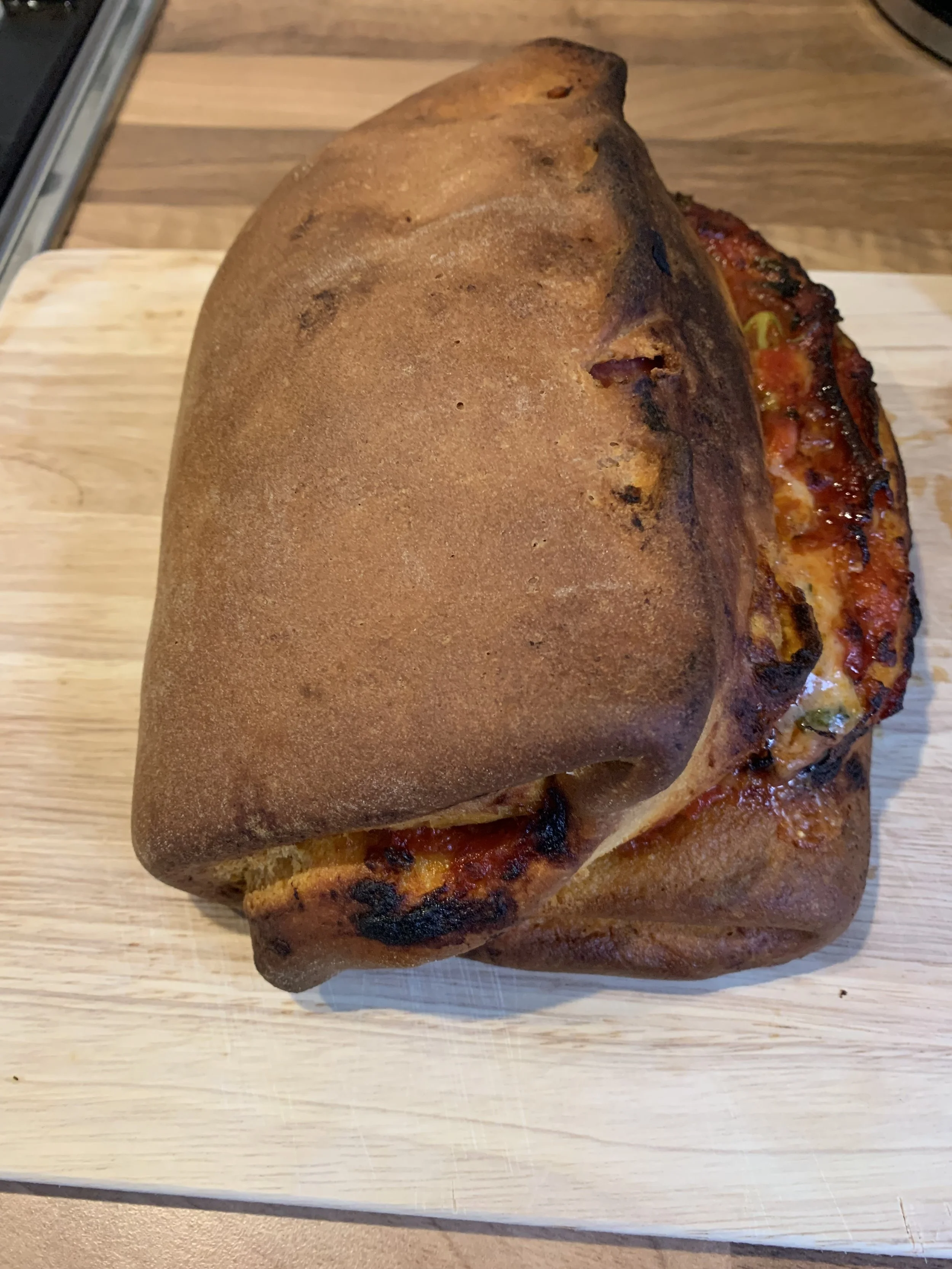
One of my prior attempts at Scaccia Ragusana - straight from the oven
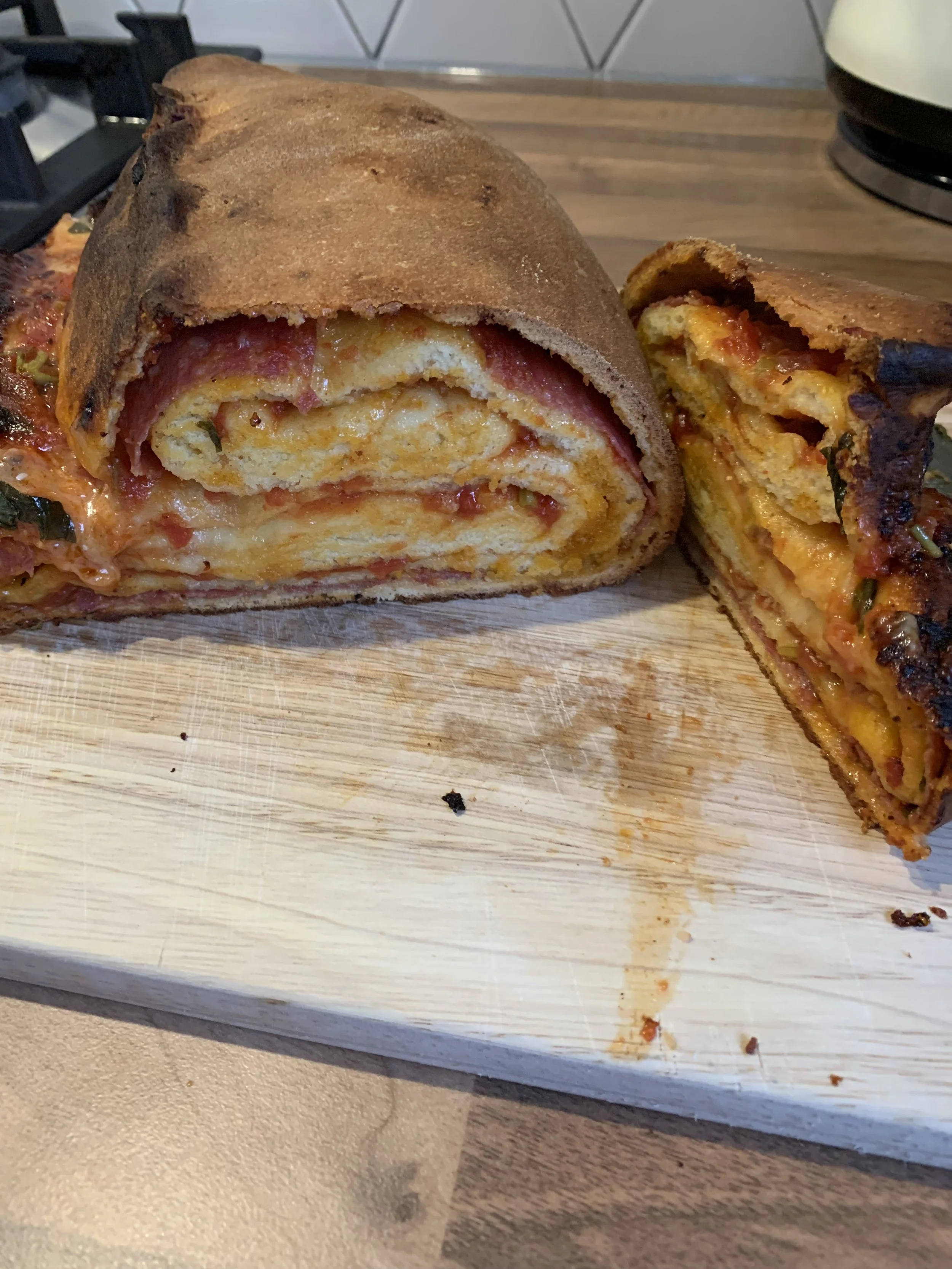
A cross-section of my scaccia. Having now tried the real deal, I can’t wait to get home to tweak and develop my technique further.
Eerie Erice
We’re driving through the outskirts of Trapani. A rain shower passes over as quickly as it came, a common theme for this part of the north western Sicilian coastline in late November. The windscreen wipers begin to slow and the sun shines bright, glistening off the road.
Monte Erice ahead of us, still shrouded in a heavy, thick cloud; brooding above.
We’re driving through the outskirts of Trapani. A rain shower passes over as quickly as it came, a common theme for this part of the north western Sicilian coastline in late November. The windscreen wipers begin to slow and the sun shines bright, glistening off the road.
Monte Erice ahead of us, still shrouded in a heavy, thick cloud; brooding above.
We begin the never-ending climbs of twists and turns up the mountain and I’m thankful for having hired a car with an automatic gearbox. We pass incredibly brave (or daft) cyclists making their way up 2,461 ft climb. The sun is glistening down on the city of Trapani, below and we have a clear view across to the Egadi Islands.
We begin to reach the summit and within a turn of a hairpin bend, the infamous cape of fog and mist that envelopes Erice in morning hits us. I make a bad quip about Erice being eerie as I pull into a car parking space by Porta Trapani that seems to have been marked out using a Smart Car as the optimal size of vehicle for its use.
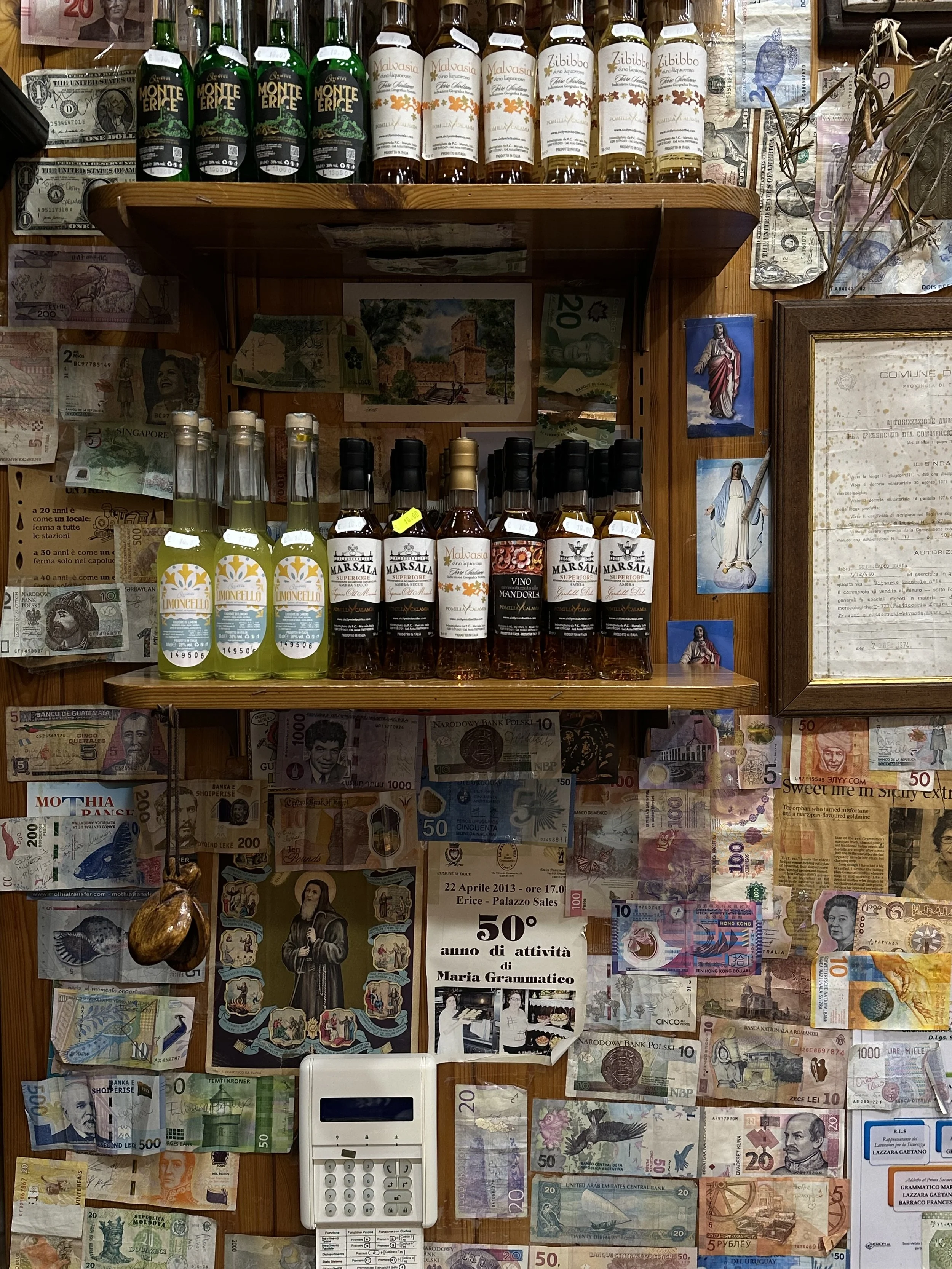
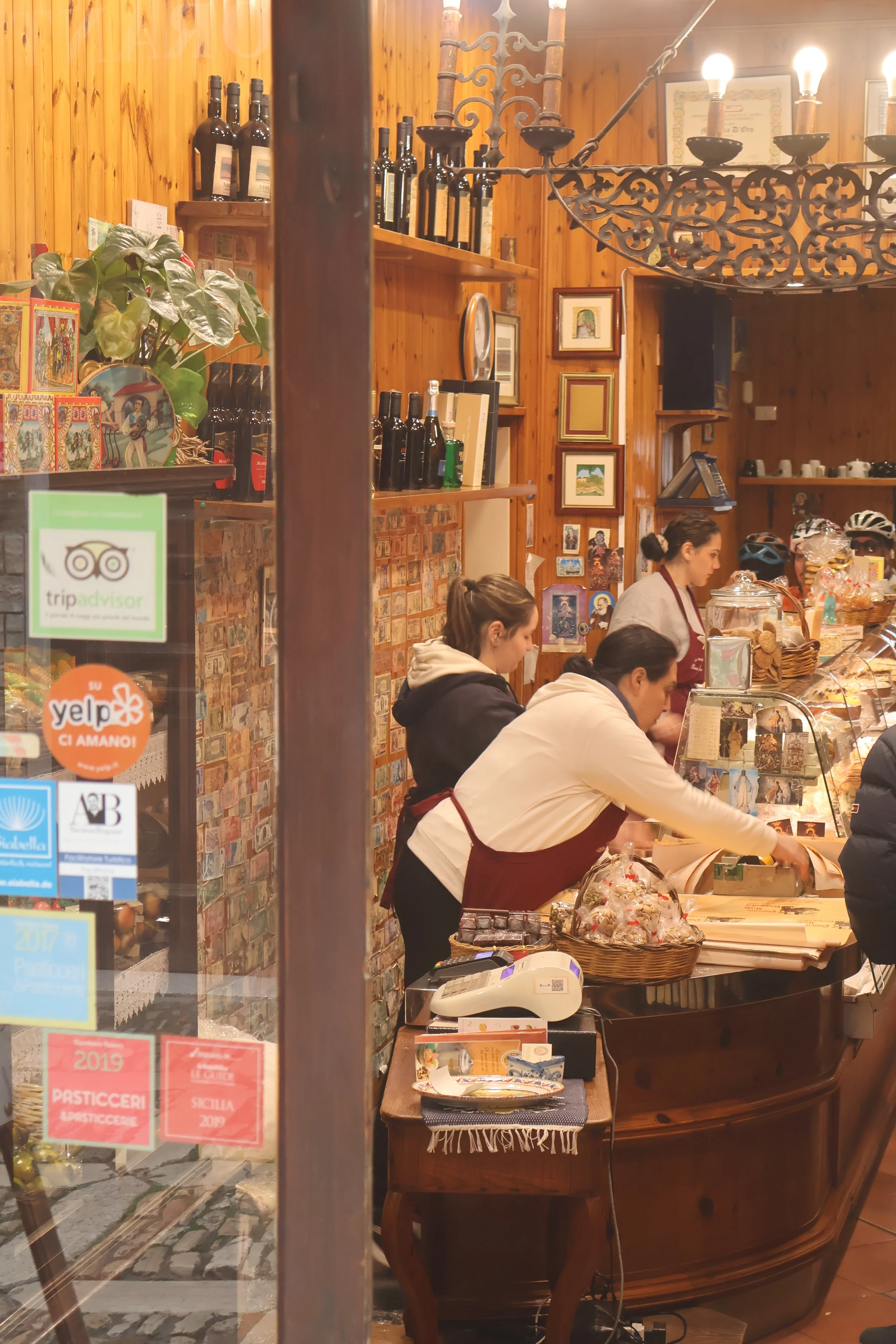
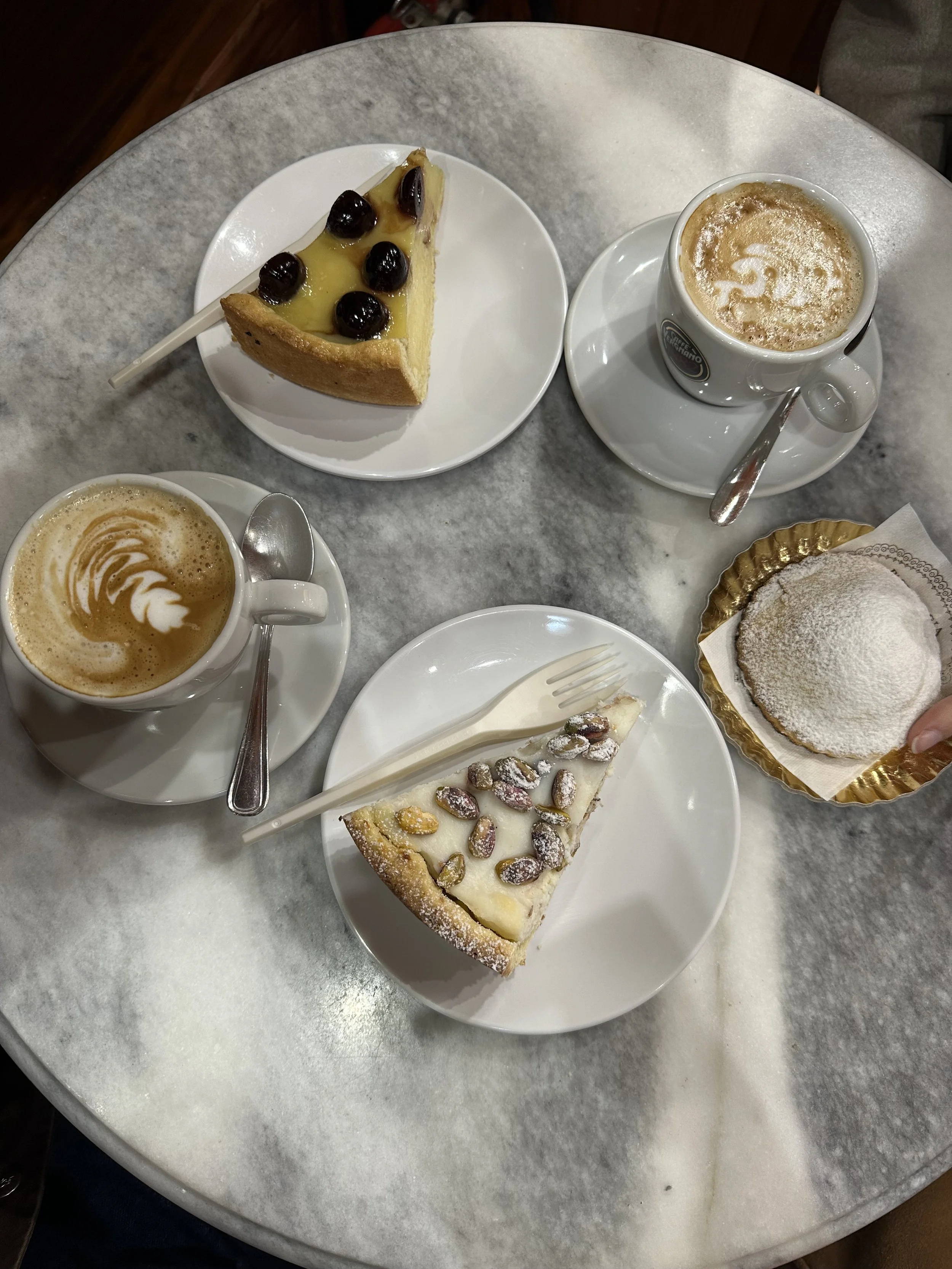
We head up the steep hill from the car park in search of a sweet breakfast at the infamous Pasticceria Maria Grammatico. The slippery footpath like glass from the earlier downpour and horizon barely visible, we finally reach our target and some sugary, caffeine fuelled solitude.
It’s quiet when we enter and the feeling of being part of a noir tv drama series is only intensified by the wonderfully old fashioned decor of the pasticceria - wood panelled walls and a large collection of foreign currency and Catholic saints a backdrop to the large, sweeping counter that’s full of Sicilian treats.
We have our cappuccino and share a few bits from the counter - a still warm crema Genonvesi, a slice of Torta alle Amarene and piece of Crostata al Pistachio. Our eyes being bigger than our bellies, we wrap some away for ‘later’ and head out into the street, past the group of cyclists we’d passed earlier on the road up and into a now slightly clearer Erice.
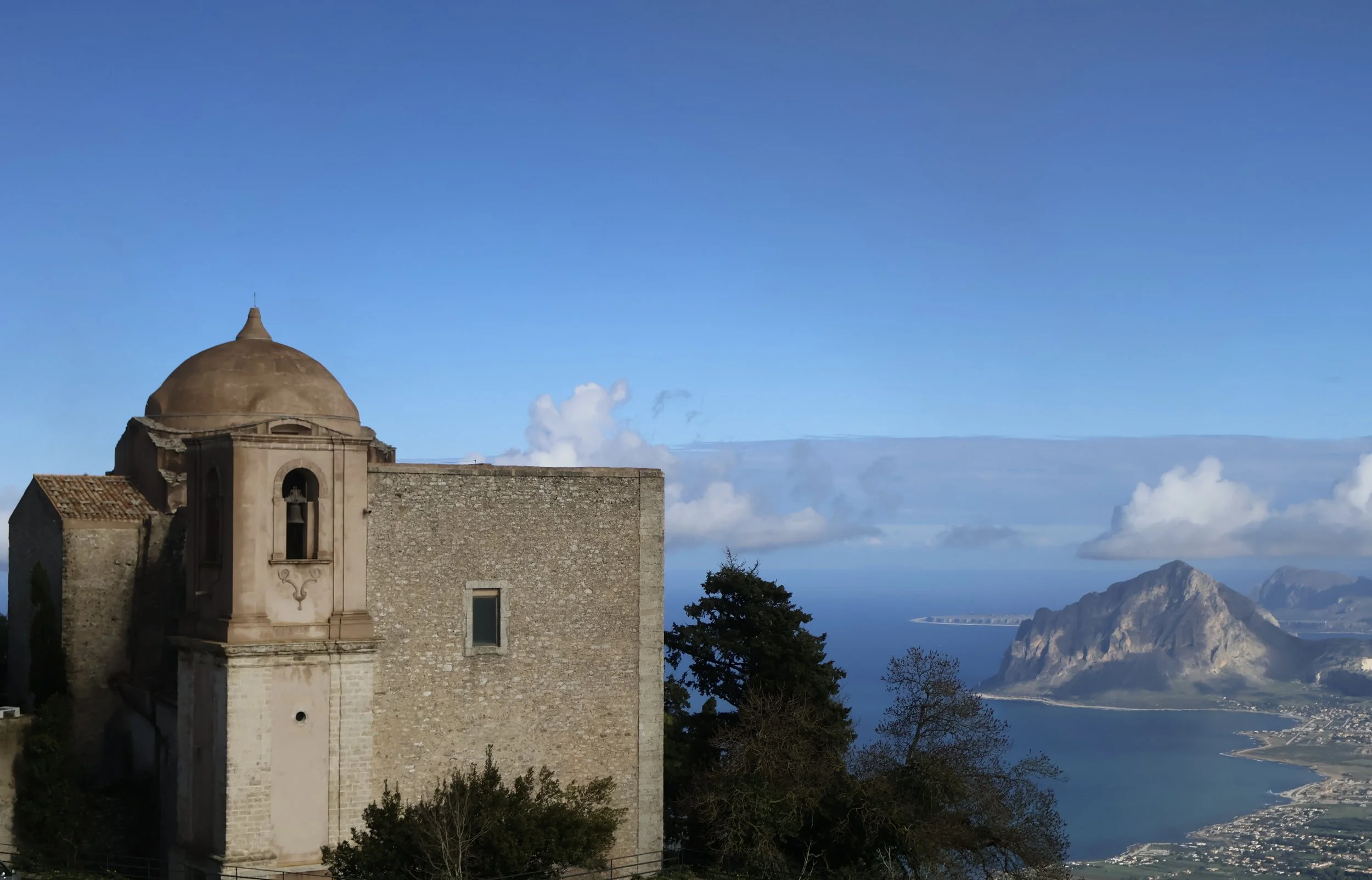
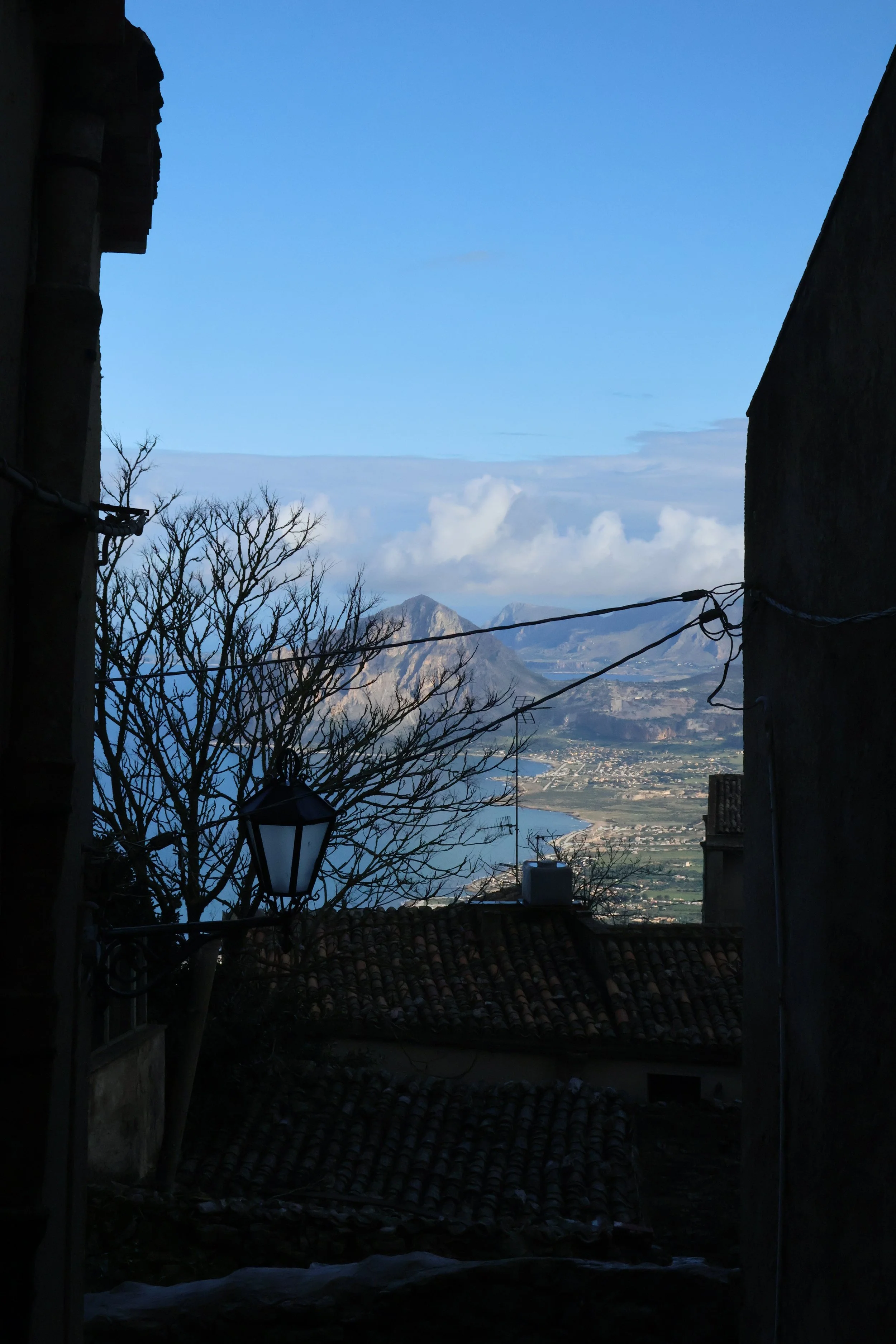
The fog and mist lift to add even further sense of cinematography to an already picturesque town. We tread delicately on the slippery stone streets and reach the north-eastern edge of the town to be blown away by the dramatic landscape towards San Vito Lo Capo. Clouds suspended mid air and running quickly along the vista of the hills below and the sea beyond.
An incredible vista towards San Vito Lo Capo, from Erice
The eeriness of the climate and landscape only continuing as we walked around to Castello del Bálio where we stood above a blanket of swirling cloud, obscuring the view to the south and Marsala with just the odd glimpse of a field a couple of thousand feet beneath.
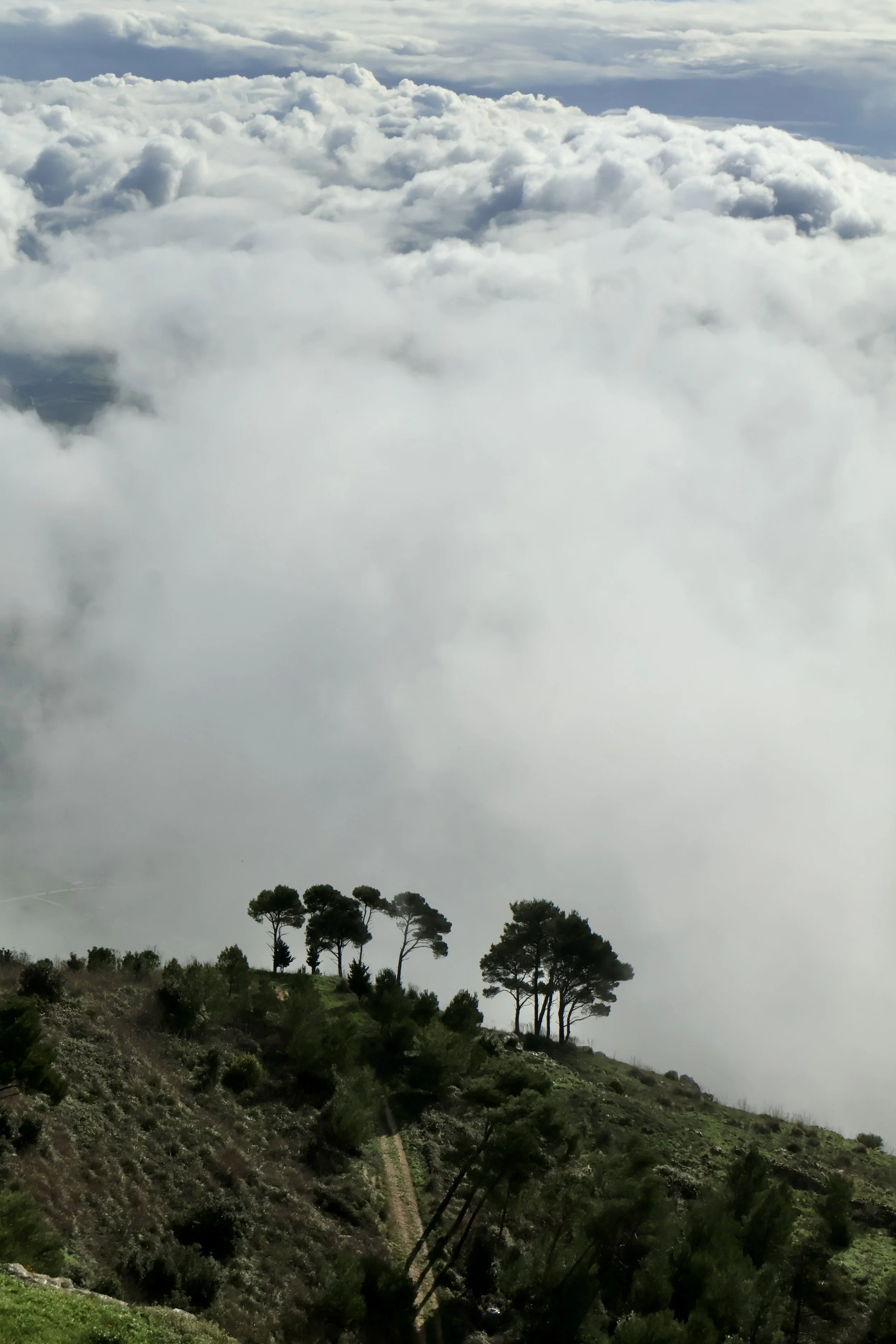
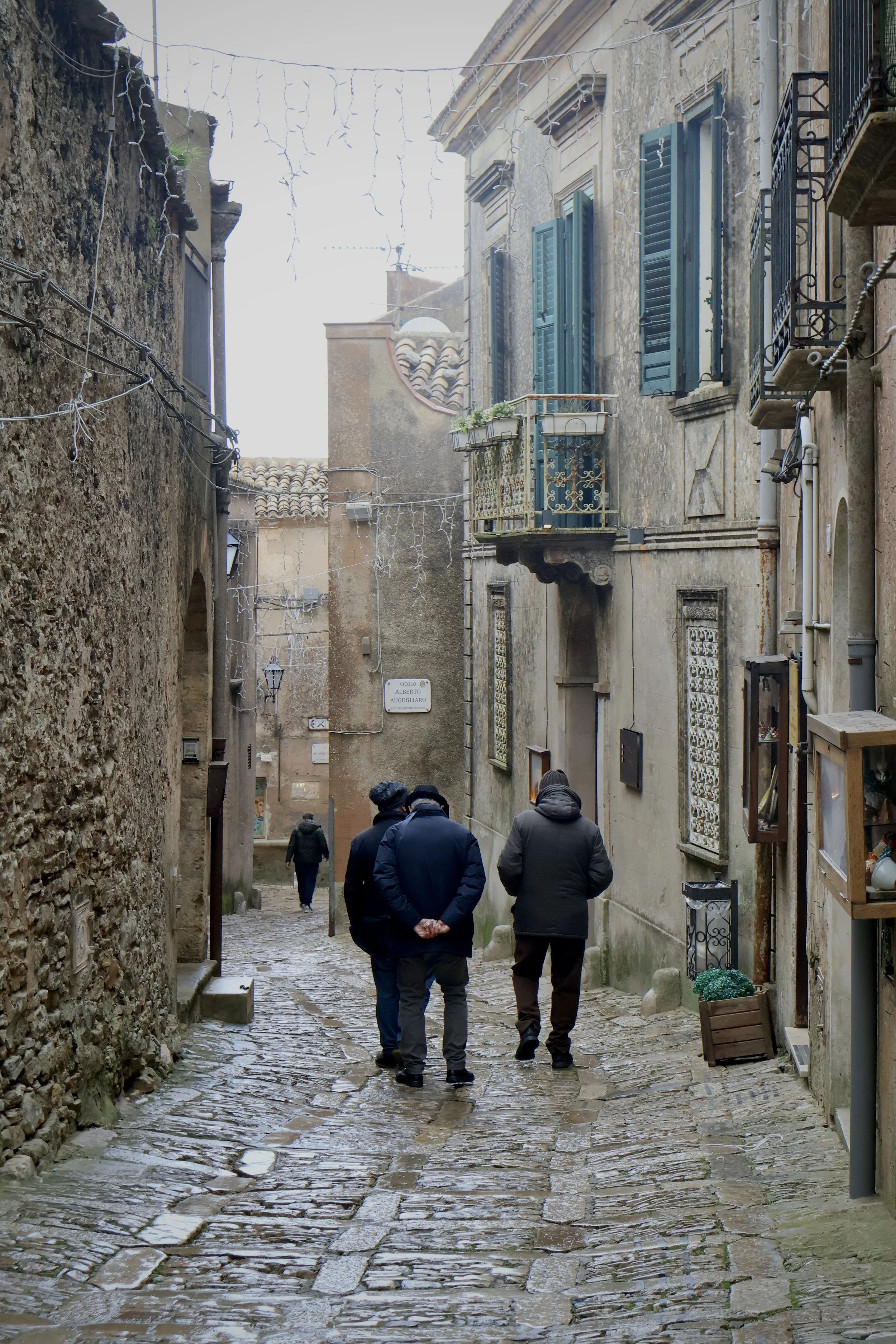
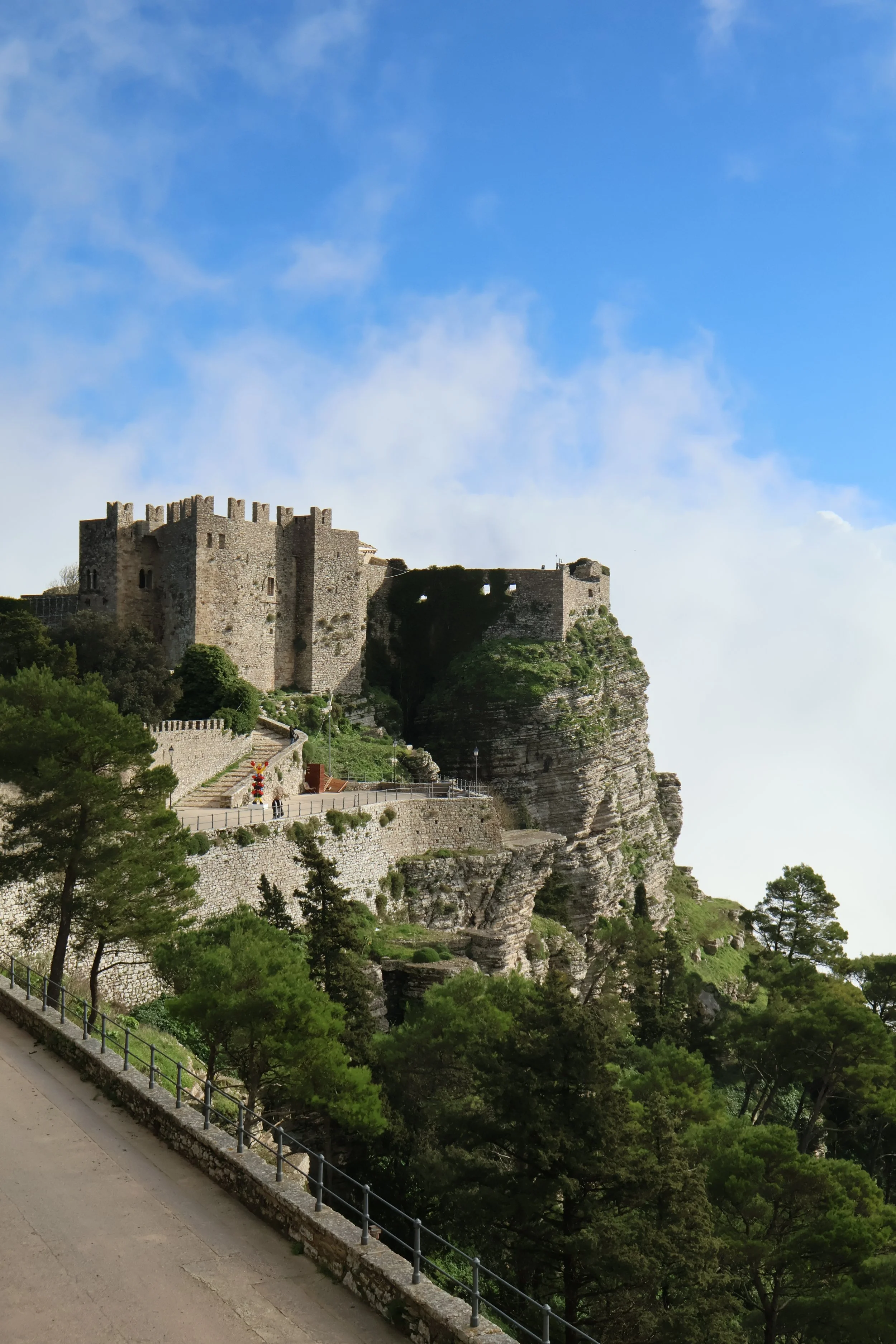
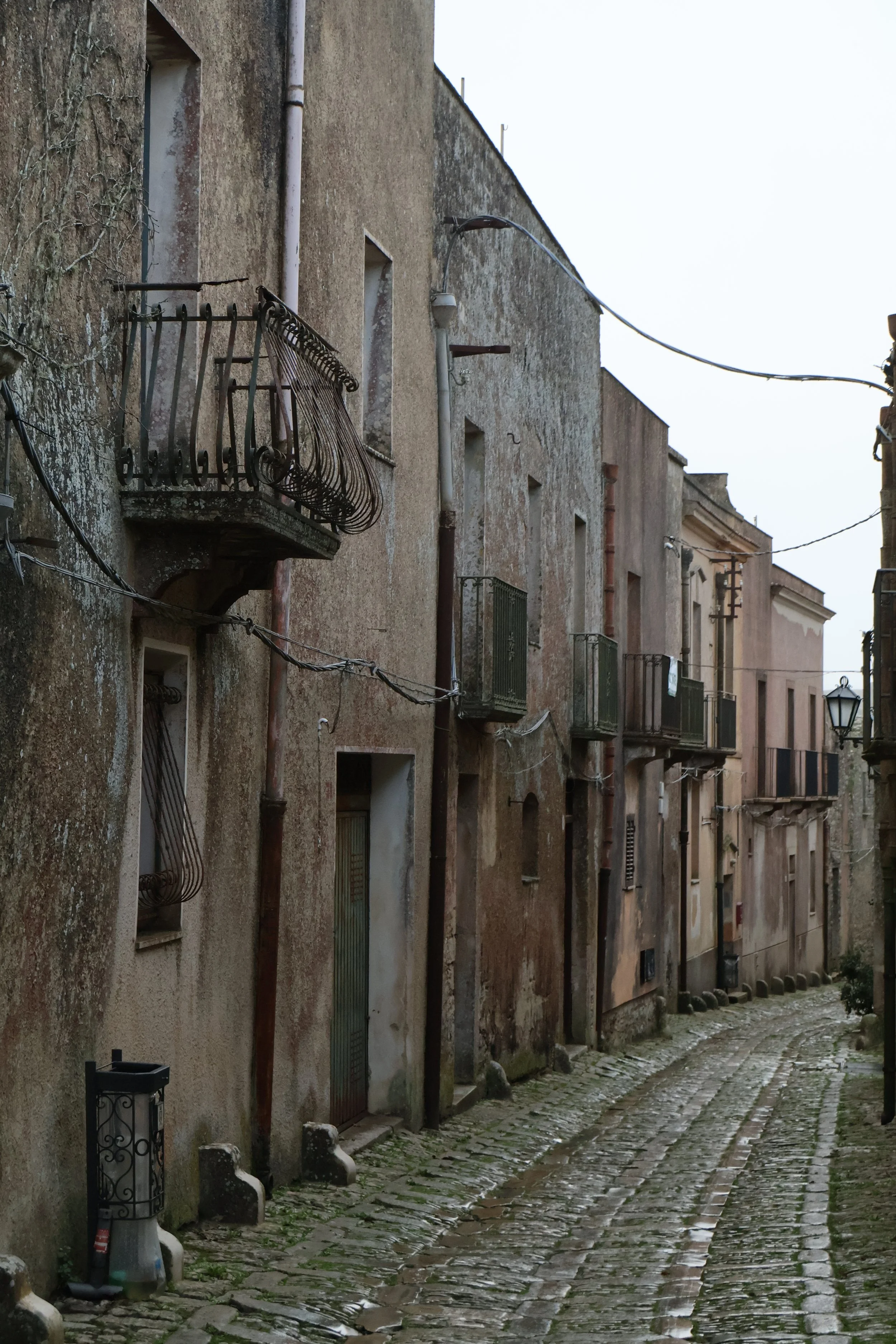
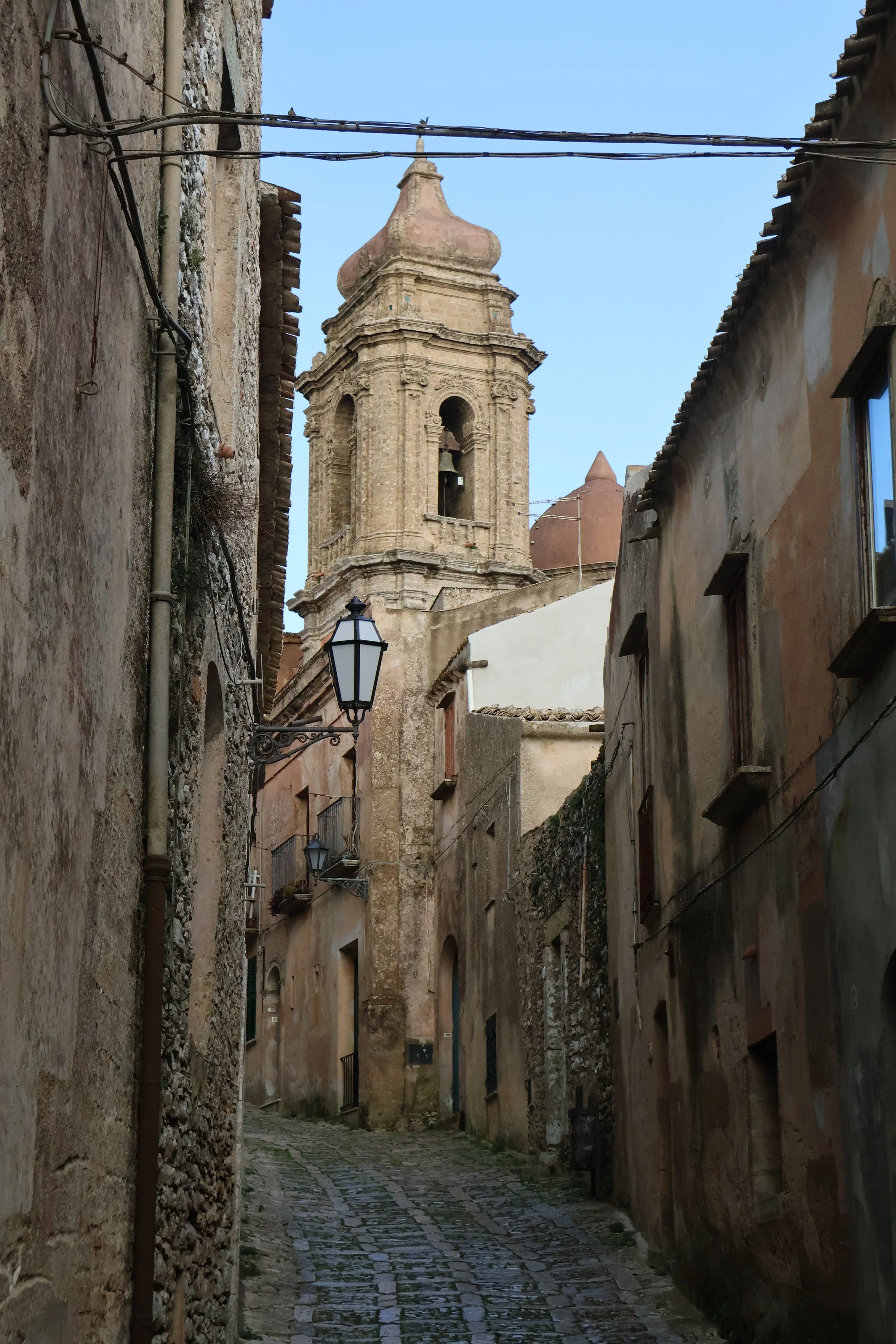
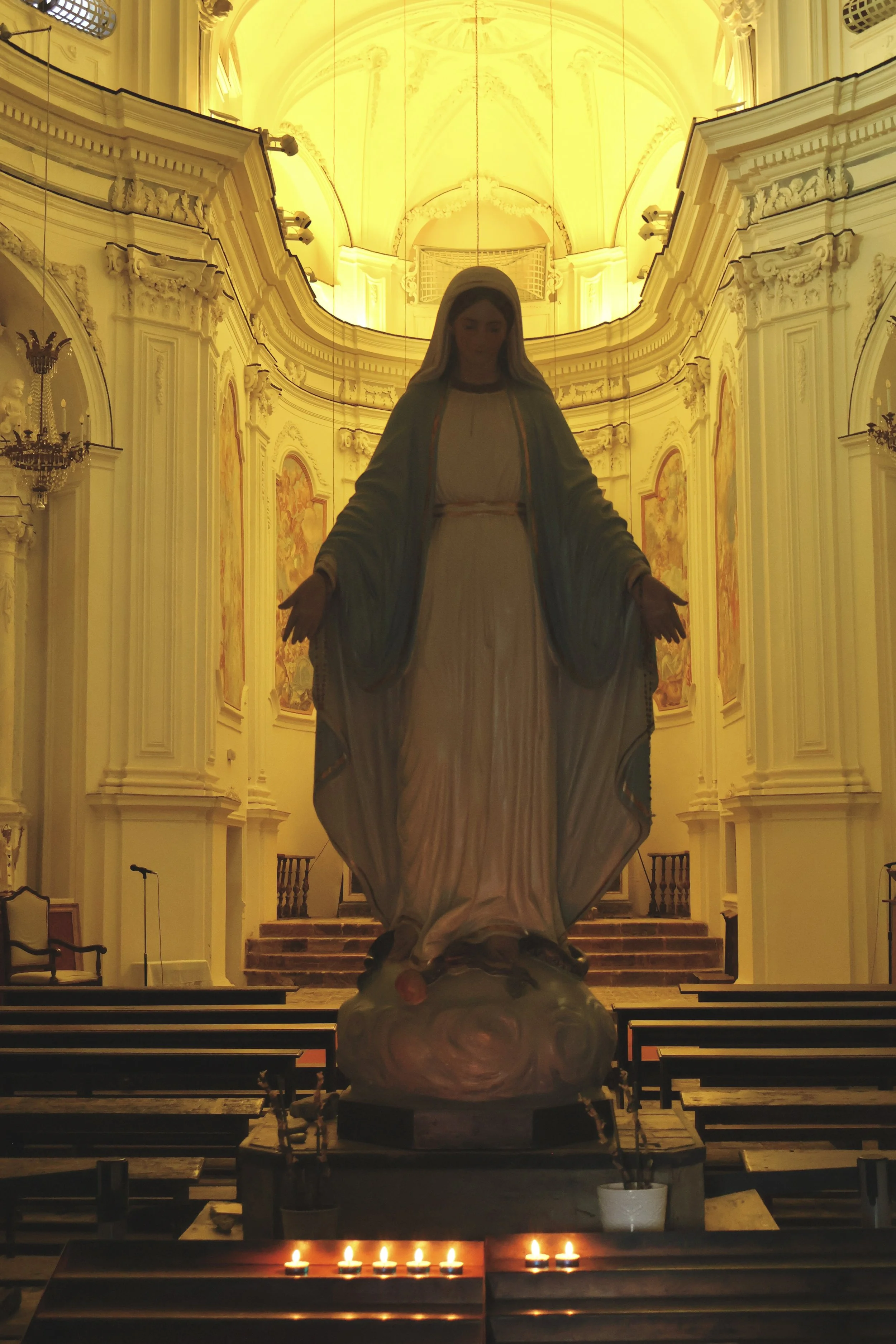
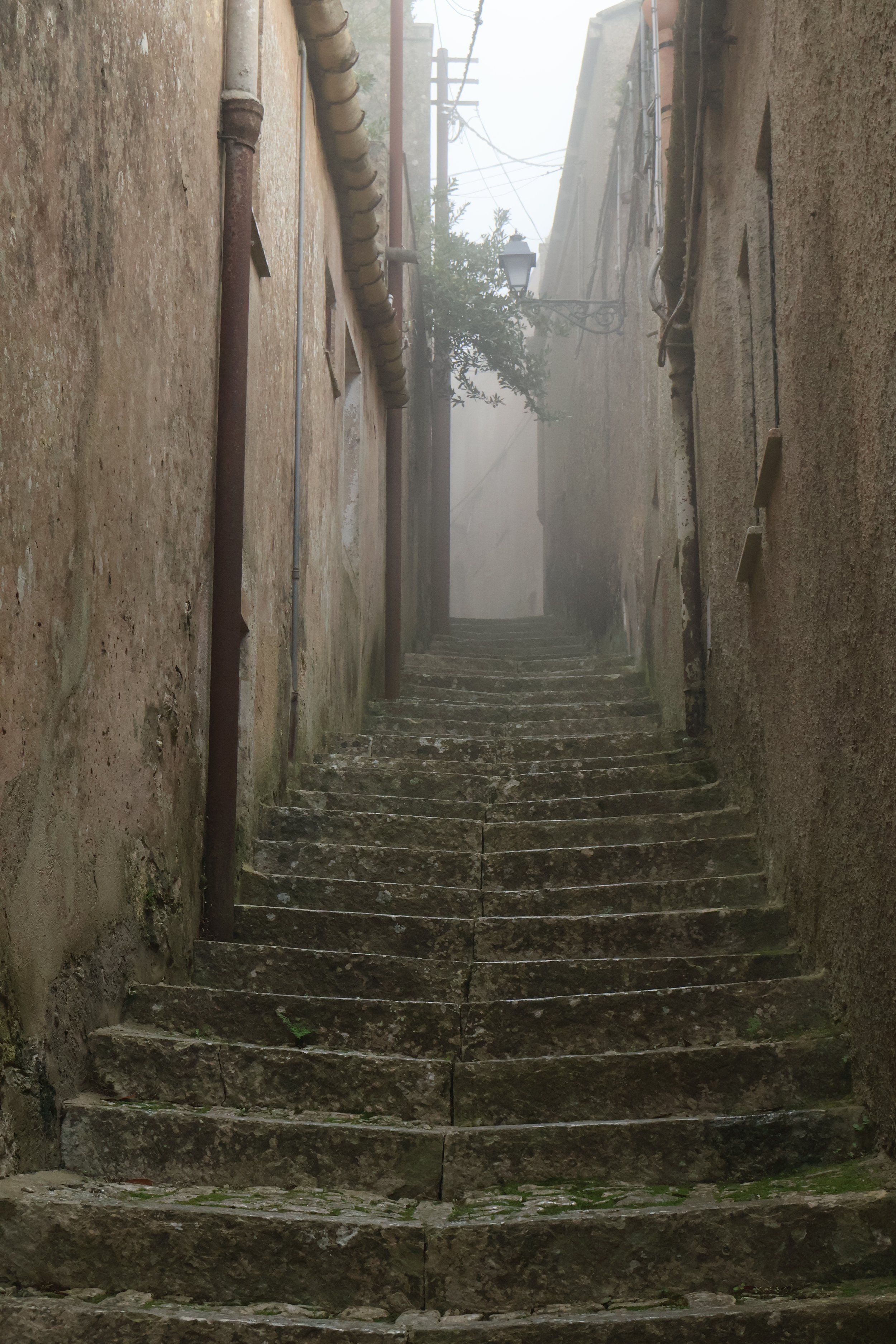
We continue walking back through the main heart of the town. Past a church with its doors open - a Virgin Mary statue illuminated in the doorway to welcome in visitors and along more winding street with dark semi derelict houses only adding to the mystique as the clouds and mist envelop the town once more. A cold dampness setting into the air.
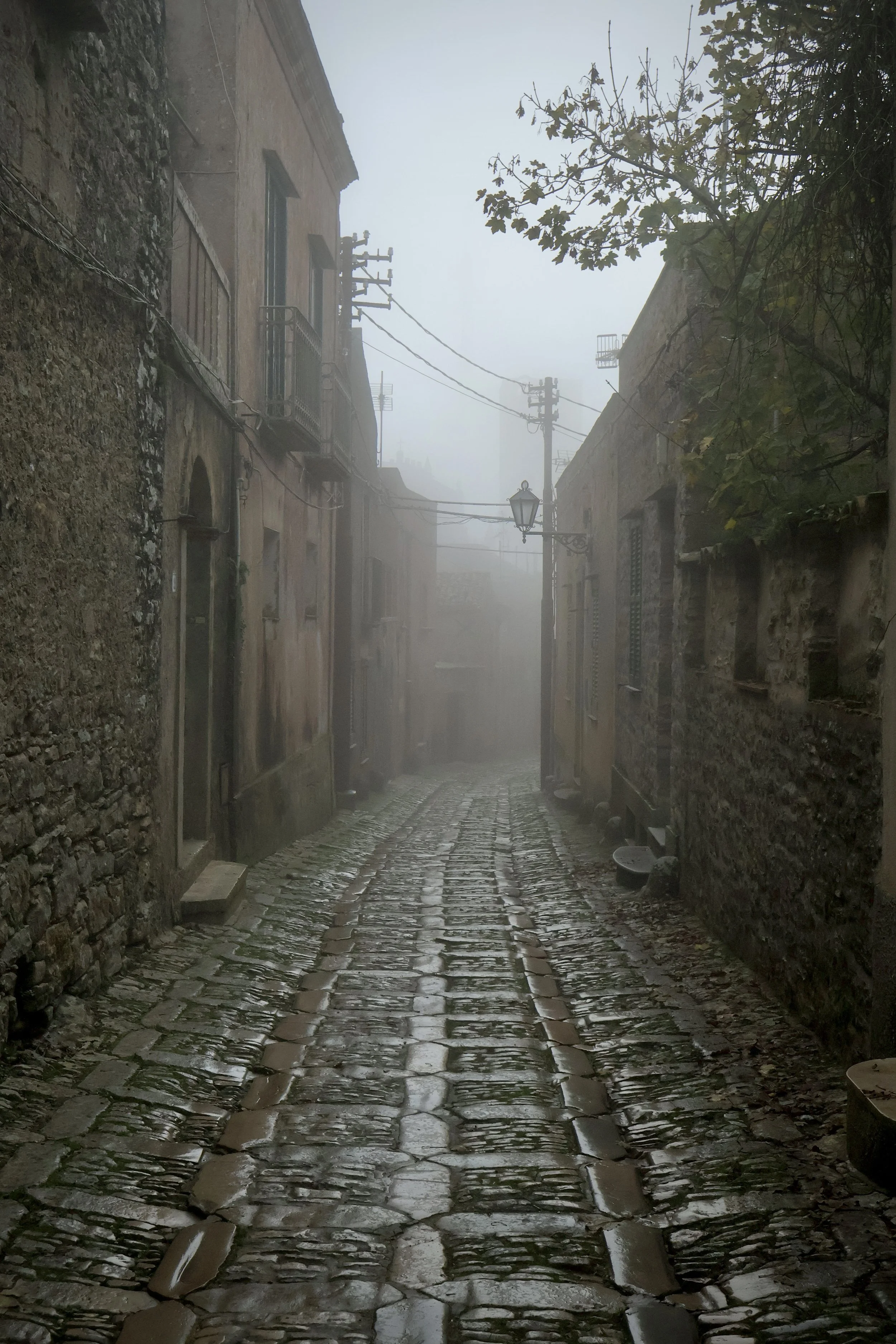
The mist and noir sets in once more as we head back to our car
Erice was a truly remarkable place that surpassed all my expectations and if it hadn’t been for tiredness and a slight anxiety about the car being parked in a space that’d have been small for Noddy’s car, whilst being fully aware of many Italian’s inability to drive carefully, we would have stayed for longer. Alas, we left feeling grateful for the experience as we snaked our way back down Monte Erice.
I mercati di Palermo
Anthony Bourdain once said that the real heart of a place is found in its markets and that if you want to understand a culture, you should go where people shop and eat every day.
I have always agreed with him. Whenever I travel somewhere new, the market is my first stop. Spend twenty minutes wandering between the stalls and you get an instant sense of what is in season, what is local, and what you should be ordering later at dinner.
Anthony Bourdain once said that the real heart of a place is found in its markets and that if you want to understand a culture, you should go where people shop and eat every day.
I have always agreed with him. Whenever I travel somewhere new, the market is my first stop. Spend twenty minutes wandering between the stalls and you get an instant sense of what is in season, what is local, and what you should be ordering later at dinner.
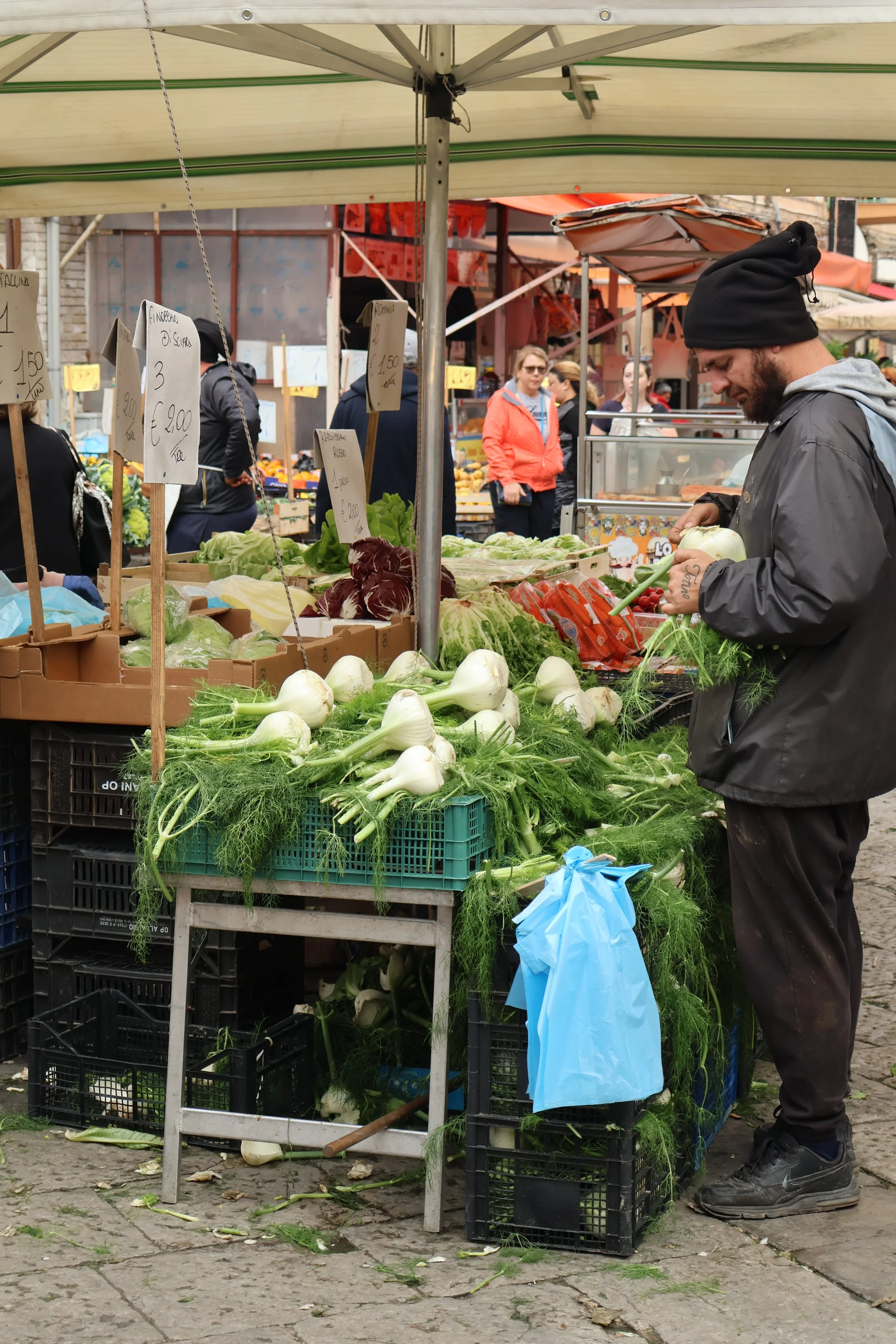
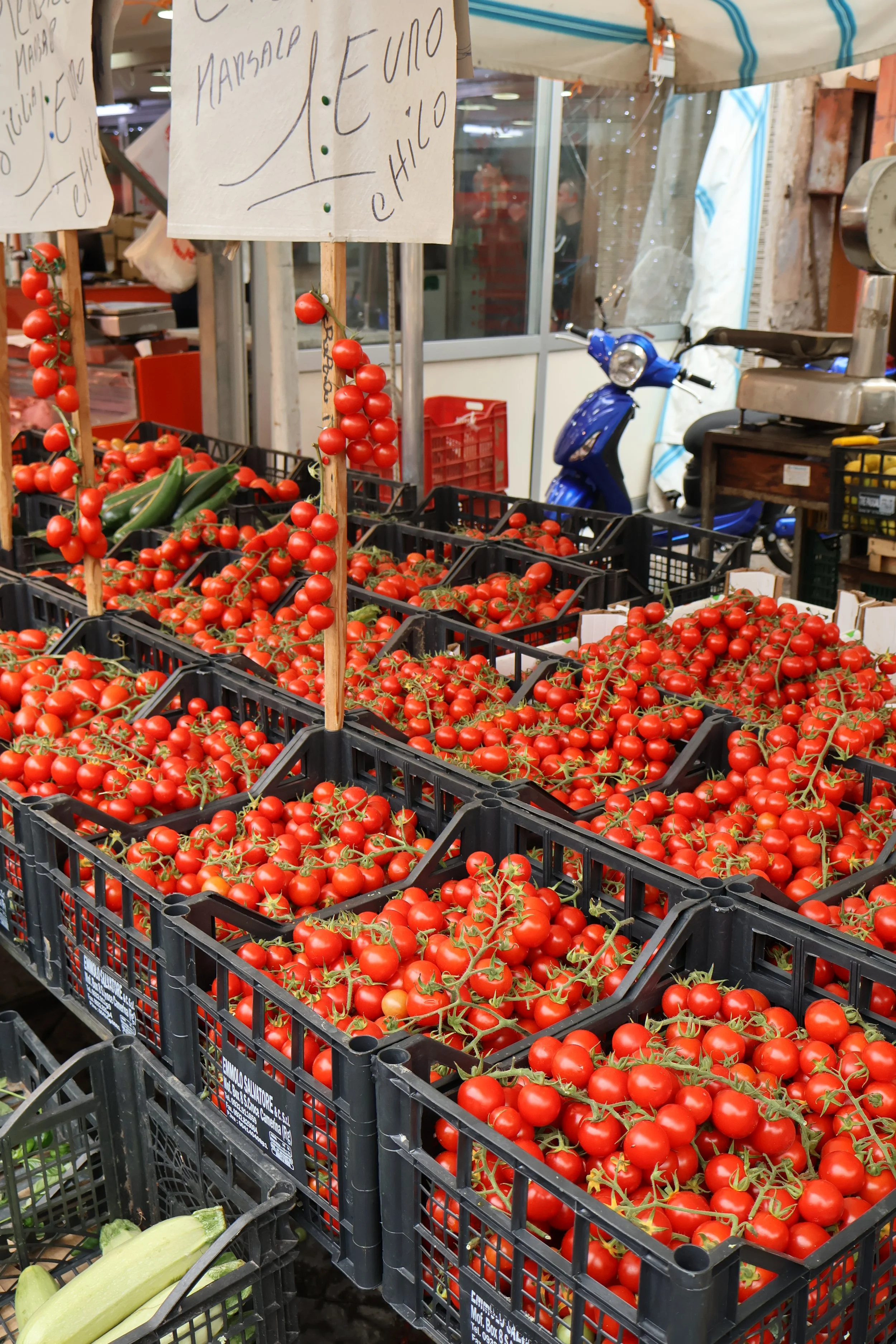
Here in Palermo, returning to Mercato Capo and Ballaró has been every bit as exhilarating as I remembered from three years ago. Both run along narrow streets through the centre of the city, a jumble of makeshift stands and permanent shopfronts tucked beneath the golden stone apartments above.
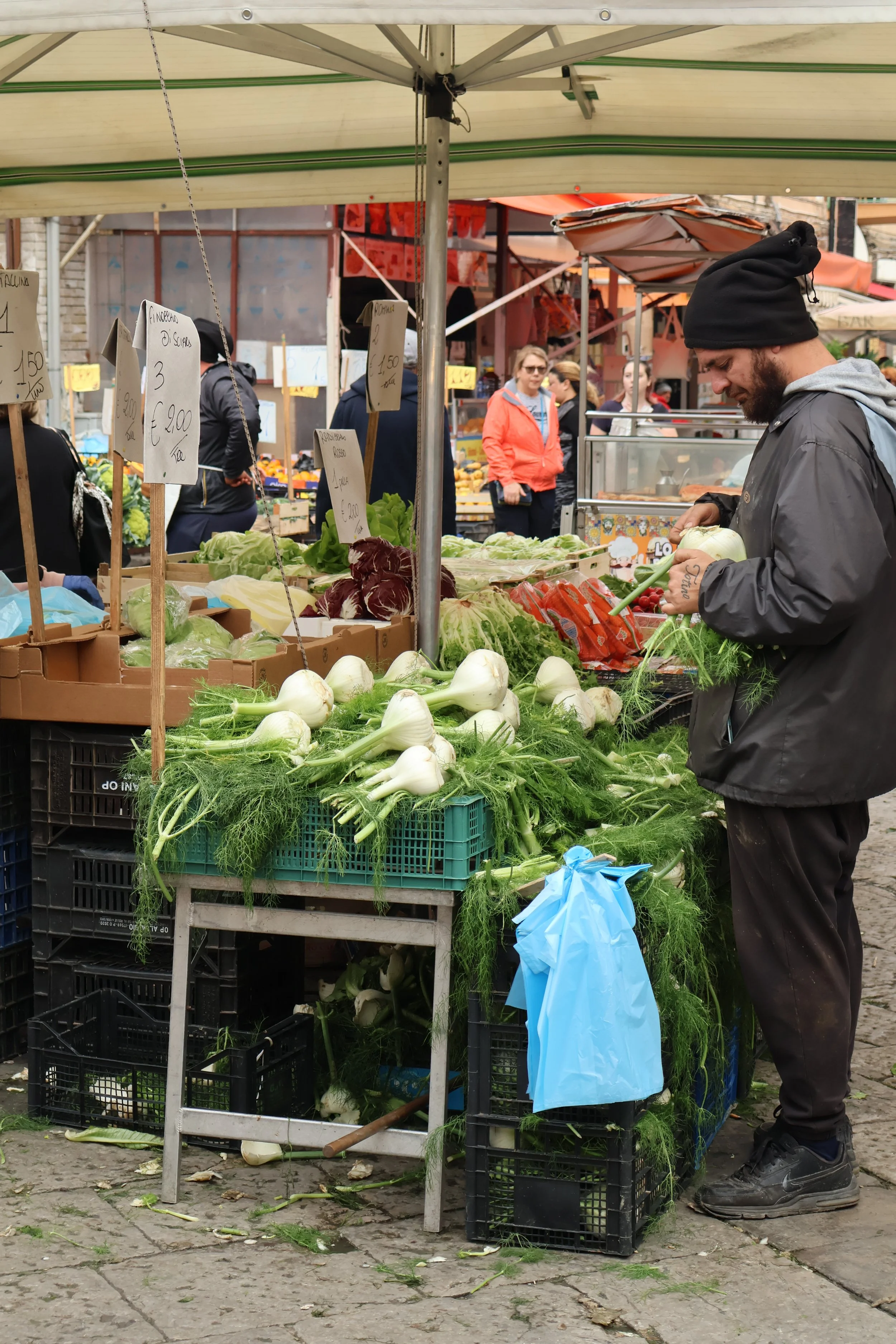
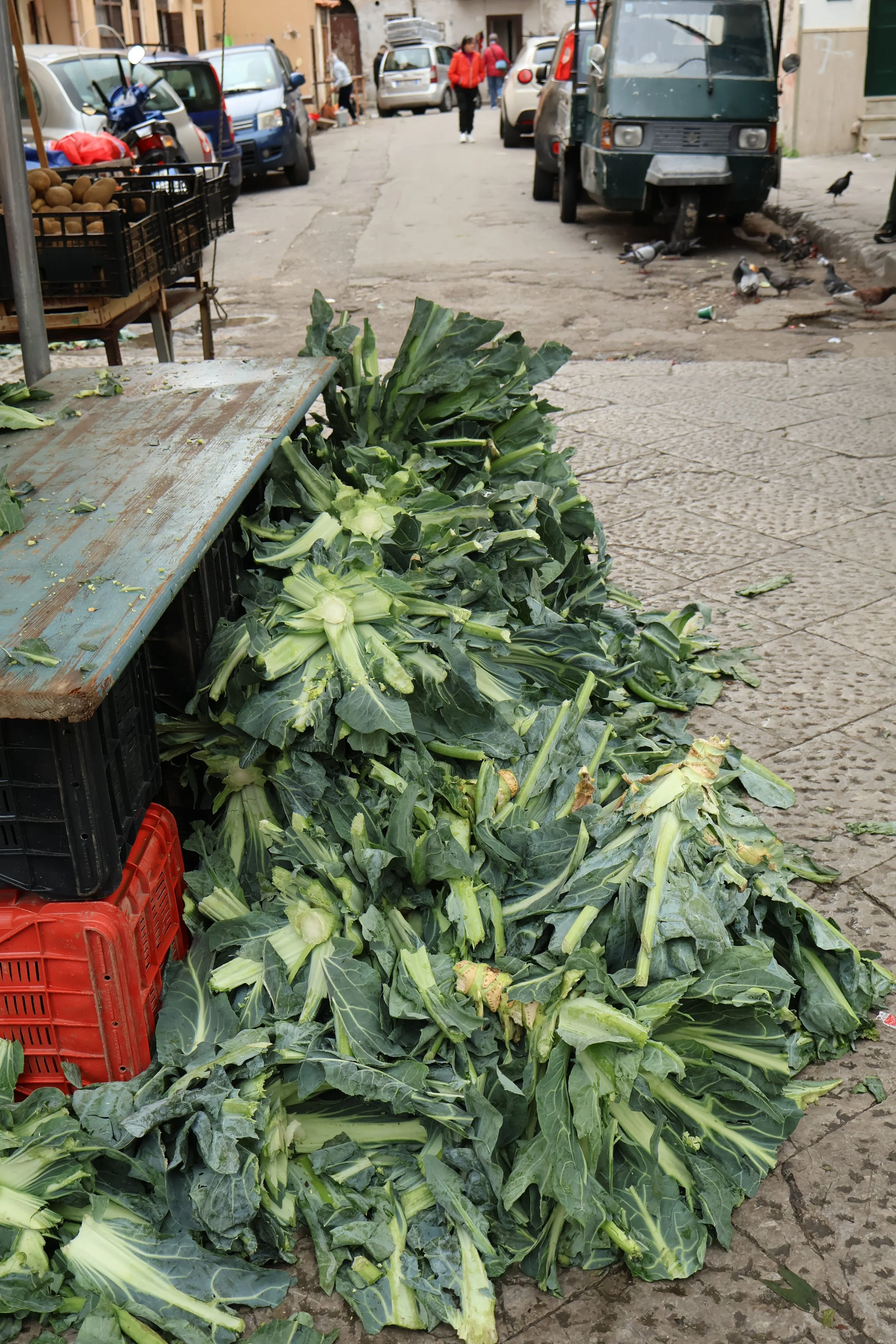
It can feel like controlled disorder. Teenagers on mopeds inch their way down corridors of people. A car turns down the wrong lane and has to roll over a mountain of discarded cauliflower leaves to escape. Voices carry from every direction, thick with Sicilian dialect that hints at the island’s history with North Africa and the Middle East.
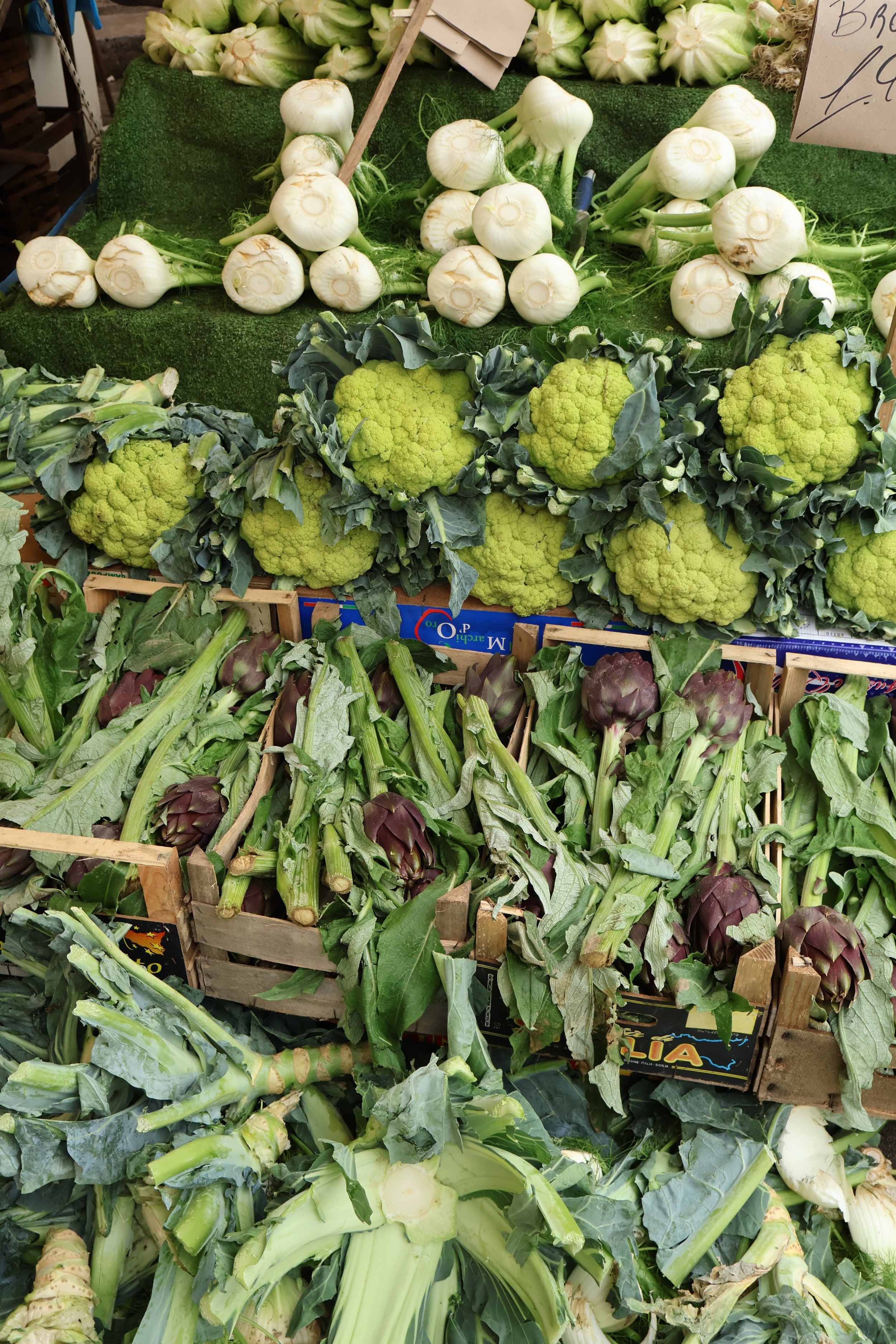
Music fills the gaps, especially at Ballaró where Italian pop blares from speakers and stallholders dance as they serve panelle con pane. One man I remembered instantly from our last trip, famed in my mind for turning meat with his bare hands, shouts a compliment at my wife with full theatrical hand gestures. Palermo knows how to put on a show.
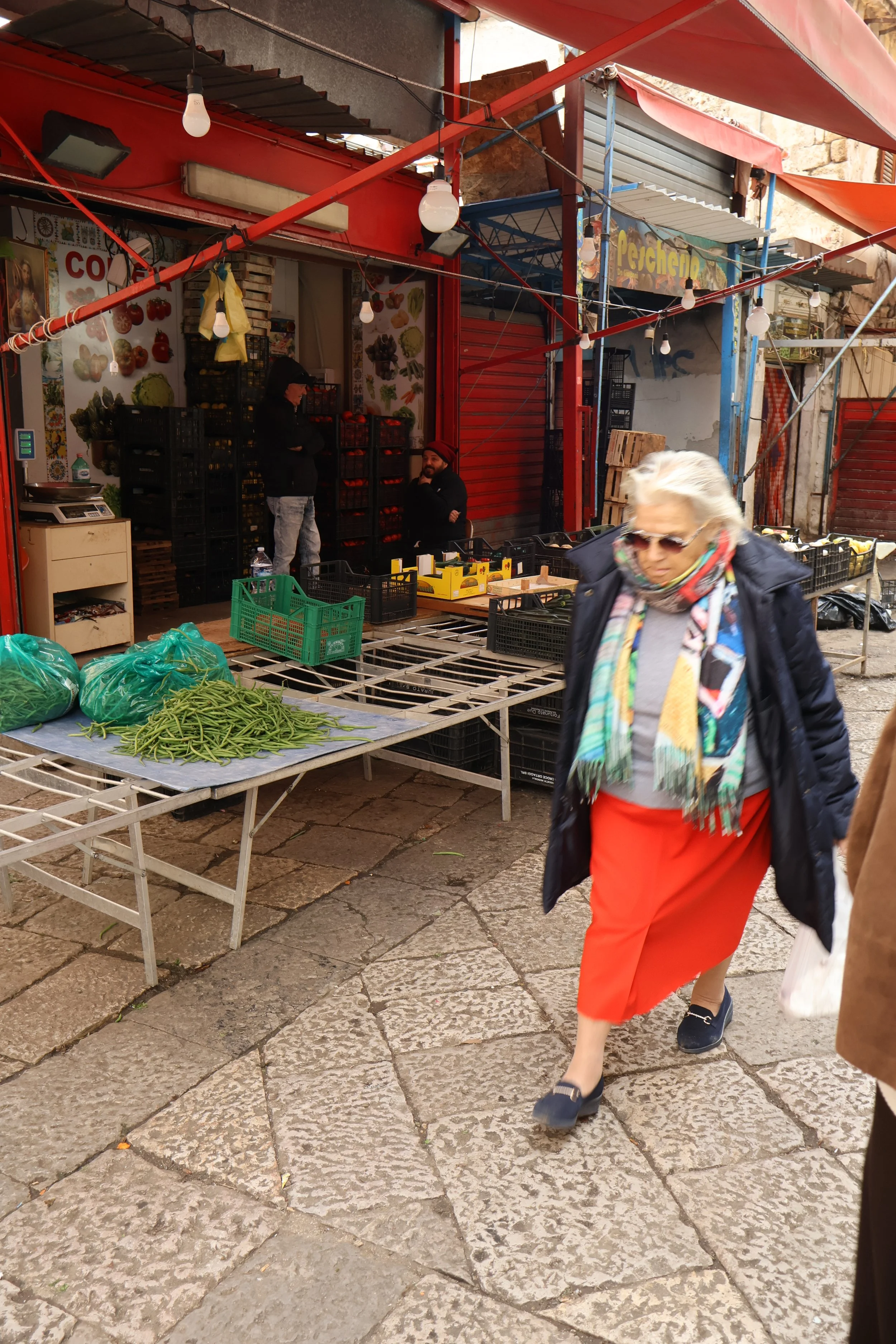
It is a full sensory hit, equal parts spectacle and obstacle course. Yet this time, something is different. The heat has eased. It is late autumn now, a comfortable twenty rather than the humid mid thirties. And the crowds have thinned. Gone are the tourist groups drifting toward restaurants plastered with photos of lasagne. In their place are locals comparing prices, debating the best way to cook something, offering advice nobody asked for but everyone expects.
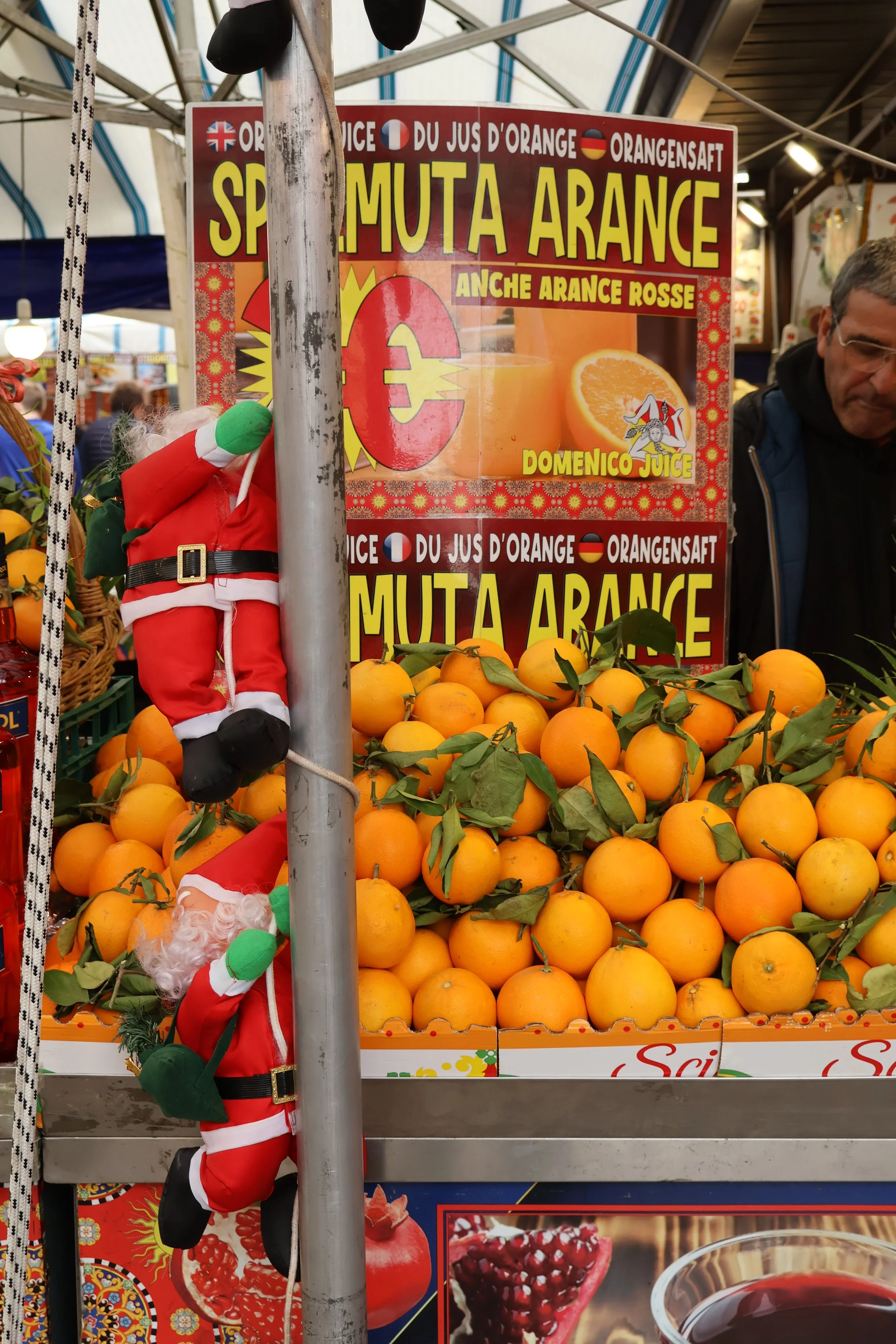
The produce has shifted too. Where figs, melons and aubergines once dominated, the stalls are now piled high with fennel, cauliflower, and the bright citrus that defines Sicilian cooking. Oranges everywhere.
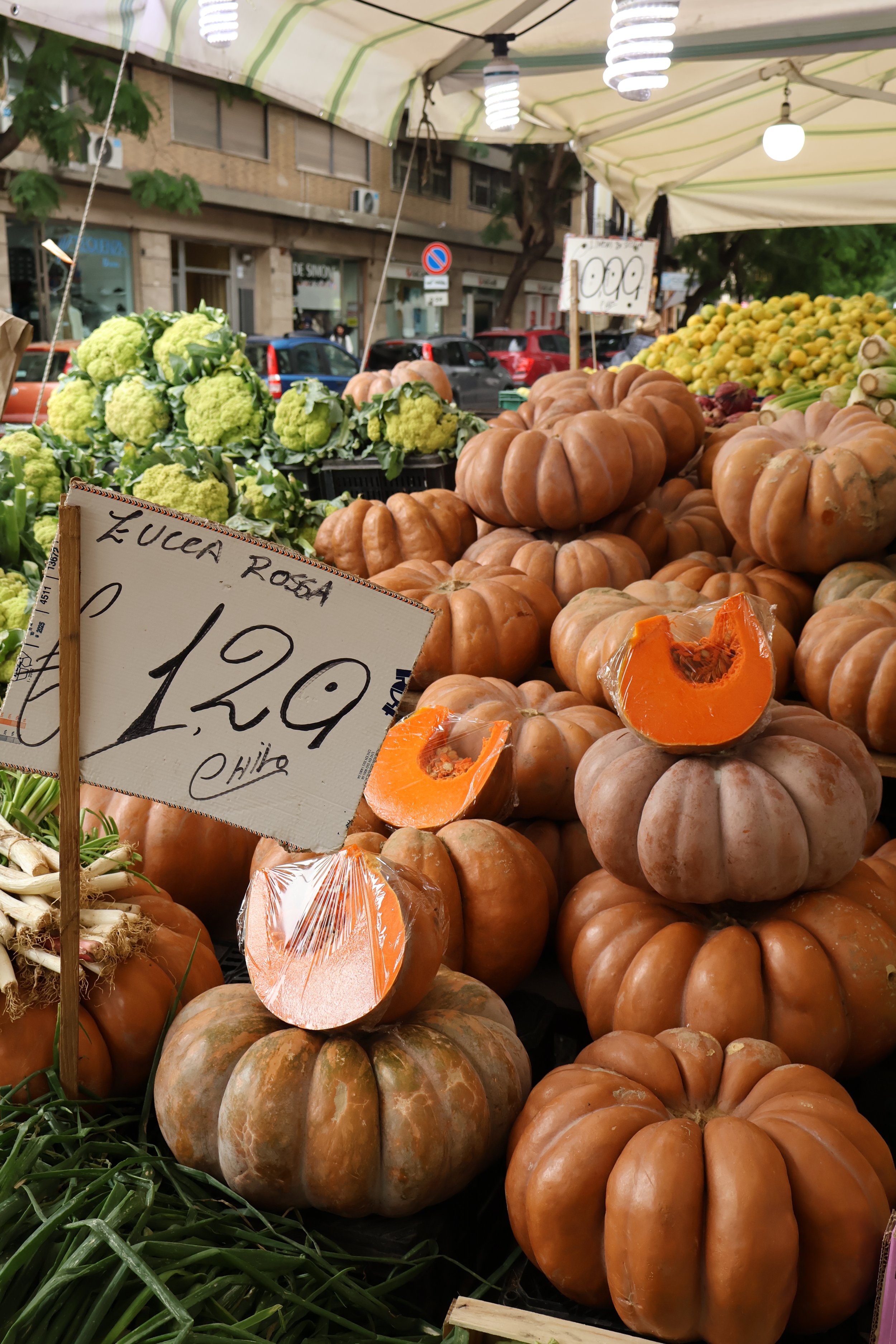
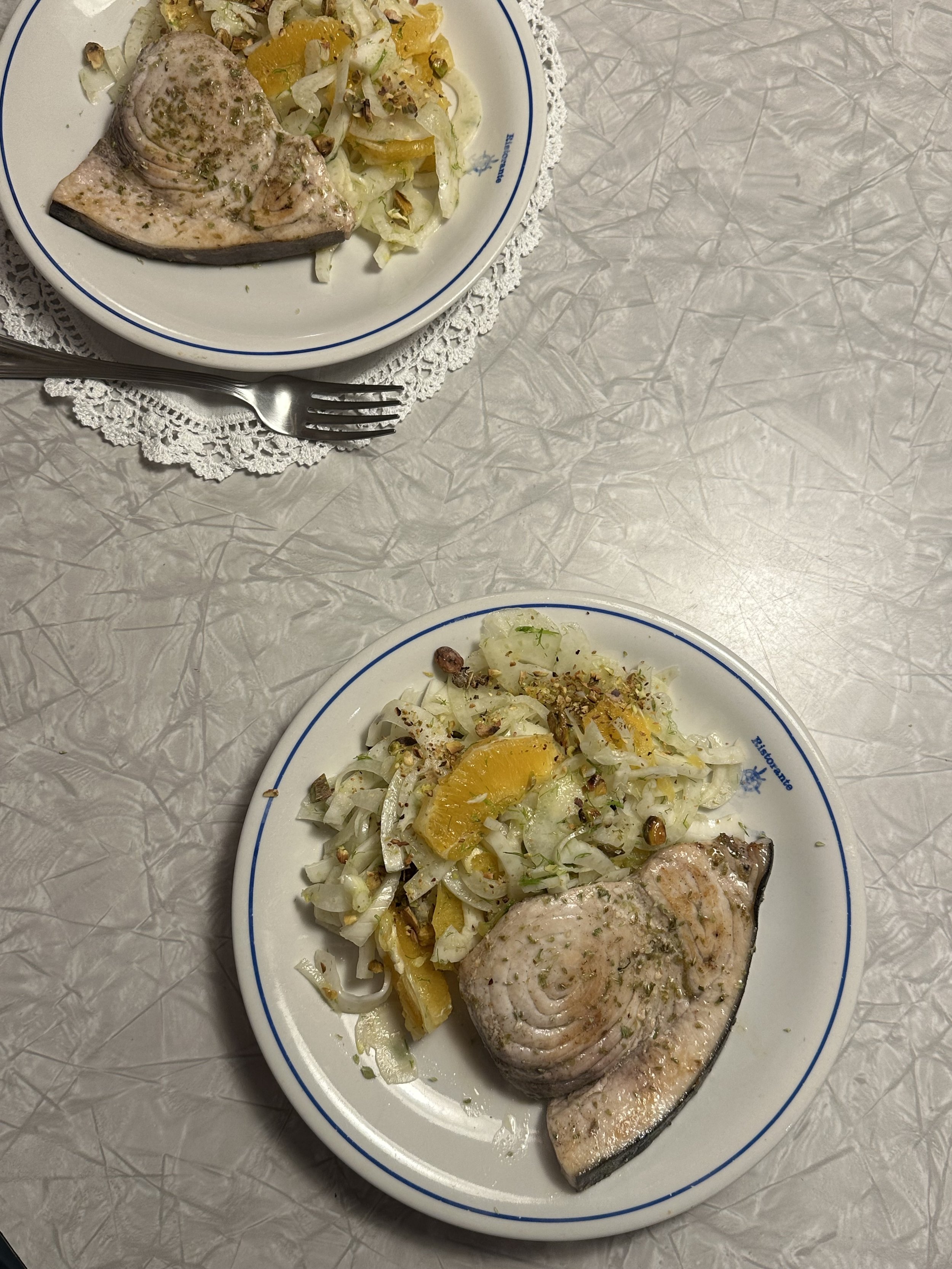
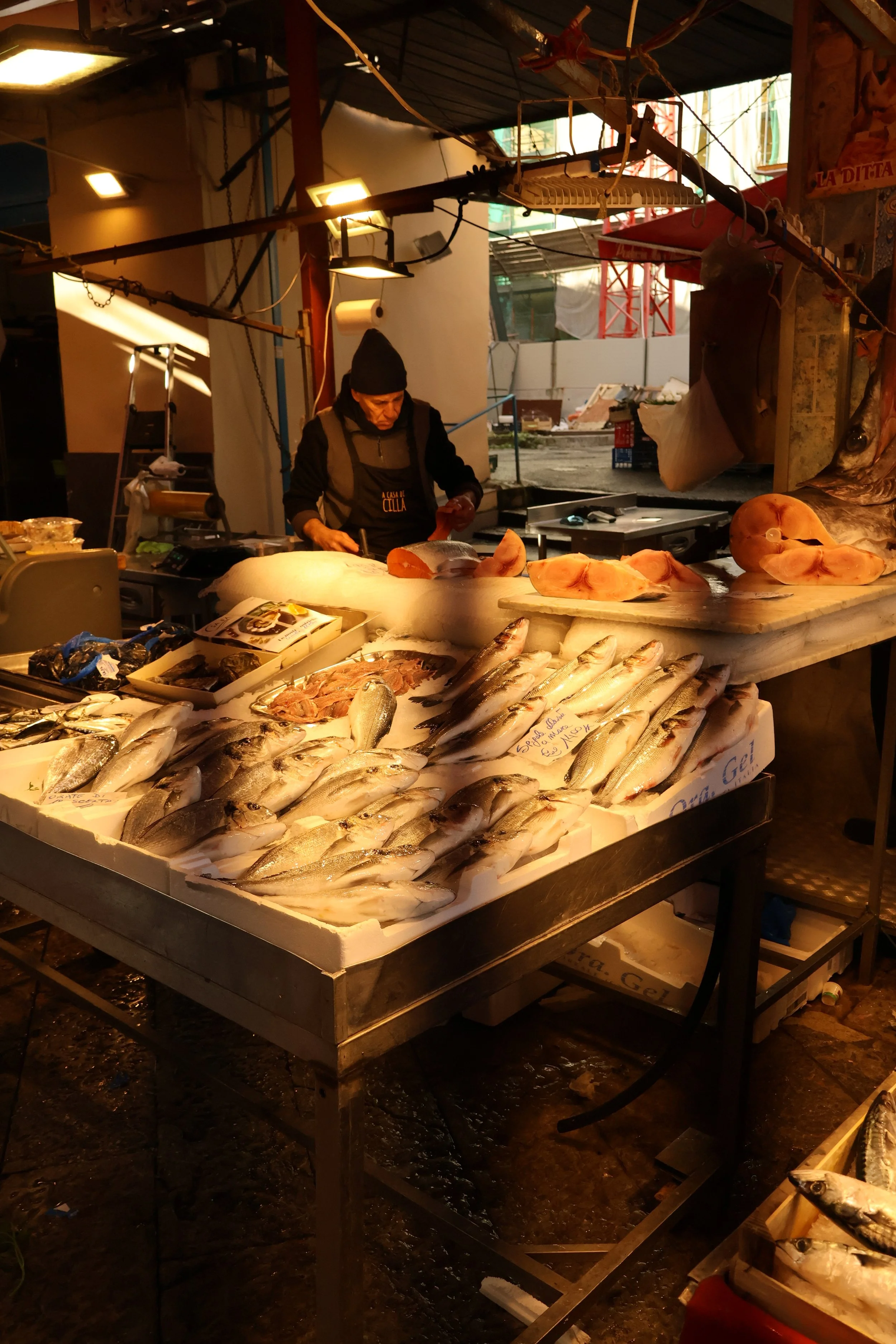
With space to breathe, choosing what to buy feels more deliberate. Ideas come fast, matching the energy of the markets themselves. And despite the flood of possibilities, the decision more or less makes itself: swordfish, still local and still in season, paired with a crisp fennel and orange salad and finished with chopped pistachio from Bronte.
Simple. Obvious. Perfectly Sicilian.
Midnight in Sicily
Our plane begins its descent into Palermo. The curve of the bay glows on our left, a soft necklace of lights against the dark water, while the mountains stand brooding around the city.
Our plane begins its descent into Palermo. The curve of the bay glows on our left, a soft necklace of lights against the dark water, while the mountains stand brooding around the city.
We’re back in Sicily. The still warm November air hits us as we alight the plane - a small announcement that we’ve left behind the cold, wet, grey of England and arrived somewhere that shares more DNA with North Africa than with Rome.
We take a (dangerously) quick cab into the city, along the highway where the Judge Giovanni Falcone’s car was blown apart by La Cosa Nostra, in 1992. I recall to the last time I was here, reading Midnight in Sicily and learning how a place so beautiful could carry such deep scars. How the island is a complicated subversive web of criminality and the law and not always necessarily fitting the bad and good tags that you’d associate with either.
There’s something undeniably pleasing about driving into a city at night. Streets hushed and shrouded in darkness. A solitary window lit by the bluish light of a TV. A tiny orange ember hovering outside a doorway where someone smokes. Traffic lights flipping colours like painted brushstrokes. A bar glowing softly, making you wonder what stories are unfolding inside. Landmarks illuminated like canvases in a quiet gallery, stripped of the crowds that swarmed them only hours earlier. A couple stepping out of a warm trattoria into the night, still slipping on their jackets.
Then there’s the AirBnb arrival ritual. You step out of the taxi hoping you gave the driver the right address, because nothing looks the same as it did on Google Street View. Nothing ever does at night. There’s the familiar dance with key codes and lockboxes, followed by the discovery that the building has no lift and both 20kg suitcases need to be hauled up four flights of narrow, badly lit stairs.
But then you open the door, and the place does look like the photos. Relief washes in: you haven’t been conned, and you can finally stop. After hours of travelling, of queuing for security, of boarding by standing in stairwells for no logical reason, of buying that unnecessary airport pint because what else is there to do for forty minutes and you can finally exhale.
The trip starts now. After a night of sleep in a strange bed, tomorrow it will truly begin.
It’s hot and humid and we are stood uneasily inside a badly lit shop. Sharp knives are carelessly left on any flat surface that can be found. A large spider crawls up a wooden beam directly behind my wife and settles, part-camouflaged beneath a heap of pineapples. There’s a bucket of discarded leaves, skins and chopped ends of fruit rotting away as flies circle its circumference.
Welcome to the fruit stall.
Since travelling we’ve become attuned to what’s in season and what each place does best, and have subsequently spiralled into some kind of unnamed fruit addiction. One that now quietly drives the intent of our days.