Writing

Joel Beighton Joel Beighton

The Moon Under Water - A Perfect Pub

Cold, smooth, creamy liquid pours down my throat rapidly before coming to an abrupt ending with a bitter finish on my tongue. It’s my first pint of Guinness in over four months. I’ve been away travelling, and one of my first ports of call upon returning is the pub.
Cold, smooth, creamy liquid pours down my throat rapidly before coming to an abrupt ending with a bitter finish on my tongue. It’s my first pint of Guinness in over four months. I’ve been away travelling, and one of my first ports of call upon returning is the pub.

I’m sat in Fagan’s, a well-known and much-loved institution on Broad Lane in Sheffield city centre. Recently changing hands from long-time landlords Tom and Barbara to a collective of Sheffield businessmen and creatives, including some famous faces. The change thankfully kept the pub largely as it was before. The traditional decor remains, the charm undisrupted and the warmth constant.

I have another gulp of the black stuff. No room for splitting the G nonsense here… It tastes like familiarity. A version of myself I’d not been for a while. I breathe a sigh of both relief and pleasure… I’ve missed this.

As I look around this beautiful traditional pub, I remember George Orwell’s essay The Moon Under Water, where he outlines his idea of a perfect boozer back in 1943. I wonder what that may look like today and how much of his essay still holds true.

It’s probably fifteen years, or more, since I last read it, so I remind myself of its prose and some key and surprising moments, for example the bar staff being “middle-aged women—two of them have their hair dyed in quite surprising shades—and they call everyone ‘dear,’ irrespective of age or sex. (‘Dear,’ not ‘Ducky’: pubs where the barmaid calls you ‘ducky’ always have a disagreeable raffish atmosphere.)”

I decide to revisit the idea of a perfect pub, realising everyone has their own perceptions of what good may look like. Nonetheless, here are my own.

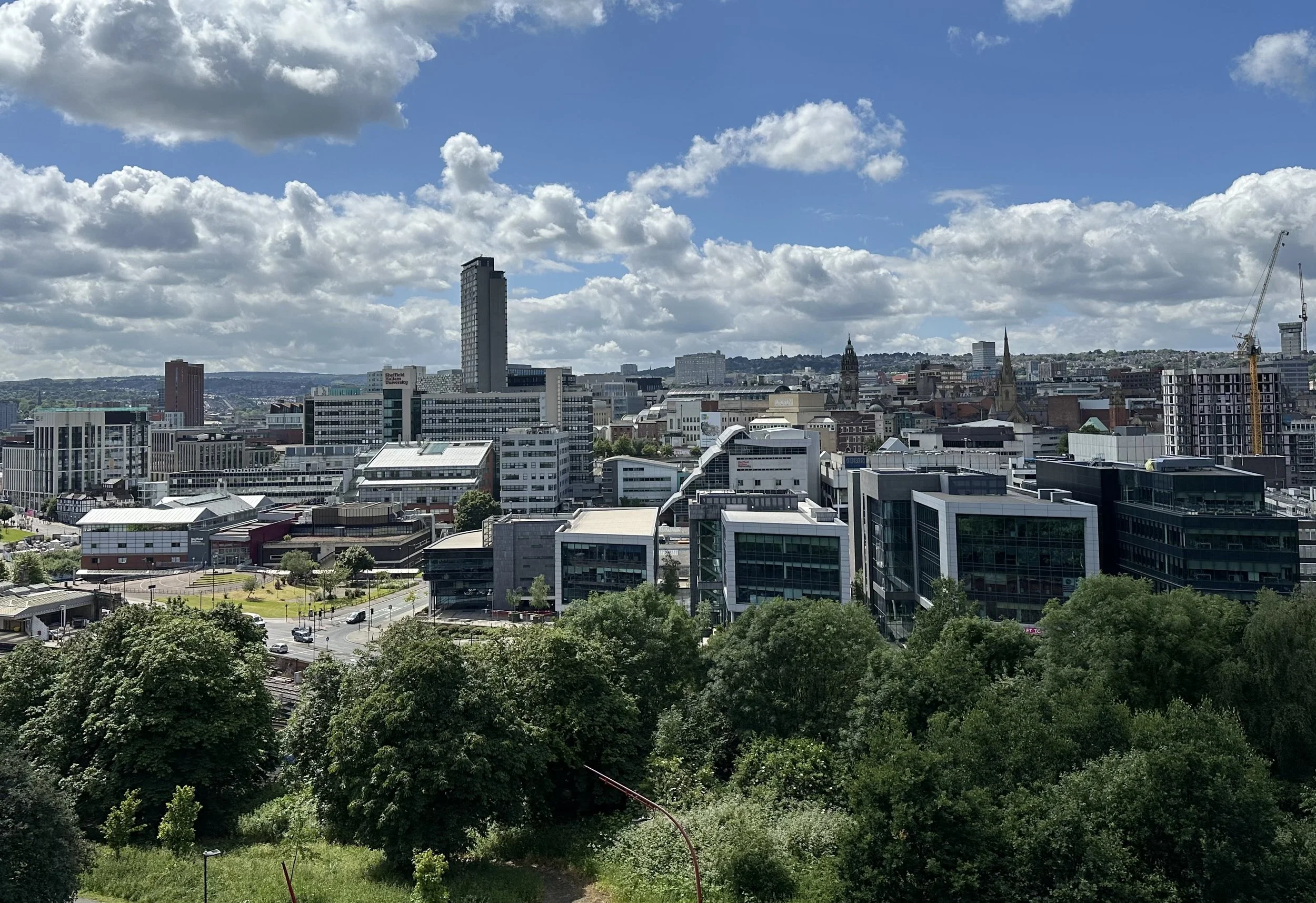
Fagan’s - Sheffield city centre.

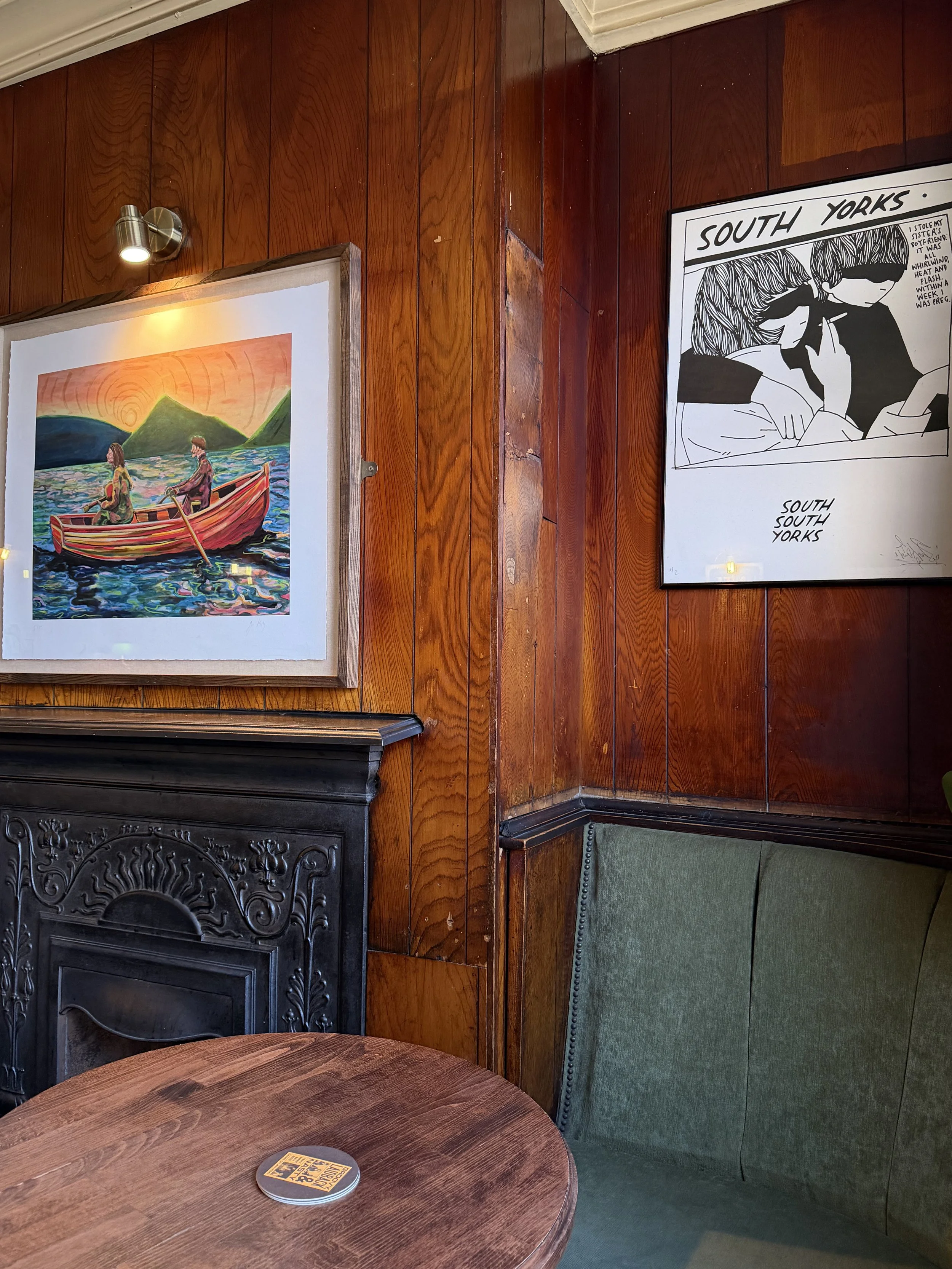
Another sip of Guinness as I glance around at the slightly imperfect décor of wood-panelled walls adorned with a mish-mash of artwork speaks to my version of a perfect pub. It’s eclectic yet harmonious without being over-designed. A pub with authenticity, not clichéd pastiche like the steady influx of themed “Irish” pubs that now seem to blight most towns and cities, where the proxy for being Irish is reduced to old beer barrels as tables and fake retro Guinness signs sitting alongside inspirational quotes featuring four-leaf clovers and leprechauns.

Many pubs in London in particular are renovated to be faux traditional and look shit. Other city pubs feel soulless despite the thin illusion of being “posh”.

A pub should have an original wooden floor, stone tiles and, depending on the location, a good old carpet. Curtains are a yes, even nets. Blinds absolutely not. Wall lamps, beer mats and banquettes elevate the look even further, as does a real fireplace. In fact, I don’t think the perfect pub can be so without one. It may not be in use, but it’s the focal point of the room. Something to stare at and ponder.

A pub should tread the fine line between calm and clinical, interesting without tipping into sensory overstimulation.

The setting and layout, I don’t believe, is as hard-fixed as Orwell outlines in his essay. Use of space is far more important. That said, a pub should provide space for large groups whilst also allowing room for peace and solitude, tucked into a comfy corner with just your thoughts as company.

Pubs should not be performative venues, but egalitarian spaces where anyone can come as they are.

My mind turns back to Fagan’s as some workmen from Wolverhampton enter, chatting to the barman. It’s their first time here, yet the conversation flows. A cheeky pint before they head back down the M1. Typical of any good pub is this openness and friendliness amongst strangers without being intrusive. We share some small talk with them as they keep coming to the window we are sat by, peering over the road to check their van hasn’t received a parking ticket.

All pub interiors should be eclectically simple

There’s no judgement in a perfect pub. Debate and open conversation, yes. But self-righteousness should largely be left at the door. There’s enough of that just over the threshold, in the real world. A pub is escapism grounded in a lived environment.

Of course, the elephant in the room (tap or lounge?) is that the escapism comes from the alcohol itself. However, and perhaps controversially, I feel that this is one of the least important aspects of a pub and something that’s often overcomplicated, particularly in recent years with the rise of craft beer.

Sure, a pub needs beer and it can’t taste bad. But I’ve drank in many pubs that pride themselves on having an amazing range and quality selection and had a bad time. Unless a beer has been badly kept, the opposite cannot be said. A good range is nice: a lager, an ale, a stout and a cider is really all that’s needed. There shouldn’t be any cocktails in a proper pub, unless a gin & tonic or a shandy counts. Wine is fine too. It’s quick to pour and doesn’t dominate the room like the sight of someone vigorously shaking a cocktail shaker in a backstreet boozer would.

In his essay, Orwell pointed out there’s a difference between country and city pubs. One real difference for me is food. In a town or city centre: no full meals, just snacks. Countryside and out-of-town pubs: yes, and in fact a necessity. There are few finer simple pleasures than a brisk countryside walk on a cold sunny winter’s day followed by a homemade pie or roast dinner. A reward for the hike and an undoing of the calories burnt is a rite of passage. Unless explicitly stated as a gastro pub, I don’t want to see any poor attempts at nouveau cuisine and definitely no balsamic-glazed salads, which in my view should be outlawed.

My temporary anger at food faux pas is interrupted by a loud laugh from the bar. I zone back into my surroundings at Fagan’s. There’s a hum of conversation taking place as the music of my youth, mid-2000s indie, plays in the background. Intentionally or ironically, I hear one of the co-owners musical prowess coming over the speakers as, I Bet You Look Good On The Dancefloor, reminds me that I’m very much now back in Sheffield as well as very much no longer fifteen.

Music in the ultimate pub, if played at all, shouldn’t be loud or intrusive, but nicely there - how a pub should be. You don’t want to be shouting just to ask your drinking partner who they think will win the World Cup this summer.

Speaking of World Cups, these are the kind of moments where a TV can work in a pub, but generally I’m against it. Worst still when pubs seem to have TVs on silent in conflict with loud music and Coronation Street subtitles flashing away in the background. The competing stimulation removes the whole point of going to the boozer in the first place: to be social.

Being social can also mean a dartboard and/or pool table. But they shouldn’t dominate should you wish not to participate. Cards and board games are welcome for long and lazy afternoons cradling one ale too many.

The snug - Fagan’s, Sheffield.

Much of the vibe in a pub is, of course, a by-product of the staff. An arsehole landlord or mardy barmaid can take an otherwise pleasant pub and make it uncomfortable.

The ultimate pub should have service that’s friendly and warm without being overly familiar. Efficient too, with those standing at the bar (not queuing in a line, please stop doing this) duly noted and served in order.

I think back to the moment I walked into Fagan’s. Eagerly the first one there as it opened at 4pm. I tell the barman that I’ve just got back from months of travelling and have been Guinness-less throughout. The conversation is easy and natural and I ask him about the Exposed Awards that evening, an annual Sheffield event where people nominate their local “best ofs”. Being uncharacteristically out of the Sheffield loop now, I ask if they’re up for nomination. They are: Best Traditional Pub.

I ask if he’s confident and he provides such an unexpectedly brilliant answer full of humility - explaining that of course he’d love to win, but the real strength of the pub is the community. Not only those who visit and form part of the fabric of Fagan’s, but the surrounding pubs in the “Irish Triangle”, where they all help each other out. It’s a symbiotic relationship, particularly now where city-centre pubs are increasingly dependent on weekend pub crawls. Being part of this little network gives each other a leg up and provides a shared sense of destination and identity.

I reflect back on his words with glee at how this wasn’t something I’d even thought of. Orwell certainly didn’t. But then that was during a time when pubs were largely centres of the community and were full. Today’s landscape is much more challenging, of course, and widely written about. But the point of it not just being the pub you’re in, but the wider surroundings and neighbouring businesses, really struck a chord with me. He’s totally right. The perfect pub isn’t usually a standalone at all.

Fagan’s went on to win Best Traditional Pub that evening. Fitting really.

‘The Snog’ by Pete McKee - Fagan’s

I stand up to leave Fagan’s unsure when I’ll be able to visit again. I take a final look around the main room and realise that the real feeling to any really good pub is meaning. Not meaning as to why you’re there, but what the pub means to you.

Of course, pubs you visit for the first time can still wow, but it’s not until the second visit and beyond that they can begin to hold some true meaning. I’m reminded of time spent in here with friends. Persuading my mate Nick to buy a Fagan’s branded hat from behind the bar, after he said they looked cool. It was in the snug I was about to pass on leaving that I told my mum one Mother’s Day that I was going to propose to my now wife.

And that’s really what pubs are above all else: moments shared.


If you enjoyed this, you might like the below too…

Read More
Joel Beighton Joel Beighton

Pizza, Oh Dear

I interrupt my usual travel writing (no, this is not a travel blog) with something closer to home. Pizza.

I interrupt my usual travel writing (no, this is not a travel blog) with something closer to home.

Pizza.

Or more specifically, the endless wave of pizzerias now blighting the UK, spreading across cities like an unstoppable beige tide of sourdough, San Marzano tomatoes and buffalo mozzarella.

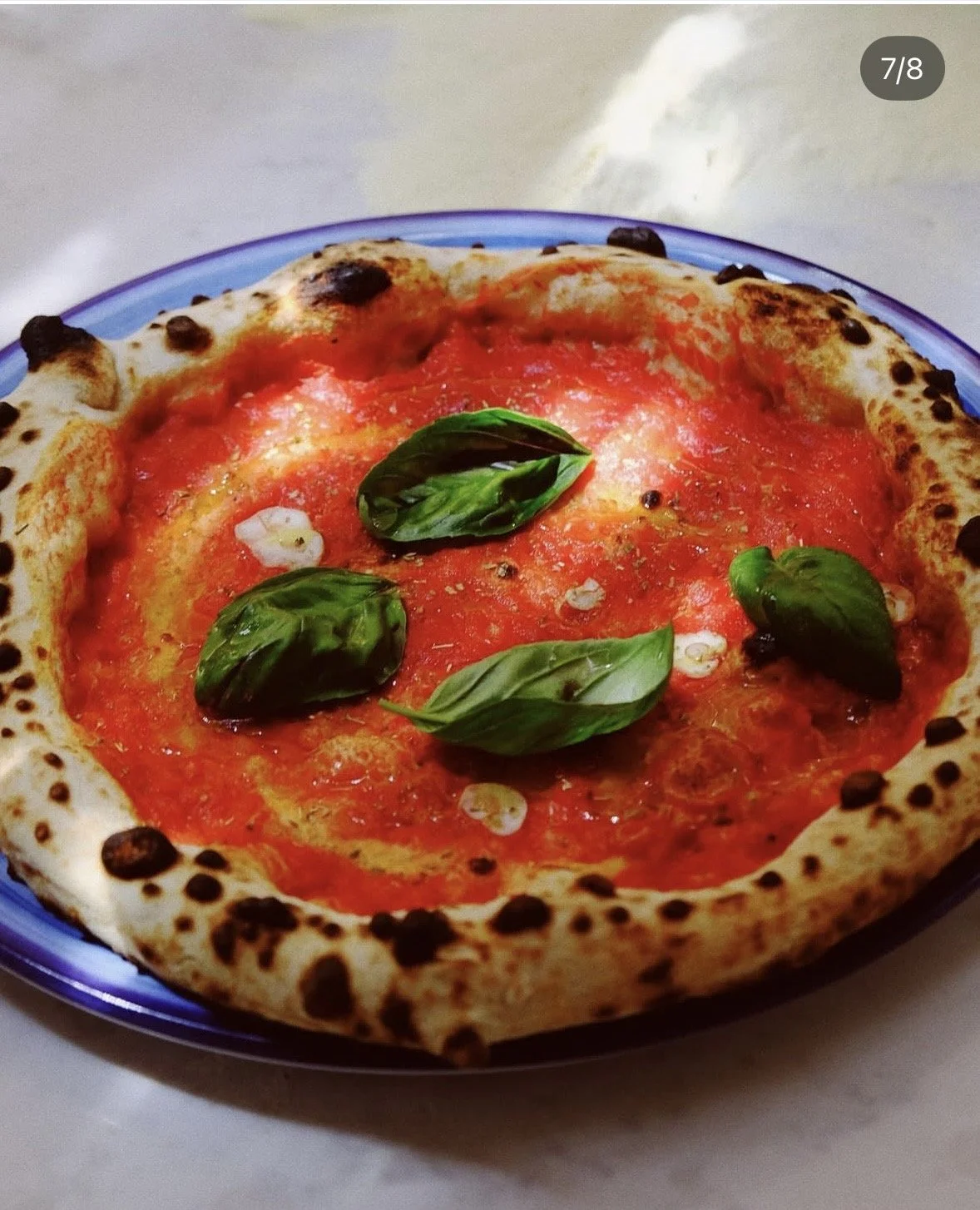
This week in Sheffield, where I’m from, a new opening arrived in the city centre: Forbici. Already operating in Manchester, it has now headed over the Pennines, bringing yet another Neapolitan-style offering to a city already flooded with them.

And it made me wonder: is there any limit to this copy-and-paste way of feeding people?

The ubiquitous pizza napoletana

Sheffield, of course, is behind London, which at least now has a more diverse range of pizza sub-genres. London has moved on to Roman slices, New York folds, Detroit trays (admittedly there are also a couple of these in Sheffield), Chicago deep dish, New Haven cult imports, and whatever people are currently calling “London style”.

Sheffield, meanwhile, is still stuck in the mid-2010s hype cycle of all things Naples.

Back to Forbici, though, who have perhaps realised that the Steel City doesn’t exactly have a shortage of pizza napoletana already. And instead of marketing themselves on the familiar holy trinity of best dough, best tomatoes, best mozzarella, they appear to have opted for a slightly more bizarre left-field approach.

Their angle is this:

Come here… because you cut your pizza with scissors… Forbici also translating to scissors, in English.

Apparently, this is the Neapolitan way - Here was me thinking the Neapolitan way was either folding it up portafoglio style and eating it on the street, or sitting down with knife and fork, slightly burned fingertips and a look of mild superiority.

In Sheffield, the world leader in manufacturing blades, perhaps the scissors are the most locally authentic part of the experience?

If anything embodies the sheer mass of identikit Neapolitan pizza options now boring many UK cities, it is surely this.

My first question is: why would anyone care about the method of cutting pizza?

People have been managing perfectly well for decades. Entire generations have survived without artisanal scissors. I admit I’ve even used them at home myself, on the rare occasion I buy a supermarket pizza for the oven. It works. It’s fine. It’s not exactly a culinary revelation.

My second question is: how sustainable can this kind of marketing possibly be?

A restaurant built on kitchen scissors feels unsustainable. What happens when the novelty wears off? Do they move on to machetes? Hedge trimmers?

Ironically, their pizza does look very nice. I’m sure it tastes very good. I have no issue whatsoever with Forbici.

My issue lies elsewhere.

A refreshing change - pizza romana al taglio

It’s the lack of imagination. The sense that outside London, the dining scene has largely become trapped in a loop: the same concept (see also, smashed burgers), the same aesthetic, the same language, the same slightly reverential obsession with Naples, repackaged again and again with some small gimmick taped on top.

And perhaps I’m being snobby. Perhaps I need to loosen up.

But I can’t help feeling it’s a slightly sad reflection of where we are that hype for a new opening is now generated not by flavour, or originality, or even atmosphere…but by the utensils.

All that being said, I know full well that the next time I’m back in Sheffield, I’ll be yearning for one of Napoli Centro’s Maradona-stamped pizza boxes making its way to my door.

Pizzeria… Pizza, oh dear.

Pride of place - Diego Armando Maradona


If you enjoyed this, you might like the below too…

Read More