Writing
Sri Lanka - Beauty & Discomfort
The ceiling fans whip above our heads at an alarming rate, trying to keep pace with the mid-afternoon humidity as those of us sampling afternoon tea on the veranda at the Amangalla Hotel in Galle attempt to tread the fine line between refinement and simply keeping cool, all while downing cups of hot tea.
It is a slightly nostalgic afternoon for a period of time of which I have no living knowledge. Anemoia, as my musician friend Yarni would say.
The building itself has lived several lives. Once the headquarters of the Dutch East India Company, later Galle’s first hotel under British rule, and now a quietly polished luxury stay.
Like many places on the island, Sri Lanka still carries clues of its European colonial past.
The ceiling fans whip above our heads at an alarming rate, trying to keep pace with the mid-afternoon humidity as those of us sampling afternoon tea on the veranda at the Amangalla Hotel in Galle attempt to tread the fine line between refinement and simply keeping cool, all while downing cups of hot tea.
It is a slightly nostalgic afternoon for a period of time of which I have no living knowledge. Anemoia, to quote my musician friend Yarni.
The building itself has lived several lives. Once the headquarters of the Dutch East India Company, later Galle’s first hotel under British rule, and now a quietly polished luxury stay.
Like many places on the island, Sri Lanka still carries clues of its European colonial past.
Old world luxury - Amangalla Hotel, Galle
In Pettah, a red post box inscribed with GR for King George sits almost unsuspectingly beside a bald car tyre filled with concrete. Even the humble custard cream, that quiet mainstay of the British biscuit tin, is readily available in supermarkets.
But the story here is not solely British.
At Geoffrey Bawa’s Colombo residence and at his country estate at Lunuganga, outside influences appear in more considered ways. Less in your face Mini Cooper energy, more quiet synthesis.
Born to a Sri Lankan father and Dutch mother, Bawa began life as a lawyer before turning later to architecture. What he left behind feels deeply deliberate. There is no pastiche here. No attempt to impose European forms wholesale onto tropical ground.
Instead, Bawa allows the space itself to do the work. Clear sightlines. Considered light. A calm sanctuary designed for thinking and for living.
His trophies are different too. Murano glass. Indian artwork. Fragments gathered from across the world and absorbed rather than imposed.
Geoffrey Bawa’s Lunuganga residence
Sri Lanka today feels like a country steadily finding its own feet. After years of internal strain, a modern identity is forming, unevenly but visibly.
Nowhere is this more apparent than along the southern coast, where development and tourist appetite sometimes appear to be outpacing the infrastructure beneath them. Hastily built beachside accommodation sits beside small local shacks selling fruit, snacks, or lottery tickets.
And then an Ashok Leyland bus roars past, and the old world briefly returns once more.
Workers at the Dambatenne Tea Factory
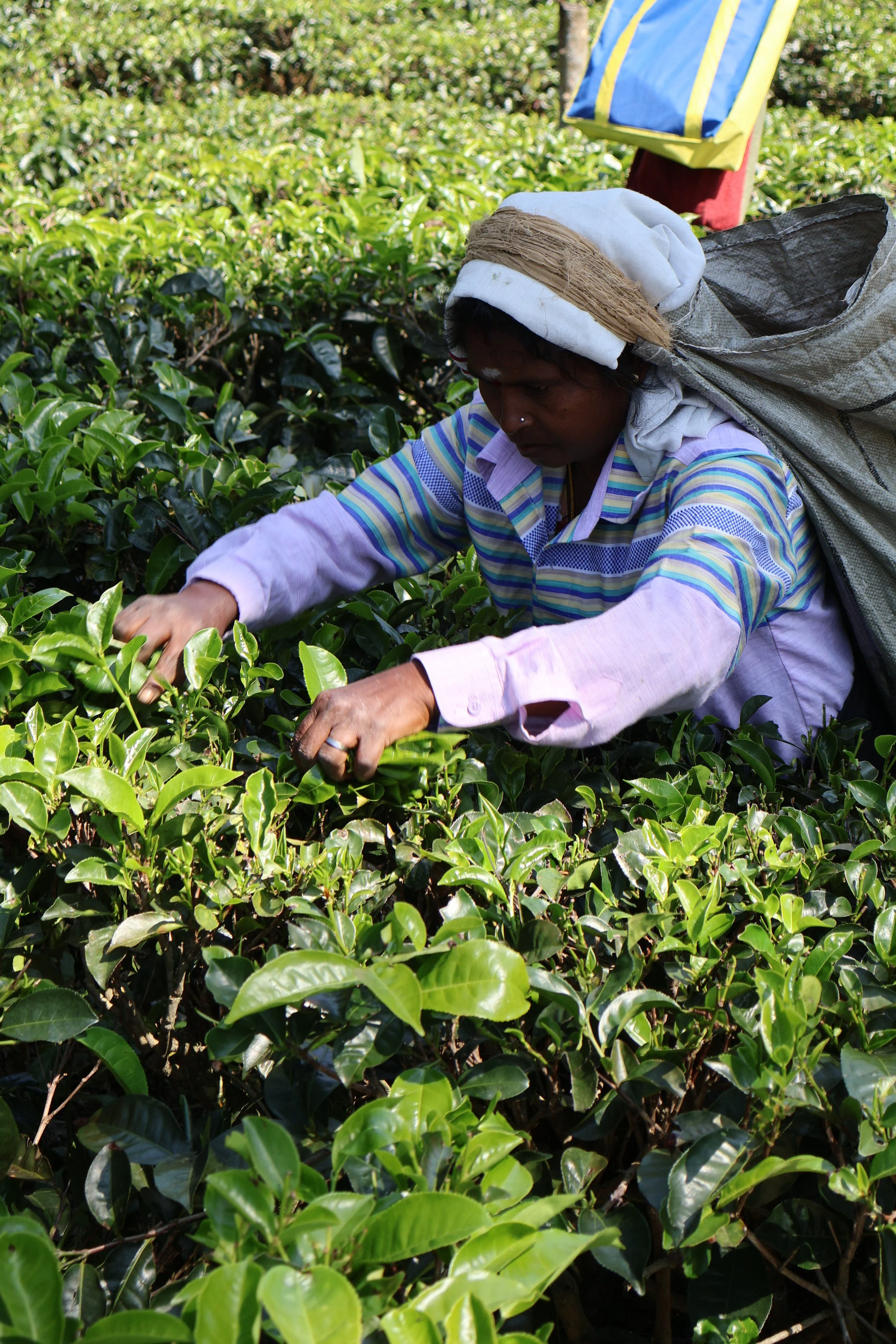
Travel a couple of hours north of the beaches of the south coast and you reach the tea country at Uva. Another relic of the past, where the country’s first commercial tea bushes were planted by the British. By the early twentieth century, the vast estates that remain today were already in place.
A visit to Dambatenne tea factory, built in 1890 by a Scot, Thomas Lipton, furthers this feeling of the old world. Not only is the factory still standing, but much of the British-made machinery within it remains in operation. Our tour guide was incredibly keen to show these off to ourselves, from the UK.
However, here too, the stark contrasts of Sri Lanka loom large as workers tirelessly labour in questionable conditions for the equivalent of around £3.60 a day. A reminder that cosplaying with nostalgia has very real downsides for those in the thick of the reality of real life.
It isn’t only ornate architecture, beautiful design and tea-drinking rituals. There is a real human element at play, one where people are exploited today just as they were back then.
Tea plantation worker in the hills near Ella
It makes me think about how morally difficult it can sometimes feel being a tourist. The natural curiosity and delight of catching a glimpse into a time you didn’t experience; often via small, real-time moments, albeit in modern clothes and modern technology - sits awkwardly beside an awareness of the hardship faced by others.
The balance between bringing much-needed outside money and avoiding the temptation to turn a day trip into a photoshoot of poverty.
Most people don’t like to be uncomfortable when they travel, but perhaps discomfort is an unavoidable part of seeing the world honestly. Something to learn from, to grow from and to try and affect positively, in your own little way. An opportunity to appreciate beauty whilst also recognising and respecting the difficulties that others live with every day.
As Anthony Bourdain once put it:
“Travel is not always pretty. It is not always comfortable. Sometimes it hurts, it even breaks your heart. But that’s okay. The journey changes you; it should change you.”
Railway relics from another era
*All photos used were done so with the permission of those photographed*
If you enjoyed this, you might like the below too…
Pettah Go Early
Long before the crowds and chaos, there is a moment of calm. A stillness. An unexpected beauty.
My tuk tuk comes to an abrupt stop outside the Jami-Ul-Afar Mosque in Colombo’s Pettah district. It’s early on a Sunday morning and I am here to take some photos of this colourful area before it all gets too much.
The air is heavy following a downpour overnight. The clouds are thick and grey and puddles linger at the side of the road. I step over one to reach the relative safety of the pavement across from the ‘Red Mosque’, a jewel in Colombo’s architectural crown.
Long before the crowds and chaos, there is a moment of calm. A stillness. An unexpected beauty.
My tuk tuk comes to an abrupt stop outside the Jami-Ul-Afar Mosque in Colombo’s Pettah district. It’s early on a Sunday morning and I am here to take some photos of this colourful area before it all gets too much.
The air is heavy following a downpour overnight. The clouds are thick and grey and puddles linger at the side of the road. I step over one to reach the relative safety of the pavement across from the ‘Red Mosque’, a jewel in Colombo’s architectural crown.
The road between me and the mosque is quiet. A few locals pass by and I’m conscious of their glancing looks as I pace up and down, trying to find my amateur photographer’s best angle to show off the beauty of the tiled building before me.
The ‘Red Mosque’. Jami-Ul-Afar, Colombo
While I do so, a small crowd approaches the mosque and I realise it’s a wedding photo shoot. I hang back and muster the confidence to take a photo of the happy couple, stood outside the entrance. I watch on with no real purpose and then, after a short while, find the nerve to attempt a shot of the pair holding hands, through the window of a passing tuk tuk. I somehow manage it first time and I’m quietly thrilled that my fairly limited technical ability with a camera pays off.
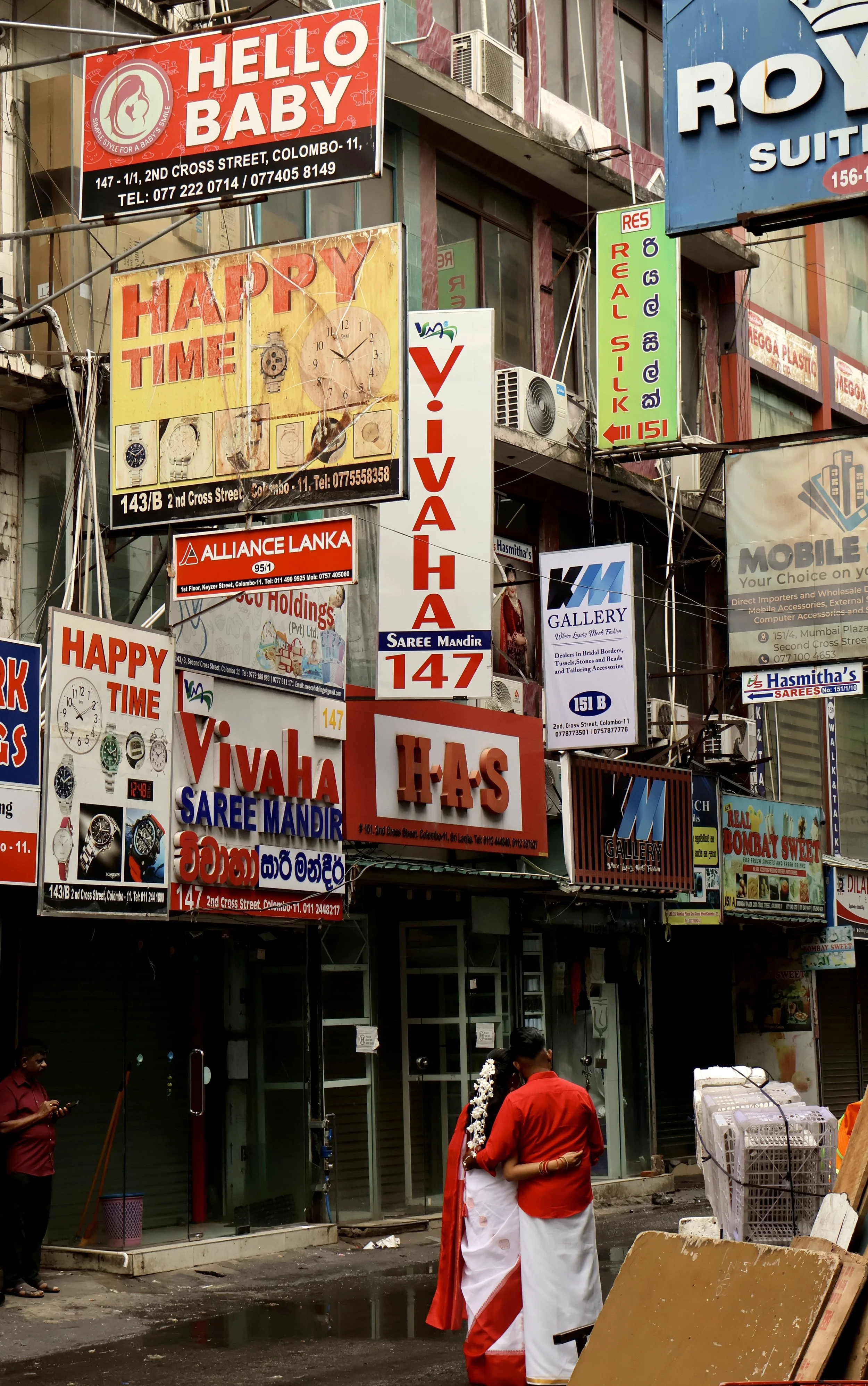
I walk on and head to explore the surrounding streets. Down 2nd Cross Street it is still quiet, but things are beginning to stir as market vendors set up their stalls for the day. I have a clear view of the jumble of signs fighting for attention from the buildings lining the street, advertising everything from clothing, to watches, to baby items.
The happy couple through a tuk tuk
King George VI red postbox, Pettah.
I’m relieved I came early and have the bandwidth to take it all in without the crowds. This time of day is maybe my favourite for getting out and walking. Right on the cusp of things starting to happen and a sense of possibility and excitement for the day ahead. A literal awakening of the day.
At an intersection I spot a red King George post box and think briefly of home. As I turn around, I see yet another newlywed couple having their photos taken right in the middle of the street. I hold back to give them space and continue on along Prince Street.
Love amongst the chaos, Pettah. Colombo.
Market porter on the move. Pettah Market.
Market porters now pass with increasing regularity, pushing goods on large trolleys and dodging the big puddles. A Chinese tour group of photographers walks by and says hello as I duck into the small passageways off the main thoroughfare, marvelling at the vivid red signs and retro typography.
Then I notice my smugness beginning to fade. I’ve made the rookie error of not checking my camera battery before setting off.
I loop back towards the mosque via 1st Cross Street. An old lady walks ahead of me, framed by towering yellow cranes at the nearby port. I’d almost forgotten I was by the sea, but being out at this time has given me the space to observe and to settle back into myself.
My camera battery finally dies and I hail a tuk tuk. It winds its way through the ever-busier streets as traffic begins to build and another day properly starts.
The smugness, briefly lost, has returned.
The towering yellow cranes of the port
If you enjoyed this, you might like the below too…
Unfamiliar Familiarity
Familiar unfamiliarity is often a feature of travel.
A trip to New York turns a lifetime of television and film into reality. Manhattan becomes a walking set of “wasn’t this in…” and “isn’t that where…”. Paris and Rome carry a different kind of recognition, the inherited romanticism of the Seine or the Trevi Fountain, places we feel we already know long before we arrive.
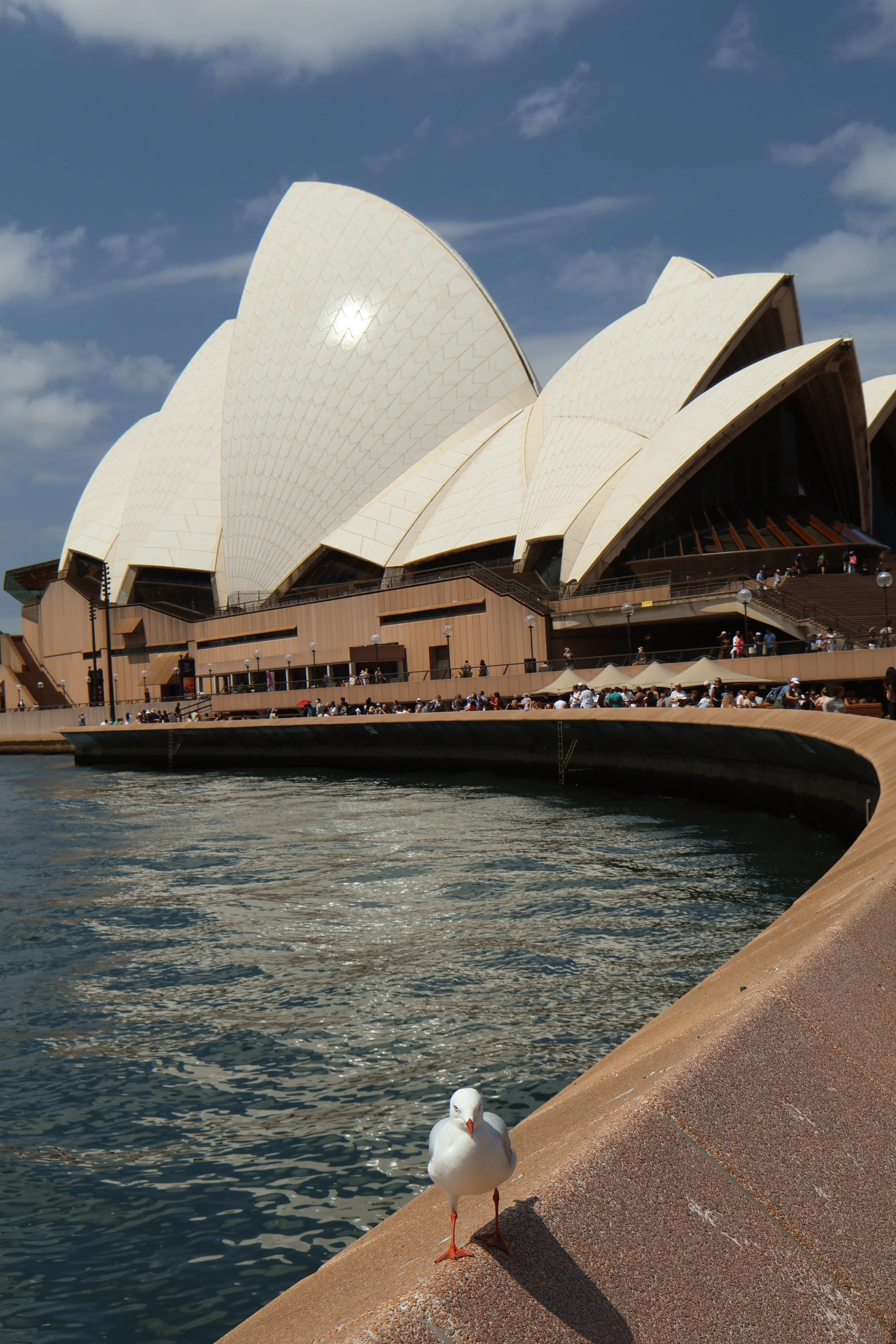
Sydney offers those picture-postcard moments of familiarity on first visit too. The Harbour Bridge, so often a backdrop to New Year’s Eve news stories, watched from afar while the Australians celebrate and you wait for the clock to crawl round to that mate’s house party back home.
Familiar unfamiliarity is often a feature of travel.
A trip to New York turns a lifetime of television and film into reality. Manhattan becomes a walking set of “wasn’t this in…” and “isn’t that where…”. Paris and Rome carry a different kind of recognition, the inherited romanticism of the Seine or the Trevi Fountain, places we feel we already know long before we arrive.
Sydney offers those picture-postcard moments of familiarity upon first visit too. The Harbour Bridge, so often a backdrop to New Year’s Eve news stories, watched from afar while the Australians celebrate and you wait for the clock to crawl round to that mate’s house party back home. The Opera House, a view seen a thousand times and in-person, as is often the case, appearing smaller than you first imagined.
Sydney Opera House and a camera friendly seagull
But Sydney offers something else, something deeper and more disarming, particularly for a British visitor.
Not only do you hear British accents everywhere and Aussies drive on the left, but there are quieter clues too. Street names and statues regularly nod to Britain’s past. Queen Victoria in particular is everywhere, watching over parks, squares and civic buildings.
Then there are the streets themselves. Much of the architecture can feel uncannily close to home, especially on a wet day, when the light dims and the air turns heavy.
Elevated Aussie take on a terraced house
A walk along Liverpool Street (there we go again…) brings to mind Piccadilly Gardens in Manchester, a comparison that will no doubt upset several corners of the North West at once. The area around Kings Cross (oh, one more) echoes the seedier edges of Leicester Square. An evening walk after dinner in Paddington (ok, this is getting daft now…) provides an Australian take on the quaint terraces of Notting Hill.
The familiarity can become confusing, almost disorientating. Enough so that you find yourself seeking reassurance in small rituals. A pub. A pint. Australians, it turns out, do pubs exceptionally well, serving proper pints in proper glasses, often with the option of a pie, or a roast dinner alongside.
A Sydney boozer whose exterior reminded me of one you’d find at some UK seaside town.
Of course, this is not what visiting Australia is really about. But there is comfort in being on the other side of the world, in a subtropical climate and still being able to find a bacon sandwich. Familiarity, it seems, has travelled a very long way.
If you enjoyed this, you might like the below too…
Byron Bay
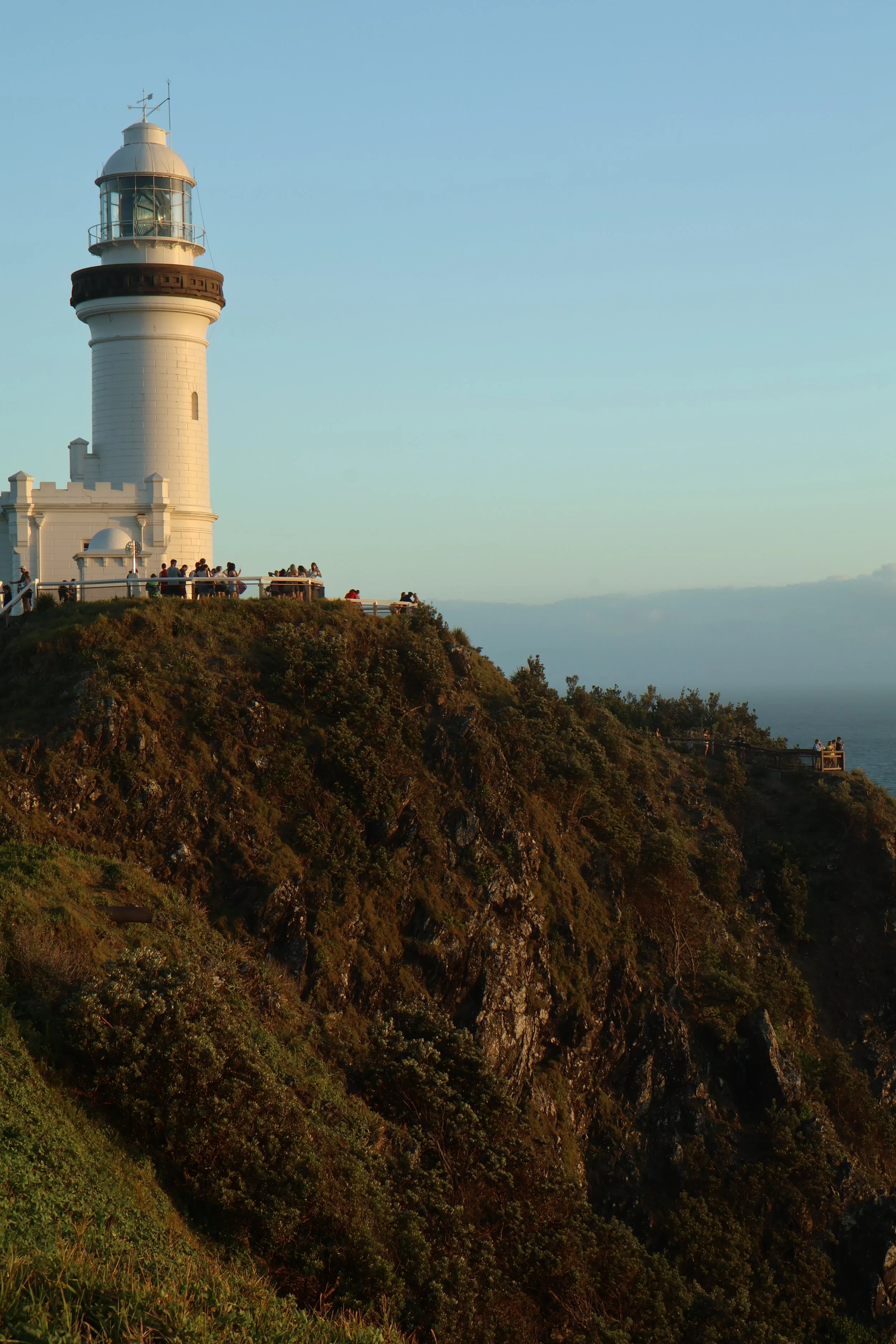
The sun rises above the horizon, spilling gold across the sea and over the hundreds of pilgrims gathered at the Byron lighthouse. A middle-aged Italian man begins singing the opening lines of My Girl. Not an obvious soundtrack for a warm, cloud-free January morning, but a welcome one nonetheless.
Long before the sun appears around 6am, the streets of this small but famous New South Wales beach town are already alive. People of all ages run, walk, and cycle through the quiet roads. Being outdoors and connected to nature feels like a default setting here, something that comes up again and again, and one of the reasons Australia, and Byron Bay in particular, feels so appealing.
The sun rises above the horizon, spilling gold across the sea and over the hundreds of pilgrims gathered at the Byron lighthouse. A middle-aged Italian man begins singing the opening lines of My Girl by The Temptations. Not an obvious soundtrack for a warm, cloud-free January morning, but a welcome one nonetheless.
Long before the sun appears around 6am, the streets of this small but famous New South Wales beach town are already alive. People of all ages run, walk and cycle through the quiet roads. Being outdoors and connected to nature feels like a default setting here, something that comes up again and again, and one of the reasons Australia, and Byron Bay in particular, feels so appealing.
Byron Bay lighthouse
Early morning sunlight has well-documented health benefits. It helps switch off melatonin, boosts serotonin activity, and supports mood, emotional resilience, and metabolism. I have always been more of a morning person, but time in Byron Bay deepened that connection to rising with the sun and getting outside as soon as possible.
Back home, mornings were often something to get through rather than enjoy. Coffee drank quickly, social media checked too early, the day already half spent before it had really begun. Here, mornings feel like an invitation rather than an obligation. Nothing is waiting for me except the light.
Good weather and beautiful surroundings help, of course, but a week of this routine left me feeling noticeably more energised, more positive, and sleeping better too. I notice it most in the afternoons. The familiar slump never quite arrives.
Sunrise at Byron Bay
Beyond the beach, Byron’s neighbourhoods unfold in quiet, tree-lined streets. Weatherboard houses sit lightly on their plots, all timber and verandas. Cafés and bakeries appear almost incidentally, corners rather than destinations, serving excellent coffee and improbably good pastries to people still in flip-flops or running gear. Nothing feels overdesigned. It is interesting in the way places become beautiful when they are lived in properly.
Health and wellbeing are a constant presence here. The stereotypical Australian instinct to be active is hard to ignore, especially around the beach, where it is striking how few overweight people there seem to be. Surfing, another well-worn cliché, is everywhere, but with a far broader cast than expected. Small children, older men, young women, and the archetypal surfer bro all share the same waves with little fuss or hierarchy.
Surfers at Tallow Beach
Australia also appears to have a refreshingly relaxed relationship with class. Byron Bay is sometimes described as “posh” or “stuck up”, which likely says more about the observer than the place. Anyone familiar with the UK’s deeply ingrained class consciousness would struggle to see much of that here. Even amid the wealth of Byron, there is an air of egalitarianism that is hard to miss.
As with most great places, however, it is the natural world that truly steals the show.
Tropical birds make sounds you usually only hear in David Attenborough documentaries. Koalas sleep lazily in eucalyptus trees while tourists peer hopefully into the canopy above. The koalas barely acknowledge the attention. Curled into themselves, they sleep through the excitement, entirely uninterested in being seen.
Dolphins are visible from the coastal path, just offshore in turquoise water. Lunch at Beach is accompanied by an unexpected sighting of a pod of whales a few hundred metres out to sea, as we tuck into the ubiquitous Moreton Bay bug. No sharks during our stay, thankfully, though a tree snake, luckily non-venomous, pops out to say hello as we check in to our Airbnb.
By the time we leave Byron Bay, waking early no longer feels virtuous or productive. It simply feels normal. As though this is how days are meant to begin and life is meant to be lived.
If you enjoyed this, you might like the below too…
Unfamiliar Kitchens
Eating out is one of the great joys of travel. I love food and I love trying as broad a range of things as possible while away, ideally local and ideally seasonal. We spend a lot of time planning what and where to eat on our trips to make sure we experience the best and most authentic food a place has to offer.
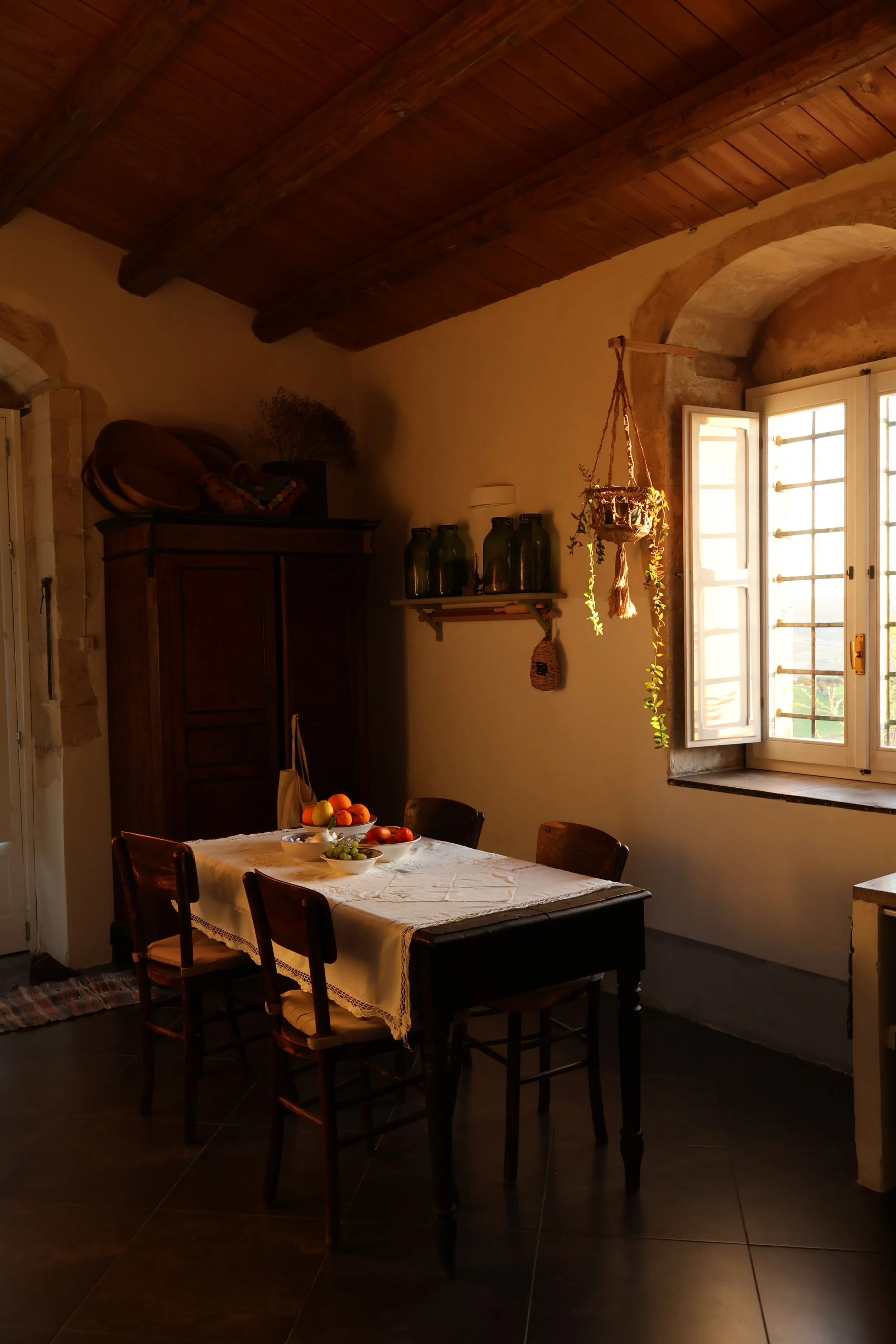
Sometimes, though, it is nice to make use of the kitchen where you are staying. A visit to the local market is always a must. It is one of the quickest ways to understand a place, its rhythms, its people, its priorities.
Eating out is one of the great joys of travel. I love food and I love trying as broad a range of things as possible, while away - ideally local and ideally seasonal. We spend a lot of time planning what and where to eat on our trips to make sure we experience the best and most authentic food a place has to offer.
Sometimes, though, it is nice to make use of the kitchen where you are staying and have a night in. A visit to the local market is always a must. It is one of the quickest ways to understand a place, its rhythms, its people, its priorities.
Then comes the kitchen itself.
A country kitchen at an Air BnB near Ragusa, Sicily.
Unfamiliar kitchens come with inevitable compromises. The blunt knife. The awful plastic chopping board, or worse, a glass one (which explains the blunt knife). An induction hob paired with a collection of pans that do not work on induction. Leftover salt and olive oil from previous guests. And, lurking at the back of the cupboard, the true heathen: balsamic glaze.
Cooking at home is an intuitive dance. Fridge to chopping board, to bin, to stove, back to the chopping board, then oven, sink, fridge again. A solid nine on Strictly. In an unfamiliar kitchen, this becomes the uncoordinated movement of a drunk uncle at a wedding. Where are the pans? Where did I put the garlic? Is this really the only knife they own?
Impatiently attempting to cook Swordfish an old outdoor grill
The fumbling intensifies if you decide to cook outside, or attempt to use an ancient wood oven. Spoilt by modern conveniences but instinctively drawn, like most men, to the primal appeal of cooking over open flames, you cannot resist. Hours are spent coaxing heat from wood and embers, trying to judge timings so that dinner does not quietly drift into midnight.
Serving presents its own challenges. No kitchen tongs. No proper serving spoon. Plates in questionable colour pallettes. Wine poured into a glass clearly designed for fizzy pop. It all pulls you out of your comfort zone, and somehow that is part of the appeal.
Once the frustration fades, you realise none of it really matters. A first-world problem, as they say. But it is a small and welcome reminder that travel is not all glamour and carefully curated feeds. Sometimes it is blunt knives, bad pans, and wine in the wrong glass. And somehow, that makes the experience richer, not poorer.
From an unfamiliar kitchen - nice ceramics and even some wine glasses, but a challenging cooking set-up
If you enjoyed this, you might like the below too…
Eerie Erice
We’re driving through the outskirts of Trapani. A rain shower passes over as quickly as it came, a common theme for this part of the north western Sicilian coastline in late November. The windscreen wipers begin to slow and the sun shines bright, glistening off the road.
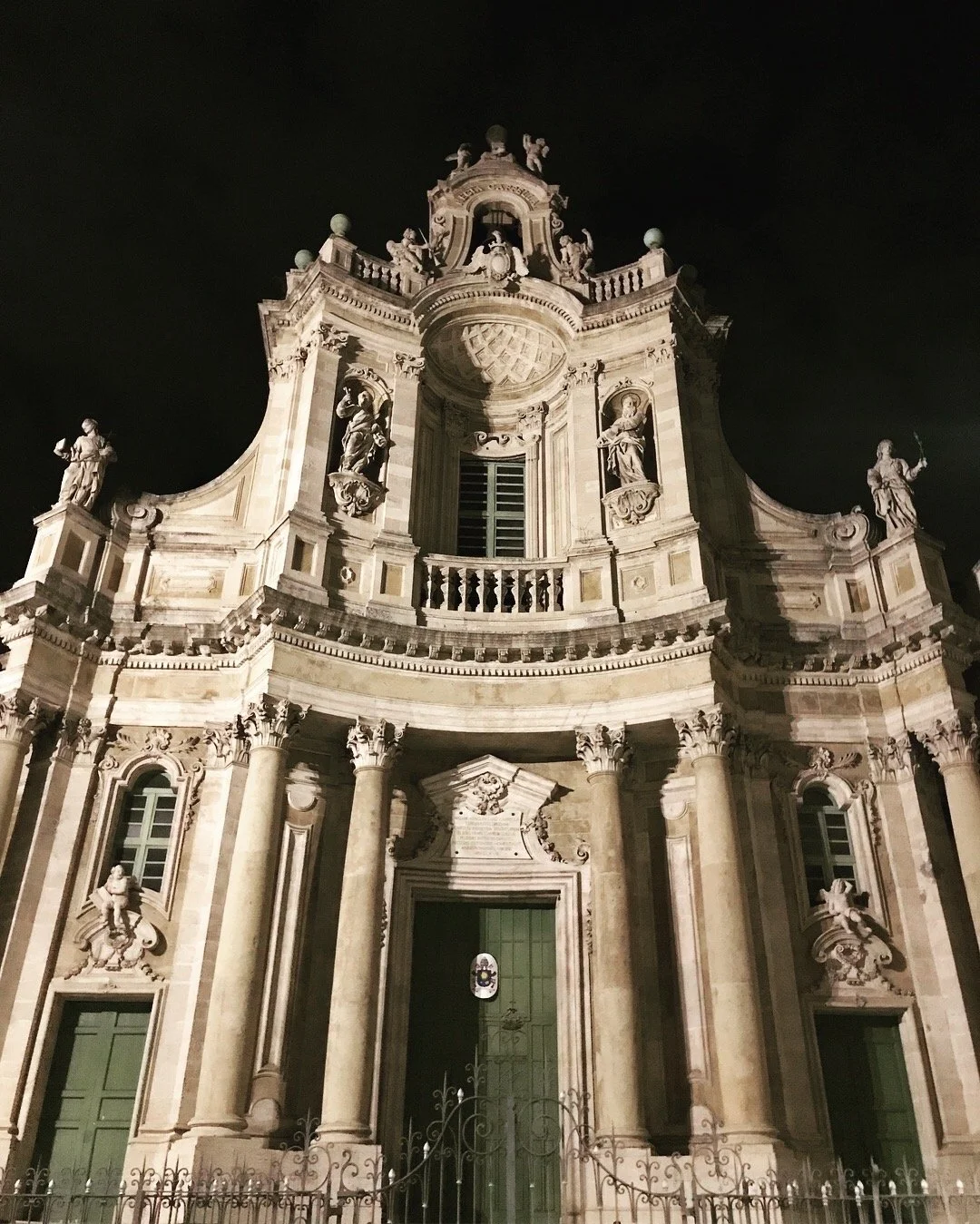
Monte Erice ahead of us, still shrouded in a heavy, thick cloud; brooding above.
We’re driving through the outskirts of Trapani. A rain shower passes over as quickly as it came, a common theme for this part of the north western Sicilian coastline in late November. The windscreen wipers begin to slow and the sun shines bright, glistening off the road.
Monte Erice ahead of us, still shrouded in a heavy, thick cloud; brooding above.
We begin the never-ending climbs of twists and turns up the mountain and I’m thankful for having hired a car with an automatic gearbox. We pass incredibly brave (or daft) cyclists making their way up 2,461 ft climb. The sun is glistening down on the city of Trapani, below and we have a clear view across to the Egadi Islands.
We begin to reach the summit and within a turn of a hairpin bend, the infamous cape of fog and mist that envelopes Erice in morning hits us. I make a bad quip about Erice being eerie as I pull into a car parking space by Porta Trapani that seems to have been marked out using a Smart Car as the optimal size of vehicle for its use.
We head up the steep hill from the car park in search of a sweet breakfast at the infamous Pasticceria Maria Grammatico. The slippery footpath like glass from the earlier downpour and horizon barely visible, we finally reach our target and some sugary, caffeine fuelled solitude.
It’s quiet when we enter and the feeling of being part of a noir tv drama series is only intensified by the wonderfully old fashioned decor of the pasticceria - wood panelled walls and a large collection of foreign currency and Catholic saints a backdrop to the large, sweeping counter that’s full of Sicilian treats.
We have our cappuccino and share a few bits from the counter - a still warm crema Genonvesi, a slice of Torta alle Amarene and piece of Crostata al Pistachio. Our eyes being bigger than our bellies, we wrap some away for ‘later’ and head out into the street, past the group of cyclists we’d passed earlier on the road up and into a now slightly clearer Erice.
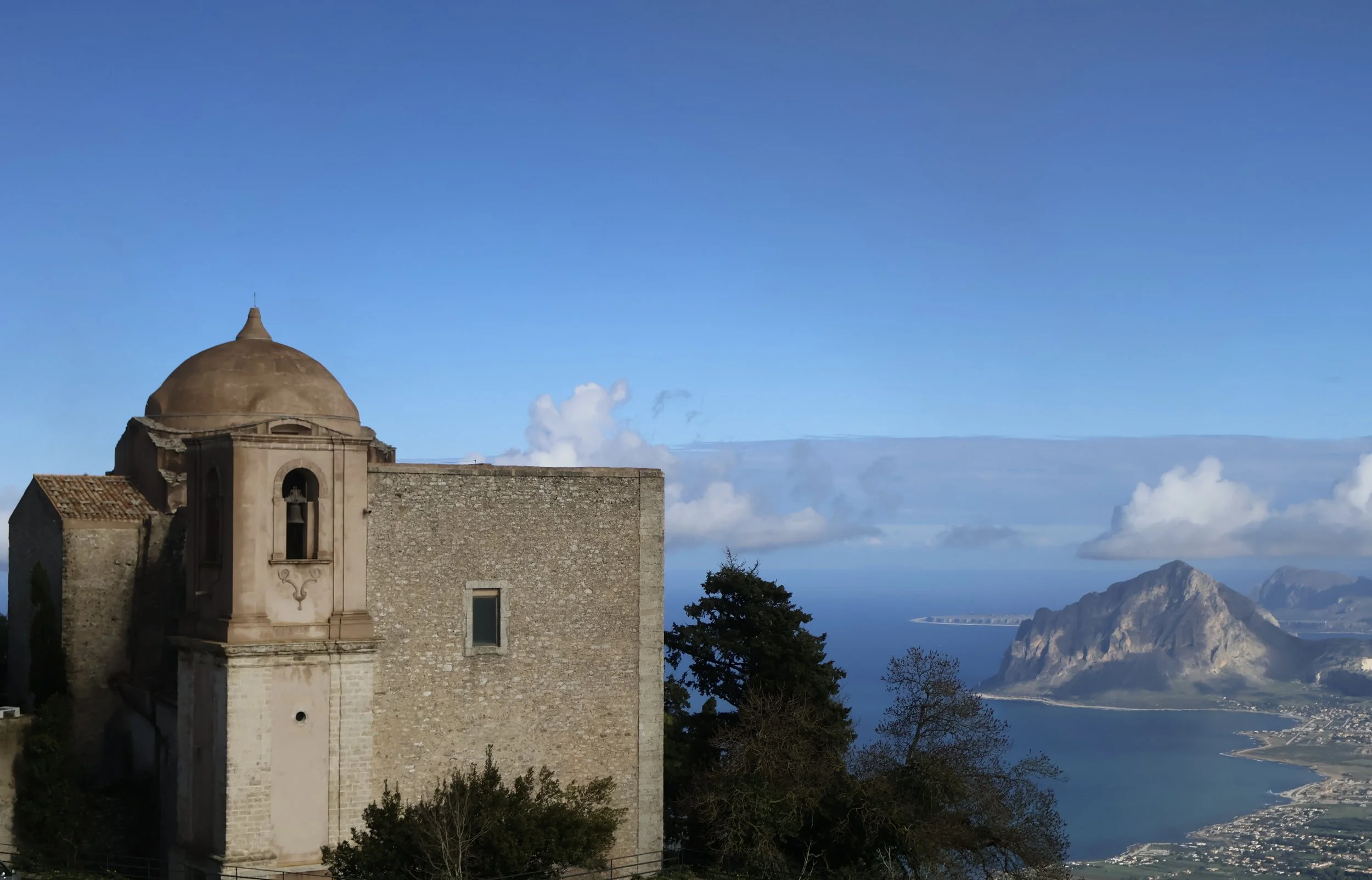
The fog and mist lift to add even further sense of cinematography to an already picturesque town. We tread delicately on the slippery stone streets and reach the north-eastern edge of the town to be blown away by the dramatic landscape towards San Vito Lo Capo. Clouds suspended mid air and running quickly along the vista of the hills below and the sea beyond.
An incredible vista towards San Vito Lo Capo, from Erice
The eeriness of the climate and landscape only continuing as we walked around to Castello del Bálio where we stood above a blanket of swirling cloud, obscuring the view to the south and Marsala with just the odd glimpse of a field a couple of thousand feet beneath.
We continue walking back through the main heart of the town. Past a church with its doors open - a Virgin Mary statue illuminated in the doorway to welcome in visitors and along more winding street with dark semi derelict houses only adding to the mystique as the clouds and mist envelop the town once more. A cold dampness setting into the air.
The mist and noir sets in once more as we head back to our car
Erice was a truly remarkable place that surpassed all my expectations and if it hadn’t been for tiredness and a slight anxiety about the car being parked in a space that’d have been small for Noddy’s car, whilst being fully aware of many Italian’s inability to drive carefully, we would have stayed for longer. Alas, we left feeling grateful for the experience as we snaked our way back down Monte Erice.
Midnight in Sicily
Our plane begins its descent into Palermo. The curve of the bay glows on our left, a soft necklace of lights against the dark water, while the mountains stand brooding around the city.
We’re back in Sicily. The still warm November air hits us as we alight the plane - a small announcement that we’ve left behind the cold, wet, grey of England and arrived somewhere that shares more DNA with North Africa than with Rome.
We take a (dangerously) quick cab into the city, along the highway where the Judge Giovanni Falcone’s car was blown apart by La Cosa Nostra, in 1992. I recall to the last time I was here, reading Midnight in Sicily and learning how a place so beautiful could carry such deep scars. How the island is a complicated subversive web of criminality and the law and not always necessarily fitting the bad and good tags that you’d associate with either.
There’s something undeniably pleasing about driving into a city at night. Streets hushed and shrouded in darkness. A solitary window lit by the bluish light of a TV. A tiny orange ember hovering outside a doorway where someone smokes. Traffic lights flipping colours like painted brushstrokes. A bar glowing softly, making you wonder what stories are unfolding inside. Landmarks illuminated like canvases in a quiet gallery, stripped of the crowds that swarmed them only hours earlier. A couple stepping out of a warm trattoria into the night, still slipping on their jackets.
Then there’s the AirBnb arrival ritual. You step out of the taxi hoping you gave the driver the right address, because nothing looks the same as it did on Google Street View. Nothing ever does at night. There’s the familiar dance with key codes and lockboxes, followed by the discovery that the building has no lift and both 20kg suitcases need to be hauled up four flights of narrow, badly lit stairs.
But then you open the door, and the place does look like the photos. Relief washes in: you haven’t been conned, and you can finally stop. After hours of travelling, of queuing for security, of boarding by standing in stairwells for no logical reason, of buying that unnecessary airport pint because what else is there to do for forty minutes and you can finally exhale.
The trip starts now. After a night of sleep in a strange bed, tomorrow it will truly begin.
Captain Teebs
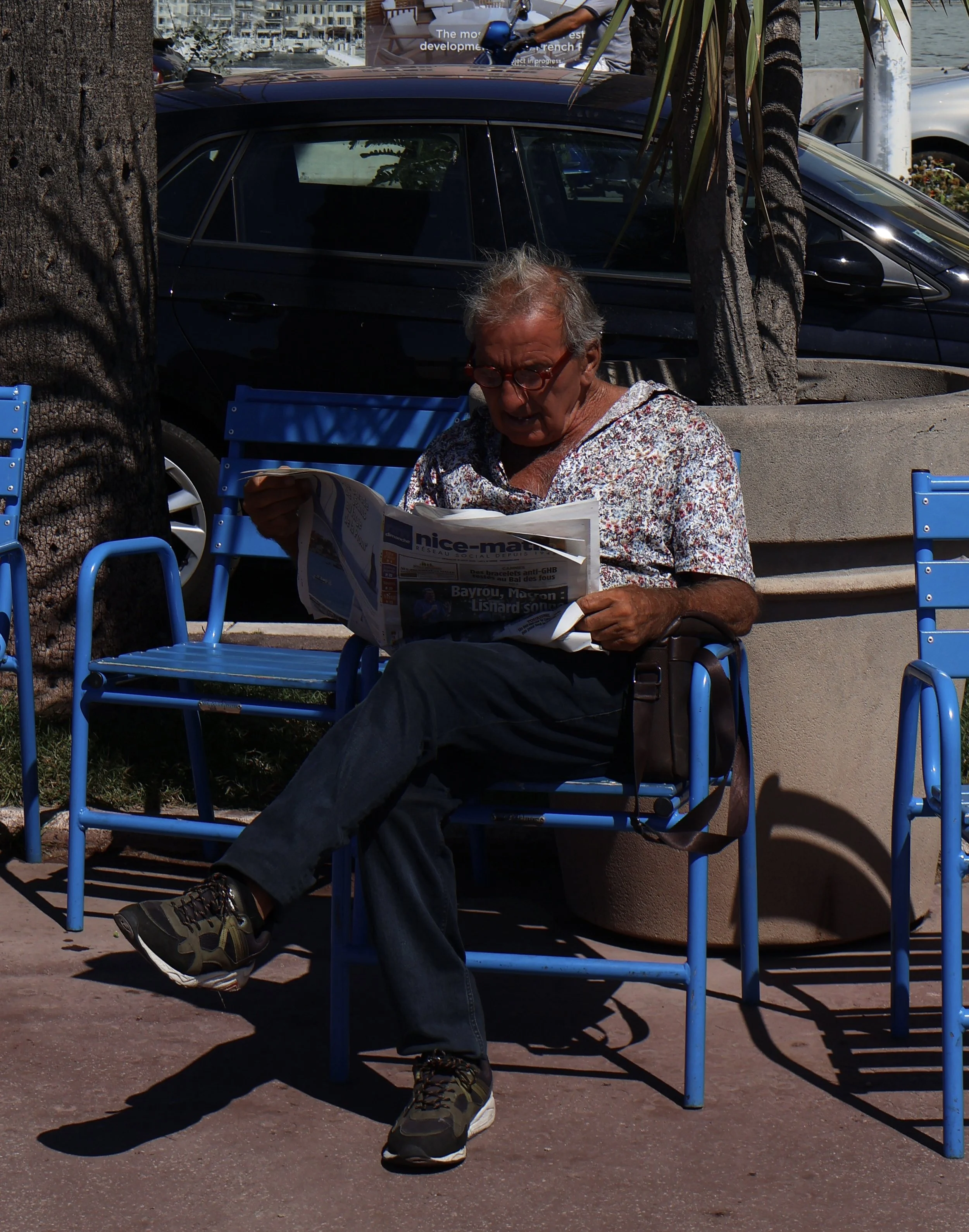
Tony Soprano once said a nursing home was basically like a hotel in Cap d’Antibes. We put that line to the test with a day split between Cannes and Antibes — one felt like a film set, the other like a place you’d actually want to stay.
Who is Captain Teebs? Fans of The Sopranos might recall Tony arguing with his mum, Livia, about the Green Grove nursing home. Tony insists it’s a “retirement community,” while Livia stubbornly calls it a nursing home. In frustration, Tony badly paraphrases Dr Melfi, who claims places like Green Grove are “basically like a hotel in Cap d’Antibes.” Tony instead says “it’s more like a hotel at Captain Teebs!”.
That odd little line stuck with me — and it’s what came to mind when we found ourselves in that very corner of the Riviera. So, consider this post a slightly convoluted homage to Captain Teebs.
Cannes
We spent a morning in Cannes and, if I’m honest, I found it underwhelming. The wealth is impossible to miss — rows of designer shops, gleaming hotels, and marinas stuffed with yachts, all basking in the afterglow of the annual film festival.
But having just spent three days in Nice, Cannes felt bland. We walked for a while, then stopped for a coffee at an expensive beach bar. A bit too comfortable in the setting, we followed it up with a spritz each — €20 apiece. Nice enough, but a regretful cost. The place was full of apparent models, retired CEOs, and a bloke who could have stepped straight out of a Netflix documentary on an Albanian mafia fugitive.
We thought about heading up to the old town, but in the end, the place never clicked. So we bailed and caught the train down the coast.
Antibes
Almost immediately, Antibes felt different. Buzzier, warmer, more interesting. We strolled the old streets (just missing the market as it was packing up), then slid into full tourist mode and ordered croque monsieur/madame for lunch at a little café in the sun. Basic, yes — but exactly what we wanted.
The real highlight was the Picasso Museum, housed in the seaside Château Grimaldi. For six months in 1946, Picasso lived and worked here, and since 1966 it has displayed his art in the very rooms where he painted. I’ve always liked his work, and spending an hour in that space was the perfect balance of culture and atmosphere.
Yes, Antibes is touristy, but it gave me that rare instinctive feeling of a place you want to come back to. Cannes I could take or leave; Antibes I’d happily explore again in more depth.
If travel teaches anything, it’s to trust those gut reactions. And mine say I’d happily return to Antibes, suitcase in hand, to see if Captain Teebs has a room waiting.
The ceiling fans whip above our heads at an alarming rate, trying to keep pace with the mid-afternoon humidity as those of us sampling afternoon tea on the veranda at the Amangalla Hotel in Galle attempt to tread the fine line between refinement and simply keeping cool, all while downing cups of hot tea.
It is a slightly nostalgic afternoon for a period of time of which I have no living knowledge. Anemoia, as my musician friend Yarni would say.
The building itself has lived several lives. Once the headquarters of the Dutch East India Company, later Galle’s first hotel under British rule, and now a quietly polished luxury stay.
Like many places on the island, Sri Lanka still carries clues of its European colonial past.