
In Upper Silesia, I Found the South Yorkshire I Grew Up In
Few things are as exciting to a child as being told they can have an ice cream.
The possibilities contained within that small decision. Cone or cup. One scoop or two. Chocolate or raspberry sauce. Hundreds & thousands, perhaps even a Flake if the occasion demands it. For a few minutes, the world seems to slow down and you enter a childlike state of nirvana.
After dinner one warm evening in Piekary Śląskie, southern Poland, where my wife and I are staying with her mum, we walk through the park and stop at the ice cream kiosk next to the play area. The summer sun is still shining brightly in the sky. Children weave between us on scooters and rollerblades while older couples sit talking on benches.
Watching the children wait for their ice creams, I notice a particular sense of expectation. The optimistic belief that something good is about to happen.
Perhaps that is why the rest of the park begins to feel so familiar.
Close to the kiosk is a public toilet that is not only open, but seemingly clean. There’s a free set of lockers next to it. Further along, there are two neatly maintained play areas, a small dog park and enough bins that the paths remain almost entirely free of litter. The grass has been cut. There are plenty of benches to sit down on. Nothing is especially glamorous or architecturally dramatic. It is simply a public place that appears to expect people to use it. And they most certainly are.
Viewed through British eyes, all of this feels strangely noticeable.
Piekary Śląskie is not a wealthy suburb or a polished city centre redevelopment. It is a post-industrial town shaped amidst coalfields, steelworks and heavy industry, now trying to become something else after decades of economic change. A mine still stands close to its centre, having only closed in 2020. Its pit wheel is still proudly silhouetting the skyline.
In many ways, it reminds me of the South Yorkshire I grew up around.
And yet the atmosphere feels markedly different today.
There is a sense of civic optimism here that increasingly feels absent in modern Britain. Not optimism in the grand political sense, announced at a podium or printed on the side of a bus, but something subtle and yet more tangible. Places being maintained. Public spaces still seem enterable. Rapidly growing purchasing power. Train lines being extended and modernised. Infrastructure leaning towards proactivity rather than managed decline.
Upper Silesia often reminds me less of modern South Yorkshire than of the South Yorkshire I remember from childhood. Not because it was perfect, but because there was still a sense that things were broadly moving forward.
Some of that may simply have been the optimism of being young. Ice creams were more exciting (I mean, they still in fairness…). Summers seemed longer. The future was somewhere distant and bountiful, filled with things that had not happened yet.
But not all of it was imagined.
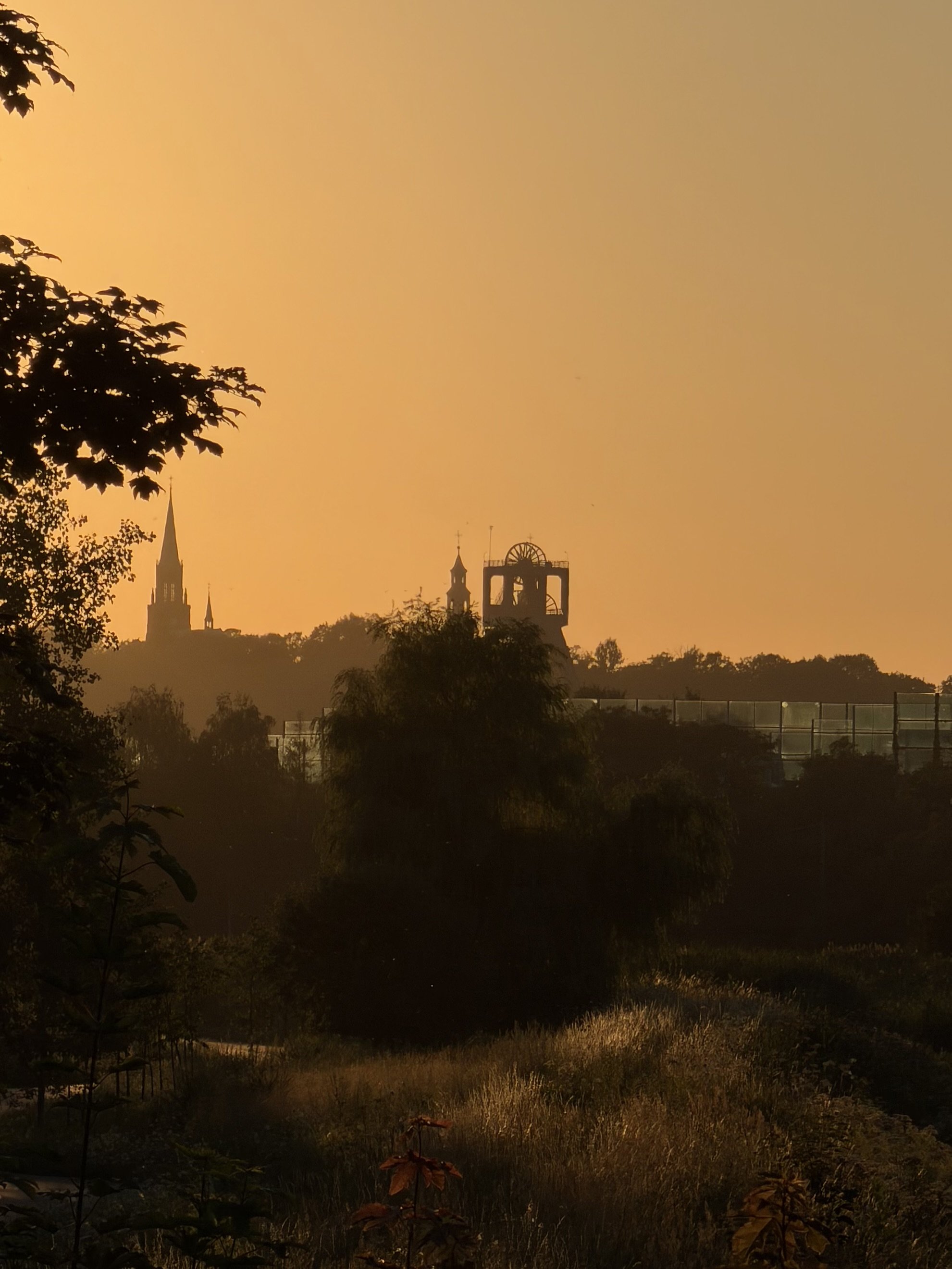
The former coal mine, Piekary Śląskie.
South Yorkshire in the late 1990s and early 2000s had recently emerged from the trauma of industrial collapse, but it also appeared to be constructing a new version of itself. Meadowhall shopping centre in Sheffield, still felt relatively new. The Supertram seemed faintly futuristic. New buildings appeared - some good, some bad. Public spaces were redesigned. Regeneration was discussed with excitement rather than immediate suspicion.
Nobody believed the damage caused by the collapse of steel and coal had been repaired. It was visible everywhere, in the landscape, in families and in the quiet humiliation of people whose skills were no longer needed or valued. Yet alongside that loss was a feeling that improvement remained possible.
That is the South Yorkshire I remember.
It is also, increasingly, what I recognise in Silesia.
The resemblance is not a timeline. Poland is not waiting to become Britain, and Britain was certainly never a playbook for what a successful European country should look like. The idea that Poland is somehow living through Britain’s recent past risks reproducing the same Western European condescension that spent decades describing countries such as this as “catching up.”
What feels familiar is not Poland’s stage of development, but its direction of travel.
When I was growing up, Poland was routinely presented in Britain as somewhere economically behind us. It had emerged from communism and was still moving towards the prosperity and modernity that countries such as ours supposedly represented. Polish people later arrived in Britain to work, often doing jobs far below their qualifications, and were treated by some as beneficiaries of a country whose basic superiority was assumed.
Walking through Silesia in 2026, that old hierarchy feels increasingly difficult to sustain.
In Britain today, basic functionality can feel like a luxury. Public toilets barely exist. Park bins often overflow, if they are provided at all. Large railway stations remain disconnected from key transport hubs. Buses disappear mid-journey. Parks, libraries and community spaces are expected to survive on diminishing budgets and the goodwill of burnt-out locals.
The individual examples are small enough to dismiss. A vandalised bench. A cancelled service. A public toilet with a metal shutter pulled across its entrance. But accumulated over years, they begin to communicate something larger. They tell people what they are entitled to expect from the place in which they live.
South Yorkshire has not only lost industries. Years of shrinking council budgets, withdrawn investment and the replacement of skilled, well-paid work with insecure, poorly paid jobs have altered its expectations.
Decline has become so familiar that functioning infrastructure is treated as an extravagance and any proposal for improvement must first defend itself against the charge of being unrealistic - such as properly connecting two of the country’s largest cities, Sheffield and Manchester, instead of by a single carriage road that cuts through small picturesque Peak District villages and is closed for large parts of the year.
In parts of southern Poland, the opposite message is still visible.
There are new roads and resurfaced ones. Trams and buses feel like parts of ordinary life rather than services awaiting their next round of cuts. Parks fill with families because they remain pleasant places in which to spend time. The civic realm still carries the suggestion that tomorrow might be slightly better organised than today.
That, more than any particular building or economic measure, is what reminds me of Britain in the 1990s and early 2000s. Not the fashions, the prices or some sentimental reconstruction of childhood. It is the sensation of living in a place that has not yet stopped expecting improvement.
Poland is not a utopia. It has its own inequalities, neglected places and political divisions. Its economic success is already producing new pressures. Housing becomes less affordable. Development threatens the character of the places that attract it. Wages do not always keep pace with costs. Public services face greater demands, while younger people begin to question whether the opportunities promised to them will ever become attainable.
Success can create its own version of the problems it appeared to solve. Investment can become extraction. Regeneration can become displacement. A country that has spent years trying to catch up can discover that the destination itself is unstable.
There is no guarantee that the clean toilet beside the ice cream kiosk will remain open. No park maintains itself. None of the things that feel abundant now are immune from neglect later.
Perhaps that is partly what makes this part of Silesia so affecting to me. I am not looking at a finished place, but one that still appears to believe in improvement.
Britain may not have abandoned that belief entirely.
As I write, Andy Burnham has just entered Downing Street. I am wary of investing too much hope in any politician, particularly one who has barely had time to set up their new broadband provider. A change of prime minister does not reopen a public toilet, restore a bus route or reverse decades of economic imbalance.
Still, Burnham breaks the mould a little.
There is something mildly encouraging about a former northern mayor, shaped by governing a post-industrial city region, arriving in Westminster talking about regional power, technical education and skilled work. He may understand that decline is experienced locally long before it appears in national statistics. It is felt in what disappears, what stops working and what people gradually learn not to expect.
Whether any of that survives contact with the central government is another question. But perhaps the arrival of someone whose most well-known achievements were shaped governing outside of Westminster, offers a faint possibility that managed decline will no longer be treated as the natural condition of places such as South Yorkshire.
Maybe optimism can return, not as a slogan or another distant regeneration plan, but as something people encounter in ordinary life. A bus that arrives and doesn’t cost a fortune. A park that remains cared for. A young person learning a skill that their community actually needs not only today, but in the future. A public place built on the assumption that the public still matters.
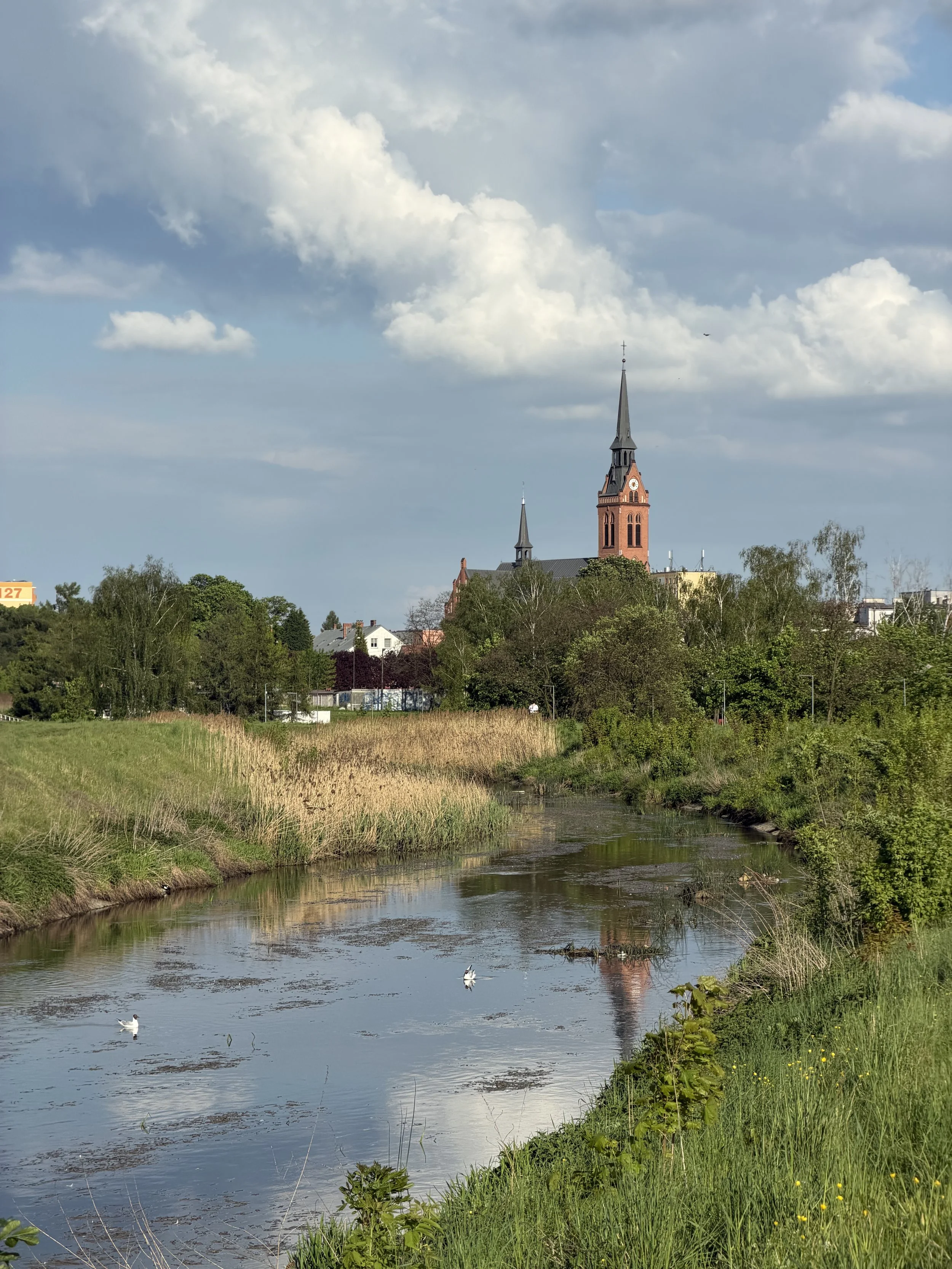
Brynica, Piekary Śląskie
Walking home from the park in Piekary, finishing my ice cream, I think about the van that used to pull up outside our house on Sunday afternoons when I was a child.
You would hear the tune before it turned onto the street. I would ask my parents for money, then head towards the pavement before it could escape, suddenly overwhelmed by possibility.
Perhaps the excitement belonged to childhood.
But not all of it was imagined.
Back then, it seemed entirely reasonable to believe that something good might be coming around the corner.
If you enjoyed this, you might like the below too…
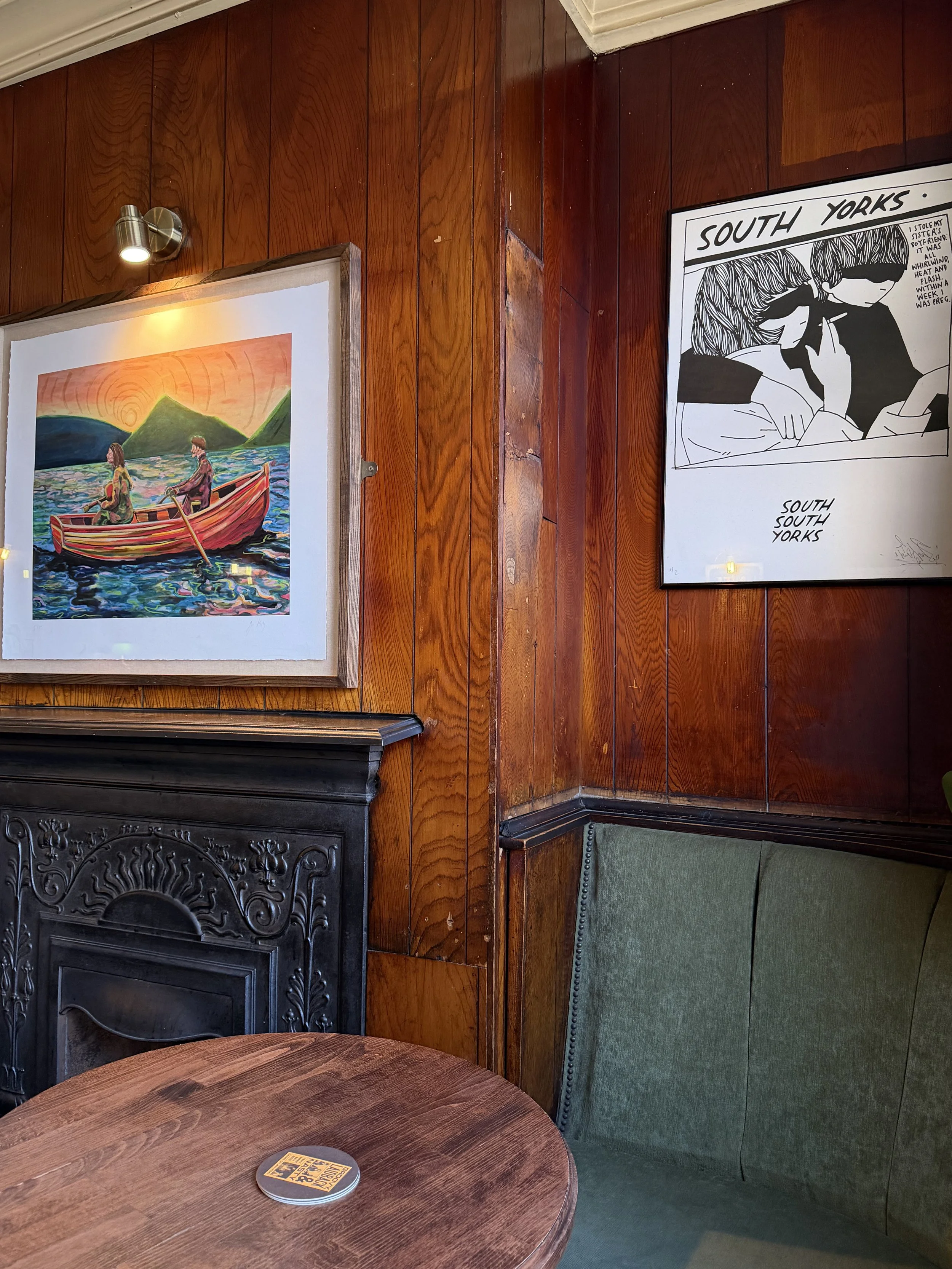

There was space. Space to rehearse. Space to experiment. Space to fail.
Sheffield’s cultural legacy was not built because somebody designed it. It emerged because enough people had the freedom, time and opportunity to create things on their own terms. Much like its industrial past.