
We Are Guests
We are sat on a busy bus in Naxos, heading into the island’s mountainous interior for a day exploring its villages.
Just outside Naxos Town, two local women climb aboard, each carrying a shopping bag from the morning market. The bus is already full, mostly with tourists like me. There isn’t a spare seat between us.
I stand and offer mine. They smile politely and wave me back down. For the next fifteen minutes they remain standing as the bus winds its way up into the hills.
I can’t understand much of their conversation, only the occasional word drifting through.
Tourístes.
Airbnb.
Although they’ve declined my seat, I can’t shake an uncomfortable feeling.
Should more of us have stood up?
Or, to take it further, should tourists simply come second? After all, these women actually live here. I’ll only ever catch this bus once.
I am probably overthinking it. Yet the question stays with me.
Fewer than two weeks earlier I’d found myself asking something remarkably similar in Athens.
We’d arrived that morning and headed straight to Diporto. If you’ve spent any time looking for places to eat in Athens over the last few years, you’ll almost certainly know it. An almost 140-year-old basement taverna. No menu. Home cooking. One of those places endlessly described as a “hidden gem”, despite now being one of the city’s worst-kept secrets.
As we sat down, shouting drifted in from the street above.
“Thief! That’s my grandmother’s necklace!”
An American tourist had apparently had it stolen moments earlier.
Before a mouthful of chickpeas or bread had reached the table, I was reminded that the city wasn’t just a backdrop. Real life was carrying on around us.
The food was everything I’d hoped for. Simple. Delicious. Completely without pretence.
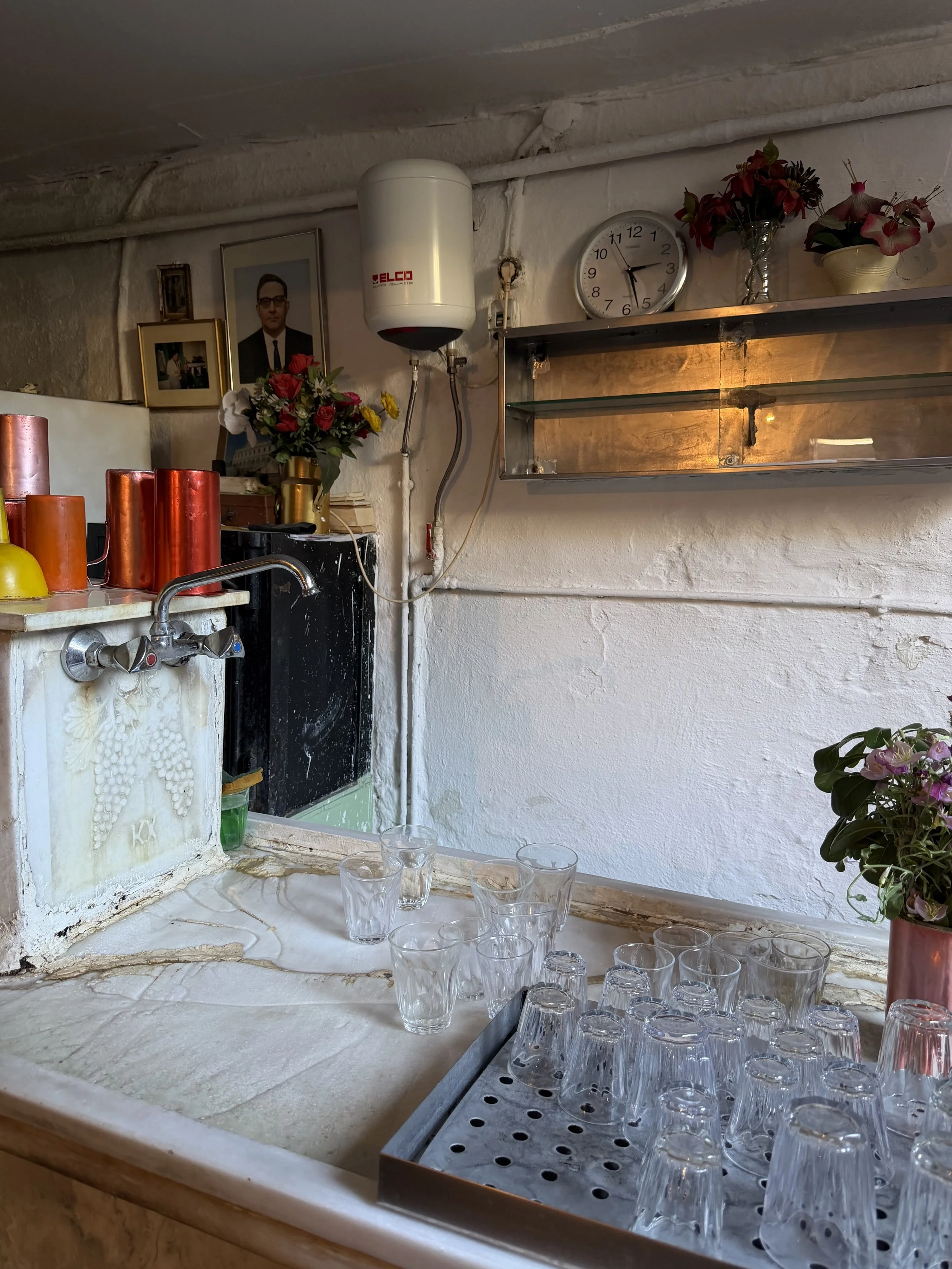
Diporto, Athens.
Yet I couldn’t quite relax.
Not because of the restaurant. Because of myself.
Part of me wondered whether I’d somehow earned my place there.
It’s not a particularly comfortable admission.
I’ve travelled extensively. I genuinely love food. I’d sought places like Diporto long before algorithms started serving them to me.
And I caught myself believing that made my reasons for being there somehow more legitimate than those of the tourists asking the waiter if they could have tzatziki and a Greek salad.
The irony wasn’t lost on me.
Whatever story I told myself, I was still another tourist walking through the same door.
Around us, phones appeared before cutlery. A couple nearby spent more time shouting across the table to each other about their jobs than noticing the room they were in.
It would have been easy to judge them.
Perhaps I did. But where exactly did that leave me?
A few weeks later I came across a Substack post describing Diporto as a hidden gem.
I nearly choked on my tea.
The phrase has become almost meaningless.
Every “hidden gem” shared with thousands of readers becomes a little less hidden.
Yet before rolling my eyes, I had to ask myself another uncomfortable question.
Hadn’t I just written about Le Swine in London?
Hadn’t I shared countless places I’d fallen in love with over the years?
Where exactly is the line between recommendation and exploitation?
I wasn’t entirely sure.
Perhaps the owners of Diporto are delighted.
Perhaps tourism has secured the restaurant’s future.
Perhaps the locals don’t mind in the slightest.
Or perhaps, like most things worth thinking about, the answer lies somewhere in the middle.
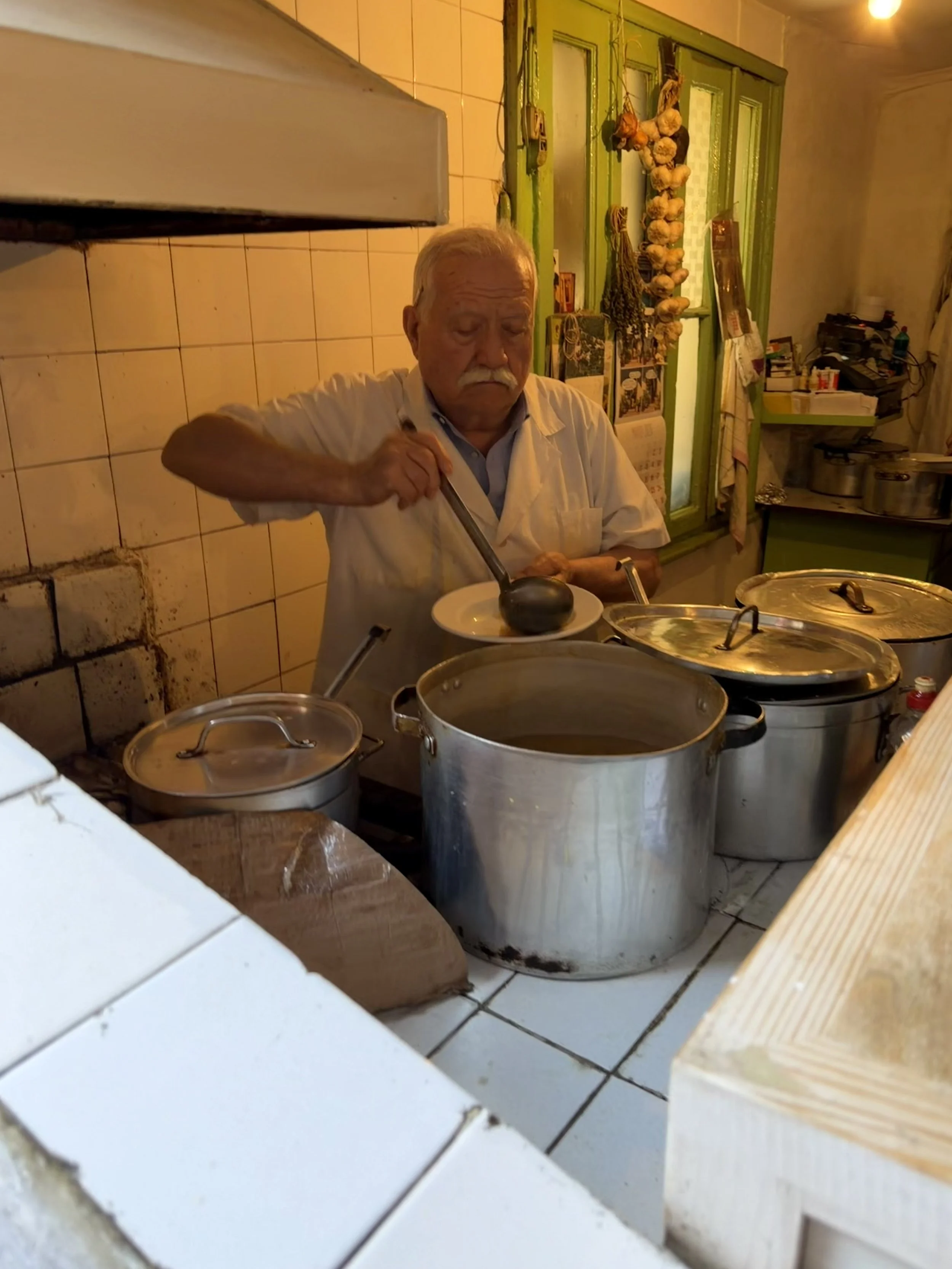
The infamous chickpeas being served at Diporto, Athens.
Maybe the answer isn’t to stop sharing places altogether.
If nobody had written about Diporto, I might not have found it. The same is true of countless cafés, markets and neighbourhoods that have enriched my travels over the years.
Equally, there’s nothing inherently wrong with taking photographs or telling other people where you’ve eaten. Travel has always been about sharing stories.
The question, perhaps, is how we do it.
Do we arrive believing a place exists for us? Or do we recognise that we’re stepping briefly into somebody else’s everyday life?
Markets aren’t attractions. They’re where people buy vegetables on a Tuesday morning. Local buses aren’t sightseeing tours. They’re how people get to work. Restaurants aren’t simply backdrops for social media posts. They’re places with histories, routines and communities that existed long before we walked through the door.
I realised that, as tourists, we’re often the protagonists in our own story.
But we’re usually just supporting characters in someone else’s.
Travel, at its best, asks us to be present rather than simply to consume.
To enjoy the meal. Take the photograph. Tell the story.
But do so with a little humility.
Because wherever we go, we are guests.
If you enjoyed this, you might like the below too…

Most people don’t like to be uncomfortable when they travel, but perhaps discomfort is an unavoidable part of seeing the world honestly. Something to learn from, to grow from and to try and affect positively, in your own little way.