
It’s Class, That!
The best full English I’ve ever eaten made me think about class.
I’m at Le Swine in East Sheen, London, after two days of Centre Court at Wimbledon.
Tennis is as much an endurance sport for the spectator as it is the players and the long days in the sun have led me here on this Sunday morning in search of some comfort food.
As soon as we step inside the diner-style café, Crying Lightning by Arctic Monkeys is playing and I’m served with a taste of my youth before a cup of tea or food touches my lips.
I order the set 1 breakfast with black pudding, alongside some hash browns to share with my wife. A heathen addition for the full English purist perhaps. But I like them, so I don’t care.
The food is genuinely flawless. The baked beans are how they should be - without a ramekin dish. It’s no small claim to say this is the best full English I’ve ever eaten. Every element has been given due care and attention, including a tomato that has been slowly roasted until it has travelled into an umami universe.
The quality of the produce speaks for itself without the menu needing to boast that the bacon and sausage came from pigs that were reared on a diet of superfoods and meditation, while the hens that laid the eggs enjoyed wellness retreats in the Brecon Beacons.
It is considered and confident cooking. Not overdone. Much like the service, which is friendly, relaxed and welcoming.
As I force myself to perform an English version of scarpetta - mopping up bean juice, bacon fat and brown sauce with the last piece of sliced white bread, I begin to realise that here I am, in an affluent corner of south-west London, eating what many would describe as quintessentially working-class food.
So often, that combination is handled clumsily.
Working-class culture becomes costume - Nike Air Max. Old football shirts for teams you’ve never actually been to watch. Martin Parr-lite photographs, stripped of the warmth and irony. All in pursuit of a carefully manufactured nostalgia.
Yet Le Swine does none of that.
It isn’t trying to be working class. Nor is it trying to elevate the full English into something unrecognisable.
It simply respects it.
That confidence got me thinking about class in Britain, a subject that had been circling in my mind for the last few weeks.
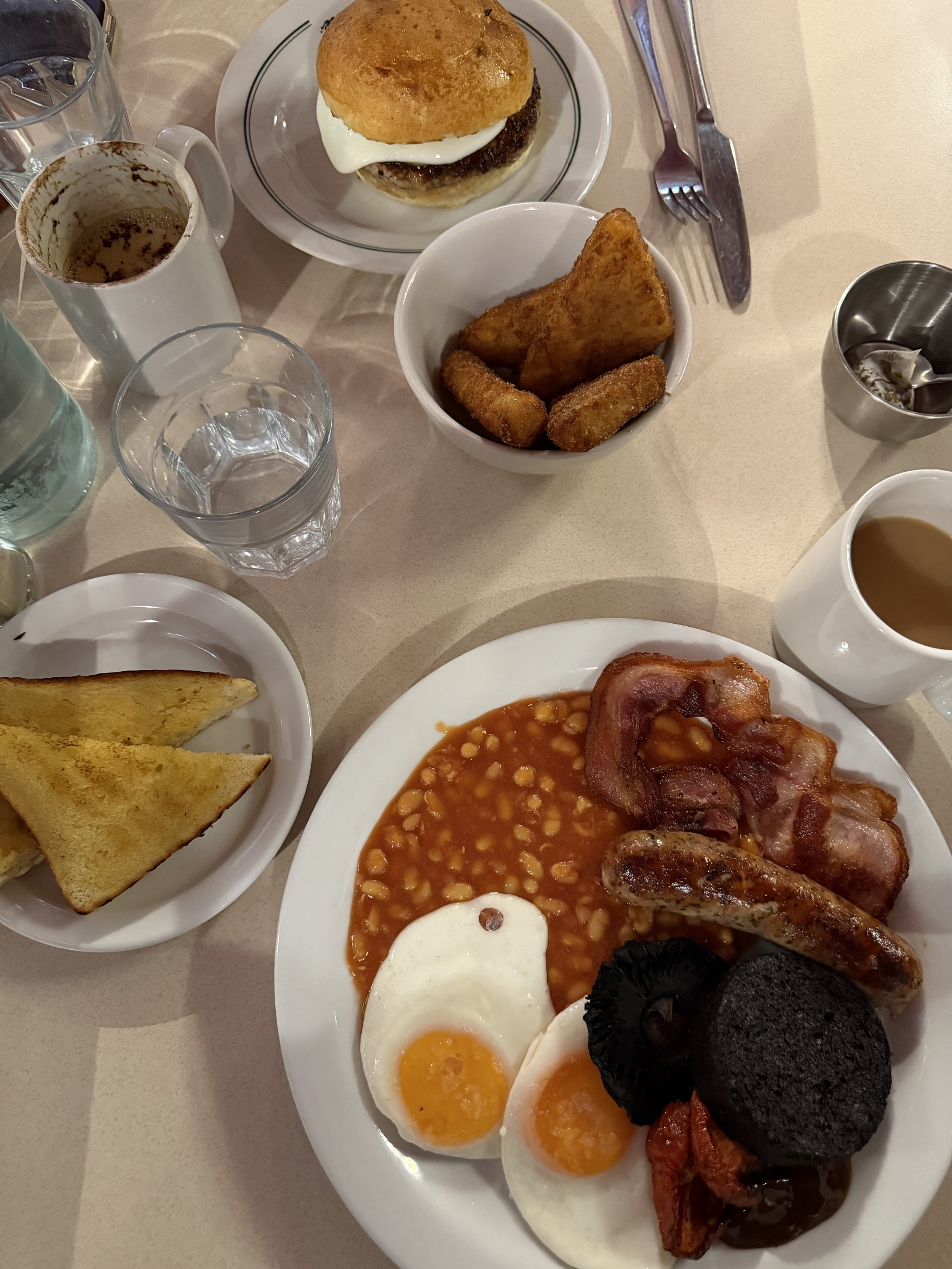
Full English breakfast at Le Swine in East Sheen, London.
Travelling has a funny way of sharpening your view of home. After months spent moving between countries, I found myself noticing how strangely we talk about class in Britain, often reducing something deeply nuanced into a handful of lazy stereotypes.
That it’s grim up north and everyone is working class, while everyone in the south somehow isn’t.
That working-class food is only authentic if it’s unhealthy and bland.
That daring to enjoy a courgette, a staple on many European plates somehow aligns with supporting a particular political party.
Class has become aesthetic. And a lazy one at that.
Fashion brands shoot campaigns on left behind council estates where the average monthly net salary is less than the jacket being advertised. Cafés borrow the visual language of greasy spoons without understanding what made them feel genuine in the first place.
Equally, genuine appreciation from someone perceived as middle class is sometimes mistaken for appropriation, as though crossing invisible class boundaries automatically comes with suspicion.
None of it feels particularly helpful.
Perhaps I notice it because I’ve spent much of my life moving between those boundaries myself.
I grew up on a council estate and attended a well below-average comprehensive school. Later came a Russell Group university and a career advising some of the world’s largest companies, with countless hours spent in the City of London’s glass skyscrapers. A life that afforded opportunities my younger self could never have imagined. Travel. Choice. Flexibility.
My story isn’t particularly unusual. Many people have climbed the social ladder, but moving between classes gives you a perspective that’s difficult to explain.
My accent has softened over the years through university, work and living elsewhere. Yet I still notice it shifting depending on who I’m with.
Around friends from home, words and phrases I haven’t used for months suddenly return.
It isn’t performance. It is recognition.
I know what it feels like to grow up somewhere where anti-social behaviour wasn’t unusual.
I also know what it feels like to spend an afternoon in an art gallery before discussing a natural wine you read about in Noble Rot, over dinner. You see, I don’t even say “tea” as much anymore.
The strange thing is that I don’t fully belong in either world entirely.
But does that matter? I’m both.
And perhaps I always will be.
Maybe any future children I have won’t experience that same tension. They’ll simply grow up in the life we’ve created for them.
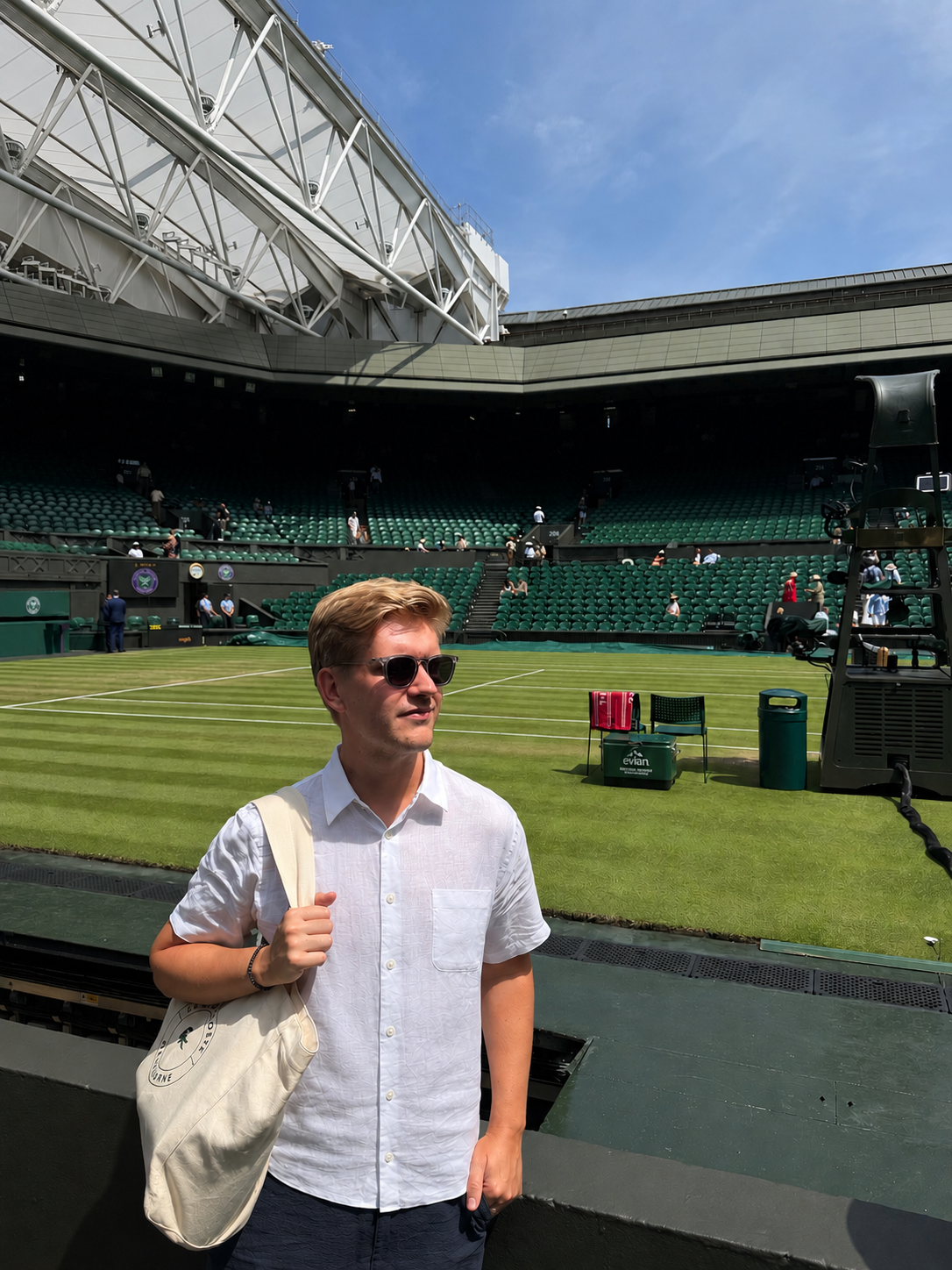
The author - Centre Court, Wimbledon.
But I can never un-know where I came from. Nor would I want to. Yet that doesn’t define the whole of who I am today.
That’s why Le Swine stayed with me.
Not because it served the best full English I’ve ever eaten. But because, for an hour or so, it was one of the few places where I didn’t feel like I had to choose which version of myself to be.
It wasn’t trying to signal class.
It wasn’t trying to reinvent tradition.
It wasn’t performing authenticity.
It was simply trying to make a good breakfast.
Perhaps that’s what confidence looks like.
And perhaps confidence, in places as much as people, is what makes something feel authentic.
If you enjoyed this, you might like the below too…
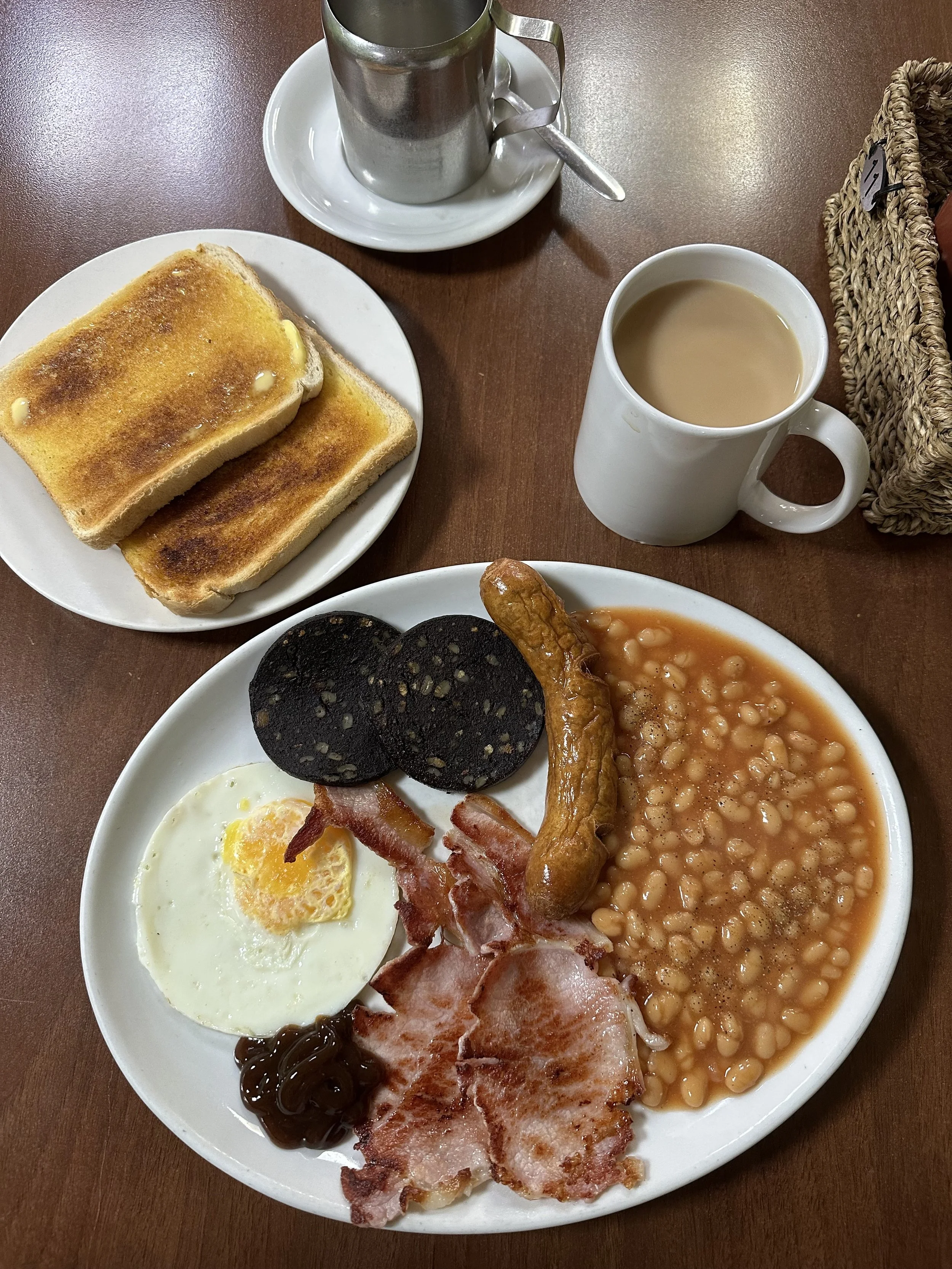

I had a random thought the other day. Ironically, it involved Karl Pilkington.
In a world of endless “Top 10 things to do in…” lists and “Come with me for a day in…” videos, Karl Pilkington may have accidentally become one of the most useful travel influencers of the modern era. Which is unfortunate, because he’d probably hate being described that way.