
Writing
















Sheffield: The Sound Of The Crowd
It is my first day back in Sheffield.
I walk through a chilly city centre on my way to get my hair cut for the first time in two months.
I feel a little downbeat at being back in the grey monotone of the UK. The streets seem surprisingly quiet. Desolate, even. The energetic rhythm of South East Asia is already becoming a fading memory, much like the energy that only a few days ago was powered by sunshine, beaches and warm seas.
It is my first day back in Sheffield.
I walk through a chilly city centre on my way to get my hair cut for the first time in two months.
I feel a little downbeat at being back in the grey monotone of the UK. The streets seem surprisingly quiet. Desolate, even. The energetic rhythm of South East Asia is already becoming a fading memory, much like the energy that only a few days ago was powered by sunshine, beaches and warm seas.
Following the de-bushing of my now much blonder hair, I make my first stop: a copy of Daniel Dylan Wray’s Groovy, Laidback & Nasty. A book charting Sheffield’s music scene from the 1950s to the present day.
I head to 2323 coffee on Norfolk Row, grab a drink and begin reading. Within a few pages, I’m reminded why I love Sheffield.
It was never about clear blue skies or charismatic energy. It was the culture. The music. The art. Even, despite the endless disappointments of being a Sheffield United fan, the football.
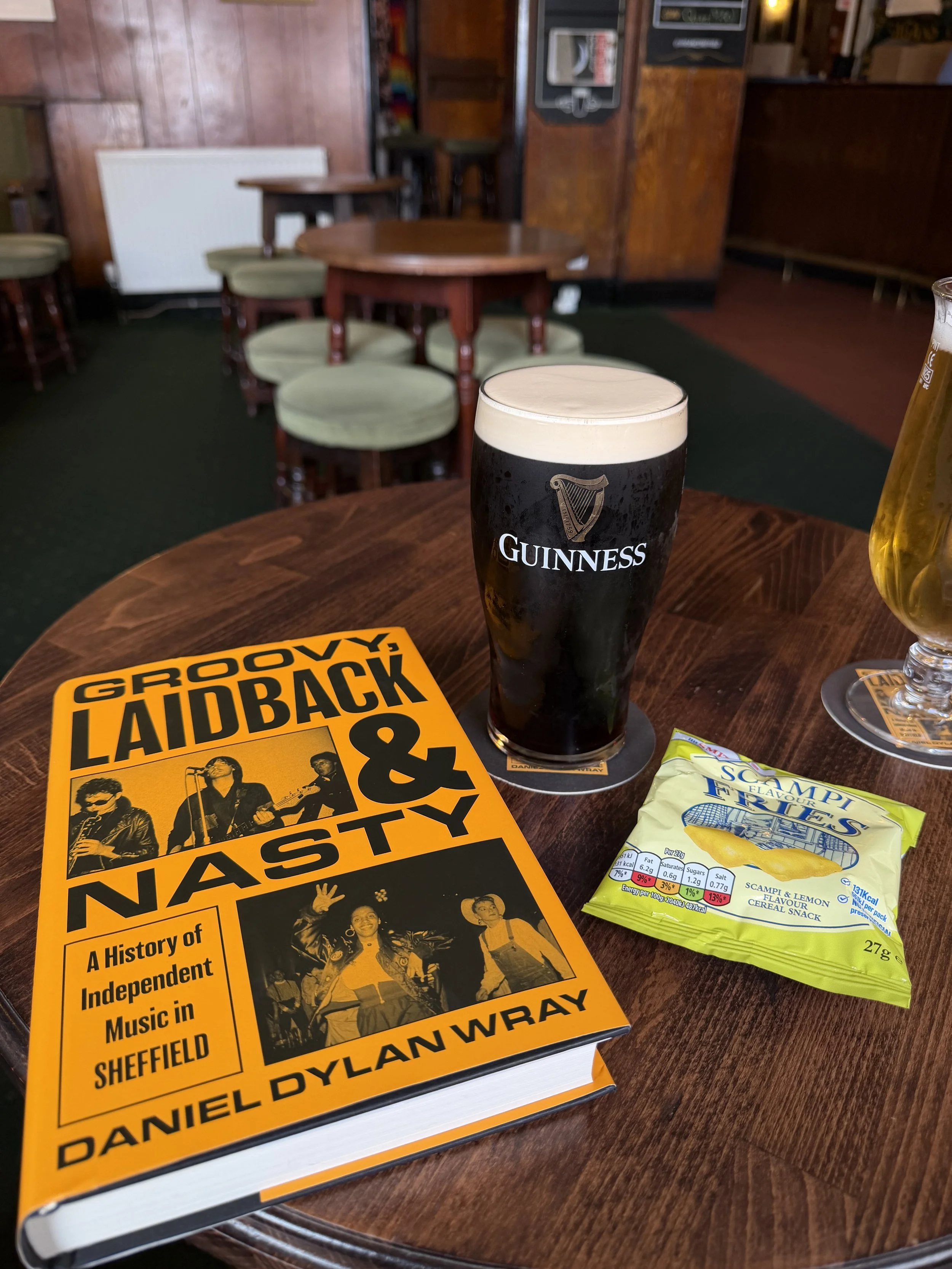
Daniel Dylan Wray - Groovy, Laidback & Nasty
After coffee, I wander around the corner to Millennium Gallery. One exhibition is between installations. The others I’ve seen countless times before.
I try again and head to Graves Gallery at the Central Library.
Things don’t improve.
The art deco building is visibly tired. The ground floor covered in hoardings, yet there seems to be no visible works taking place. Four flights of stairs later, past the libraries and a closed local archives, I reach the gallery only to find most of it also closed. A visitor asks a member of staff why so little is open. I miss the mumbled answer, but judging by their expression, it isn’t encouraging.
As I make my way back down the glazed marble staircase, I notice a quote painted on a wall of cracked plaster and chipped paintwork.
“There is no institution I value more in this country than libraries.”
Michael Palin.
A Sheffield lad.
I wonder what he would make of the place today.
I had just been sitting in a cafe reading about one of Britain’s most important cultural cities. Now I found myself standing inside a struggling public institution wondering how culture continues to survive in places like this at all.
Over the following week, and away from Sheffield once more, I consume Groovy, Laidback & Nasty at pace.
Daniel Dylan Wray’s book tells the story of a city in transition. A global industrial powerhouse losing its purpose and searching for a new identity. Yet while mass employment in Sheffield’s steel industry declined and the outlying coal mines edged towards closure, something else was taking shape.
Young promoters such as Peter Stringfellow were putting on club nights in church halls and bringing artists such as The Beatles, Jimi Hendrix and Ray Charles to parts of the city few people would associate with cultural innovation today.
The city’s DIY ethos soon began to flourish, mainly out of necessity. Early recordings by future stars such as The Human League and Heaven 17 emerged from Ken Patten’s Studio Electrophonique - a self-built studio with the unglamorous address of a semi-detached house in Handsworth.
Across the city, artists made use of whatever space they could find.
Sheffield’s industrial east end provided its own soundtrack. The clanks, crashes and mechanical rhythms of steelworks, bouncing off the city’s hillsides, helped inspire a strain of electronic music that would go on to influence artists far beyond South Yorkshire. Cabaret Voltaire became seminal electronic musicians. Warp Records followed, championing Bleep Techno. Shortly after, the city gave birth to the first Gatecrasher super club and Bassline, a sub genre of speed garage that largely came out of the contentious, yet deeply influential nightclub, Niche.
What struck me while reading was not simply the quality and breadth of the music, but the conditions that allowed it to happen.
There was space. Space to rehearse. Space to experiment. Space to fail.
A city full of overlooked buildings, cheap rooms and people willing to have a go.
Sheffield’s cultural legacy was not built because somebody designed it. It emerged because enough people had the freedom, time and opportunity to create things on their own terms. Much like its industrial past.
Which made me wonder whether those conditions still exist.
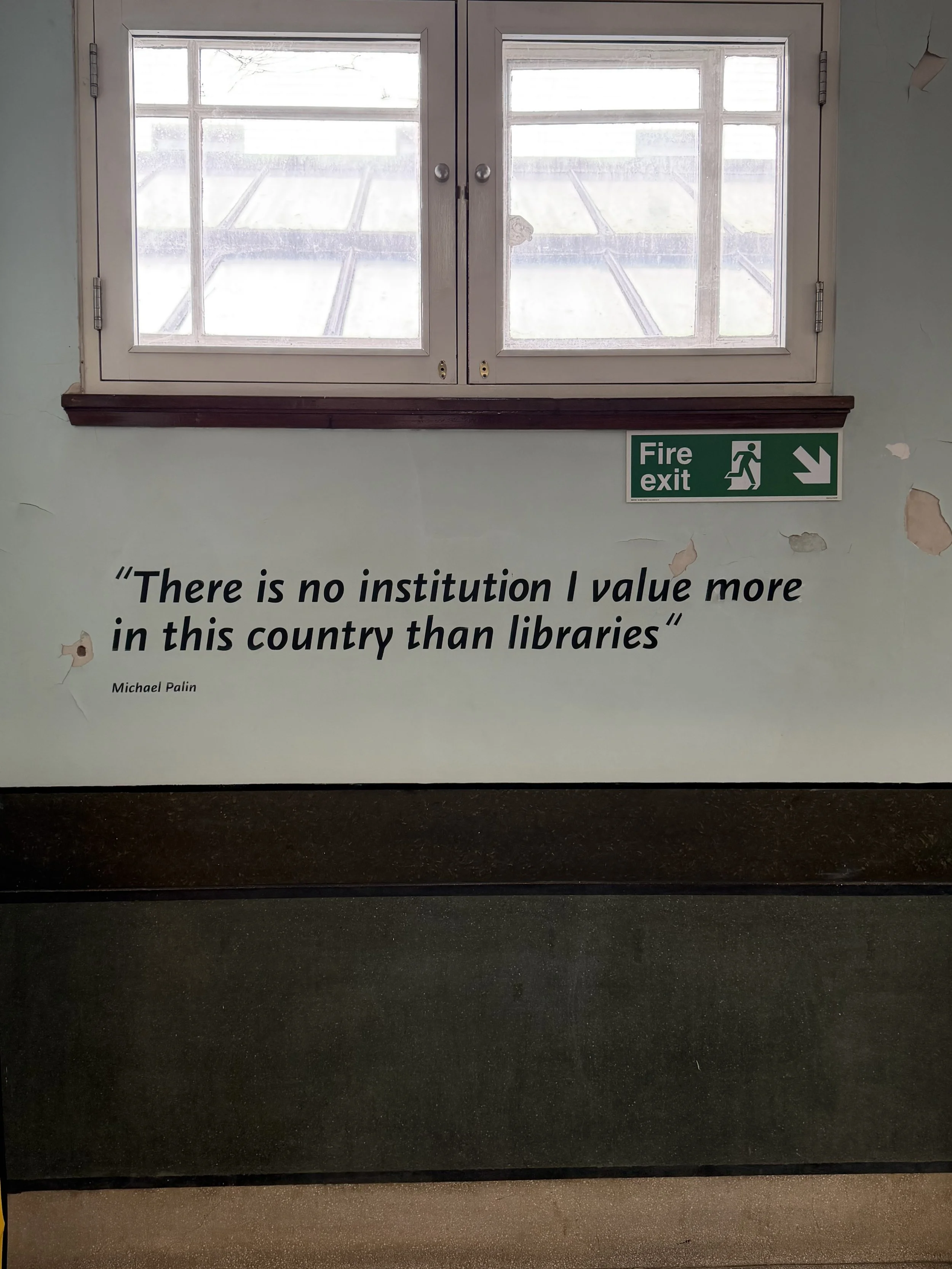
Fading glories - Sheffield Central Library
It is now more than twenty years since Sheffield produced its last truly global band in Arctic Monkeys.
There has been plenty of excellent music since. Plenty of creativity. Plenty of people still making great things. Yet the commercially successful gap is notable.
Many of the post-industrial spaces that once housed rehearsal rooms, studios and club nights have been converted into apartments or demolished entirely. Space has become more of a premium. Time has too.
It is also more expensive to simply survive than it was for much of the period covered in Wray’s book. The leap from a stable job into a creative career feels larger than ever. The music industry itself is increasingly difficult to navigate and increasingly difficult to make a living from.
To test my assumptions, I spoke to two people actively shaping Sheffield’s music scene today.
The first was Yarni, a musician who has been making a broad range of music in Sheffield for over two decades.
His response was not entirely what I expected.
He didn’t describe a city lacking in confidence. Quite the opposite. He pointed to a thriving network of DIY collectives and artists working on their own terms. Younger audiences, he suggested, are less tribal than previous generations. Their tastes are shaped less by scenes and subcultures and more by playlists, algorithms and curiosity.
In many ways, that openness has benefited artists like him.
Yet he also pointed to a growing practical challenge.
His rehearsal space, a single room in a cold former steelworks, now costs more each month than the mortgage on his home in leafy Meersbrook. Like many musicians, he balances creativity with a full-time career because making art alone rarely pays the bills.
But it was another observation that stayed with me.
For all the creativity taking place across the city, Yarni felt there was nobody pulling the various strands together. No singular figure or institution championing the wider scene. No unifying voice. Sheffield, he suggested, has plenty of people making things, but nobody quite playing the role of a Tony Wilson.
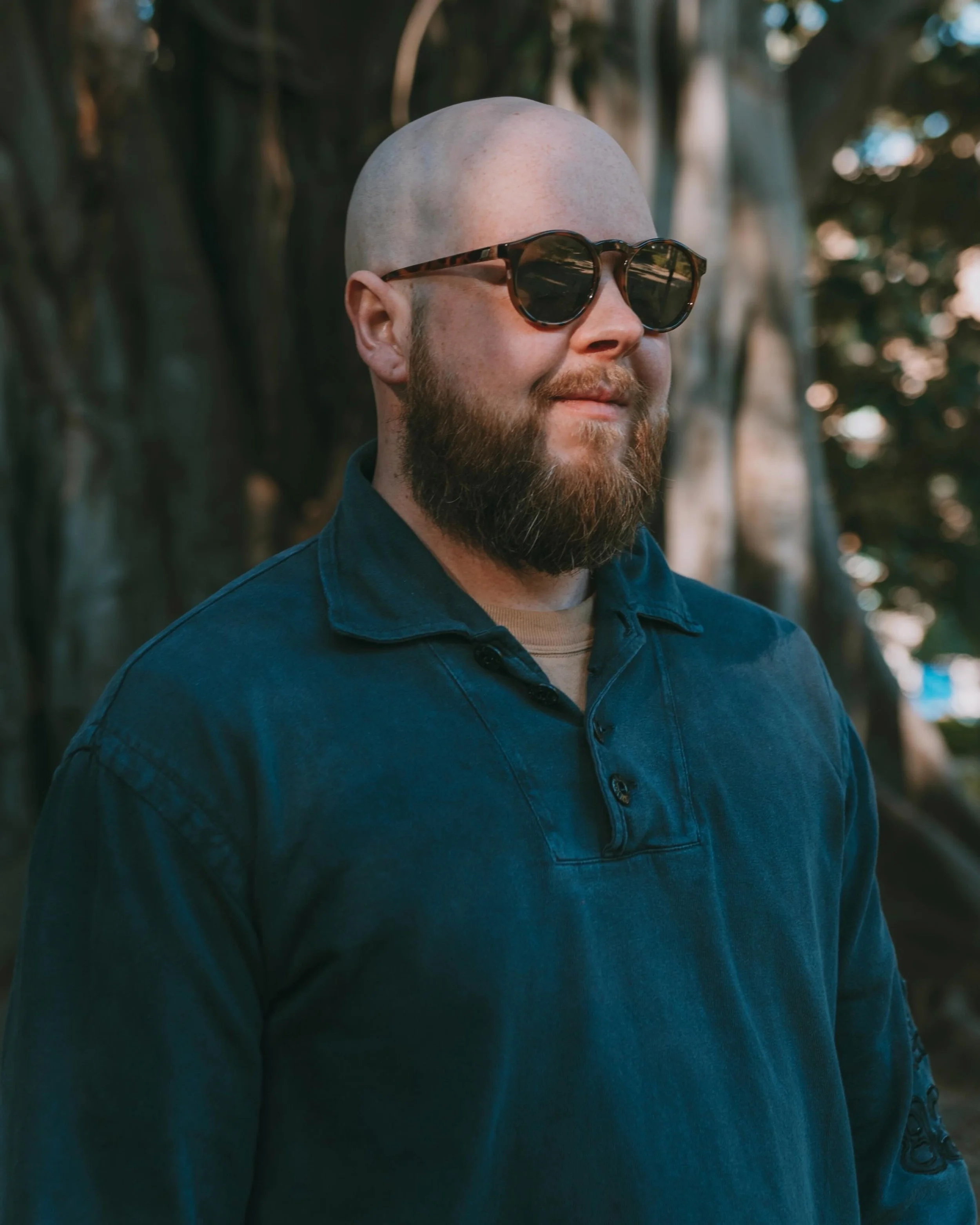
Yarni - a musician who has spent over two decades contributing to Sheffield’s music scene.
James Tsirikos, a DJ, promoter and writer, broadly agreed with Yarni’s assessment that Sheffield remains full of creativity, whilst offering a subtle challenge to some of my assumptions.
He described Sheffield as a city of contradictions.
The lack of major investment, established career pathways and dominant institutions undoubtedly makes life harder for artists. Big tours often bypass the city. Promotion is both difficult and a necessity to success.
Yet some of those handicaps can also become strengths.
Without a dominant scene to fit into, artists often have to carve out something of their own. Sheffield’s music communities may appear fragmented from the outside, but James described a surprisingly collaborative culture beneath the surface.
Promoters support one another. Honest feedback is commonplace. There is room to create something genuinely different precisely because no single scene dominates.
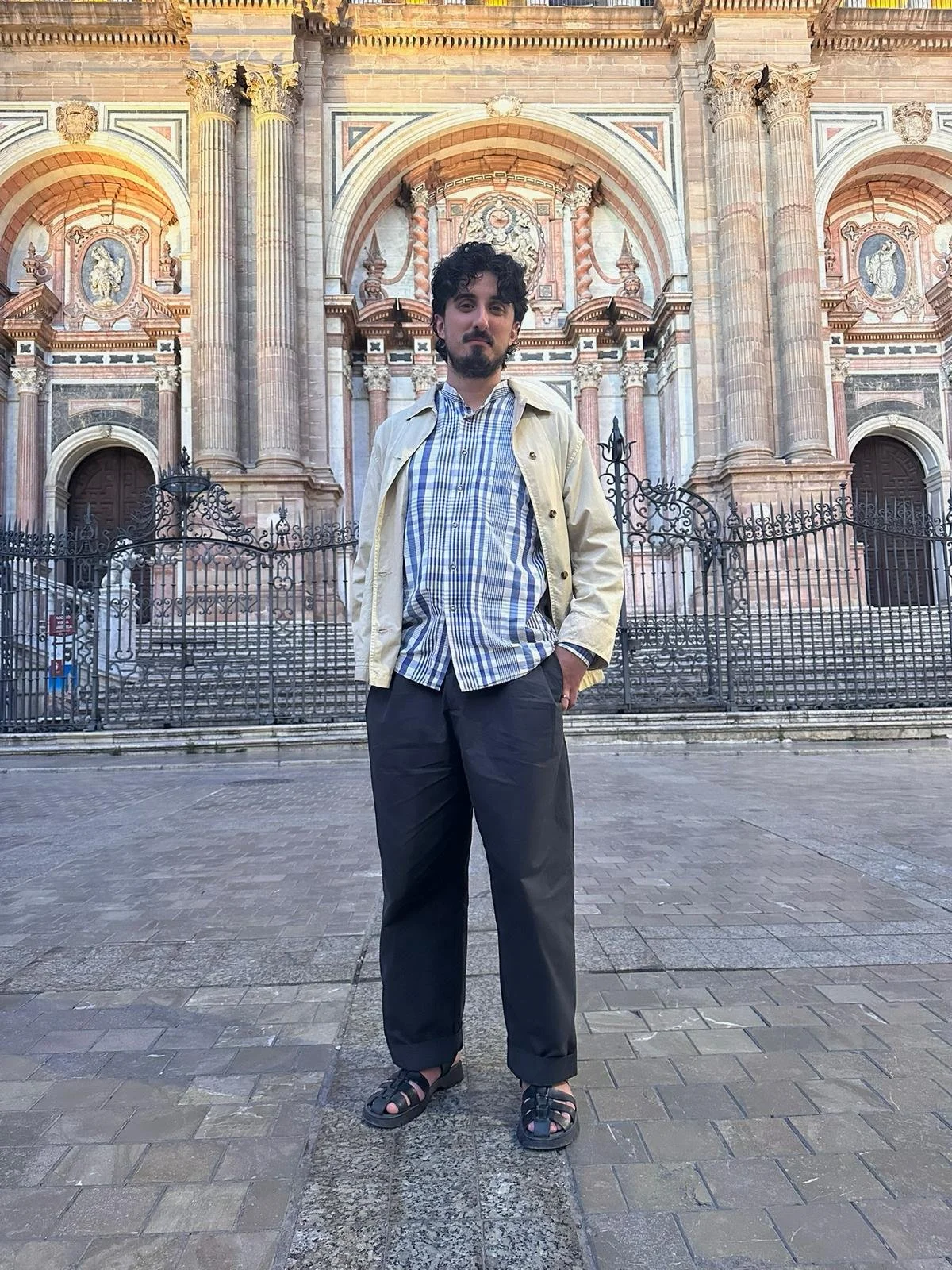
James Tsirikos - DJ, promoter & writer.
It struck me that both conversations were really describing the same city. A place where economic constraints increasingly make creativity difficult…yet where the absence of established structures still creates the freedom to experiment.
The positives and negatives are often one and the same.
And perhaps that is Sheffield’s paradox.
Manchester doesn’t just create culture. It narrates it. Sometimes excessively.
Sheffield has almost done the opposite.
Groovy, Laidback & Nasty contains enough stories, innovations and musical breakthroughs to fill several cities’ worth of cultural history. Yet many people, including plenty of Sheffielders, would be surprised by the scale of what the city has contributed, much of it from the shadows and few cities of Sheffield’s size can match that record.
Yet the city has rarely shouted about it.
Perhaps that modesty is part of what makes Sheffield creative in the first place. A city more interested in getting on with things than talking about them. More comfortable making culture than marketing it.
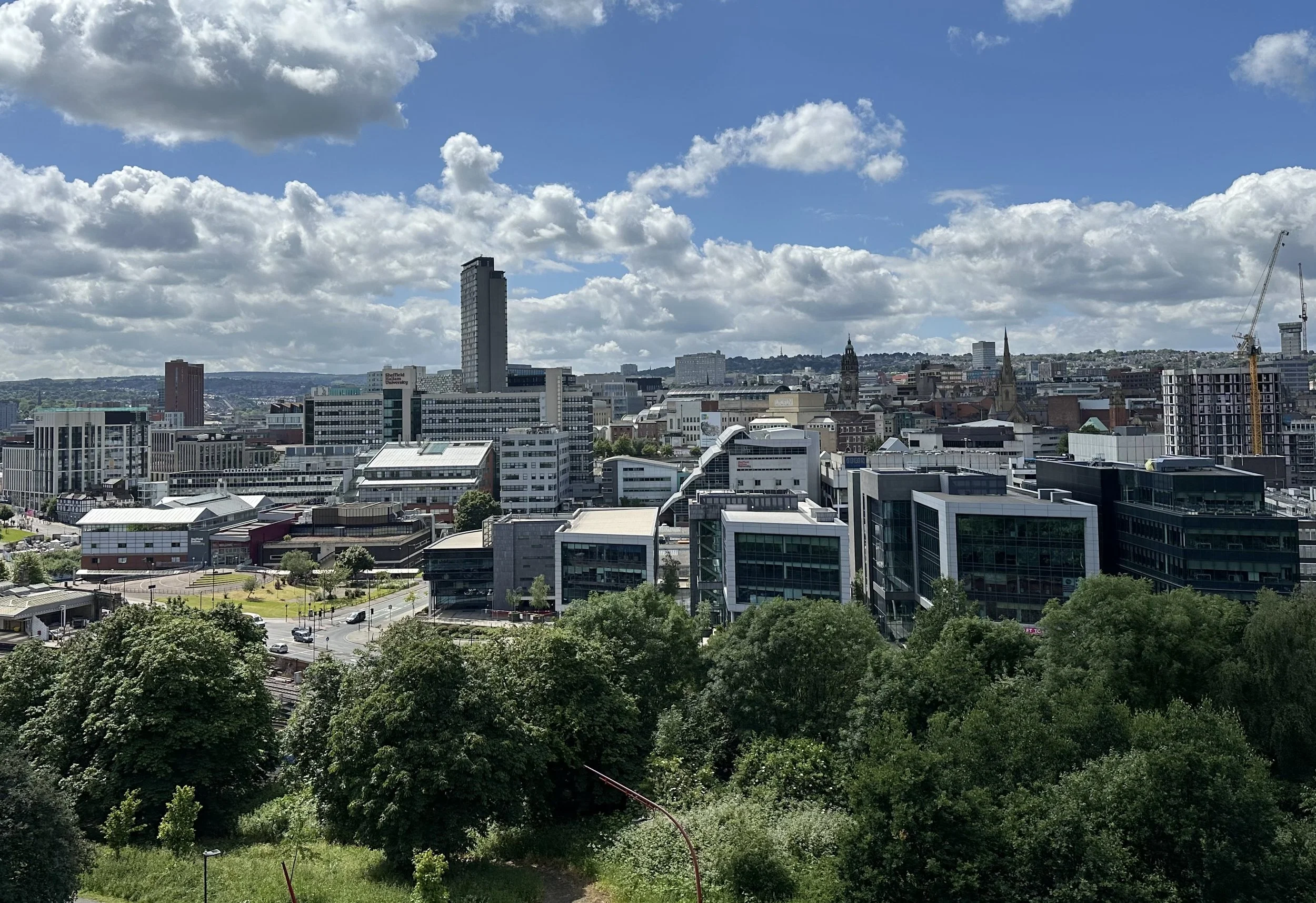
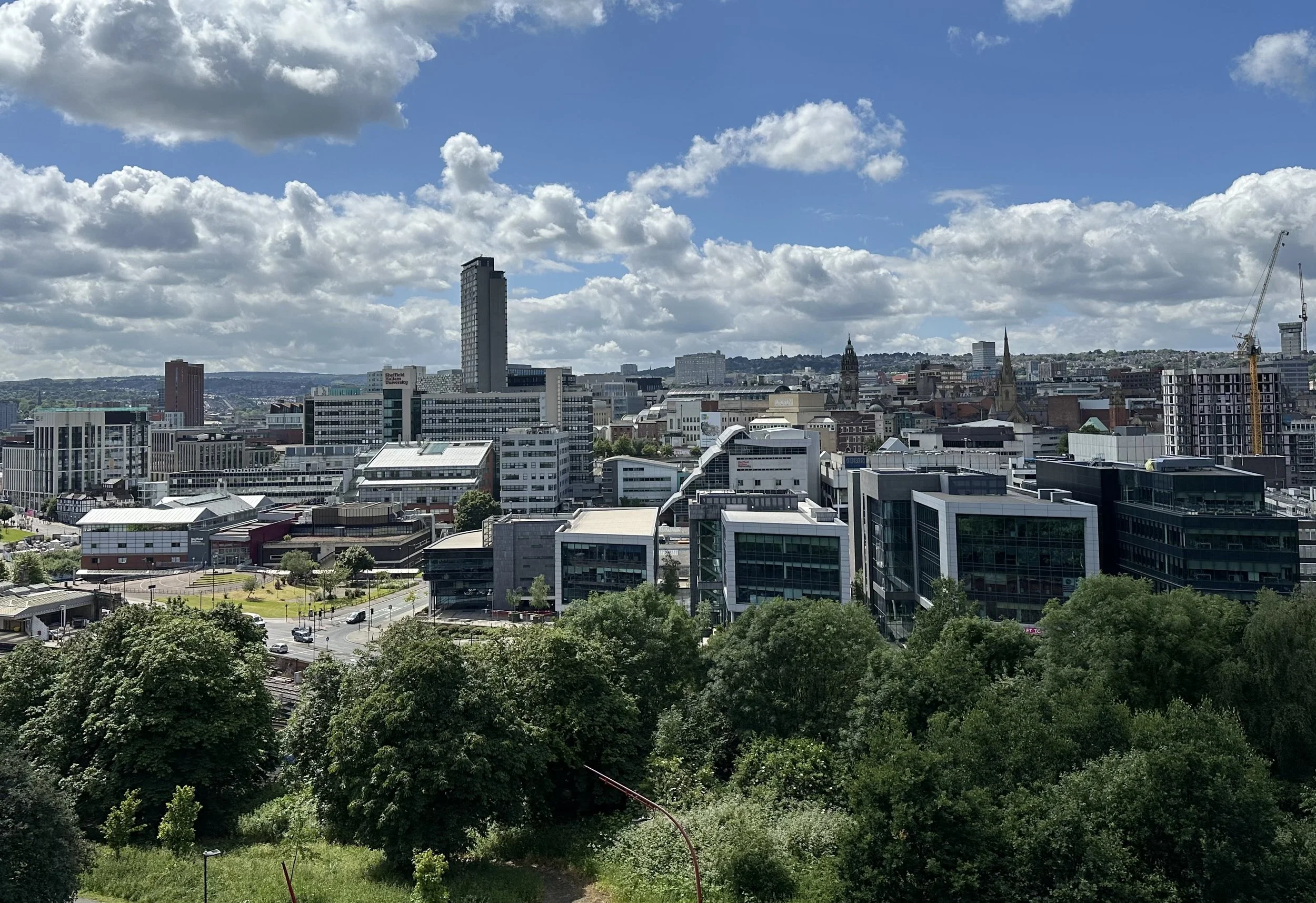
Sheffield city centre, viewed from Park Hill.
The question, then, may not simply be whether Sheffield can still produce great music.
It clearly can.
The question is whether we are still creating the conditions for the next generation to thrive. Whether there is enough affordable space, enough opportunity and enough self-confident publicity for something unexpected to emerge from a rehearsal room, a loft, a church hall or a former steelworks.
Sheffield has never had things easy.
It has never enjoyed London’s media machine, Manchester’s swagger or Liverpool’s mythology. Its greatest creative moments rarely emerged from abundance. More often they were born of necessity. Limited resources, overlooked spaces and people determined to make something anyway.
Perhaps that is why the city’s DIY spirit has endured for so long.
The economic pressures facing artists today are real, and perhaps greater than ever. There is a point where constraint stops encouraging originality and simply prevents people from creating at all. Yet Sheffield has spent generations finding ways around its limitations. It has continually reinvented itself, often when few expected it to.
Maybe it will again.
The irony is that Groovy, Laidback & Nasty exists because Daniel Dylan Wray has done something Sheffield has rarely done for itself.
He has told the story.
If the next great Sheffield scene is already taking shape somewhere in the city, perhaps in a rehearsal room, a former warehouse or a church hall, I hope somebody is paying attention.
And perhaps more importantly…
I hope somebody is there to tell the rest of us about it.
—
I’d love to hear from anyone involved in Sheffield’s creative scene, in the comments below.
This piece began as a reflection on the city’s musical heritage, but I suspect the questions it raises extend far beyond music.
If enough interesting perspectives emerge, I’d love to revisit the subject in a follow-up piece exploring Sheffield’s wider creative landscape.
If you enjoyed this, you might like the below too…
It is my first day back in Sheffield.
I walk through a chilly city centre on my way to get my hair cut for the first time in two months.
I feel a little downbeat at being back in the grey monotone of the UK. The streets seem surprisingly quiet. Desolate, even. The energetic rhythm of South East Asia is already becoming a fading memory, much like the energy that only a few days ago was powered by sunshine, beaches and warm seas.